Kishan Reddy inaugurates three GSI facilities in Hyderabad
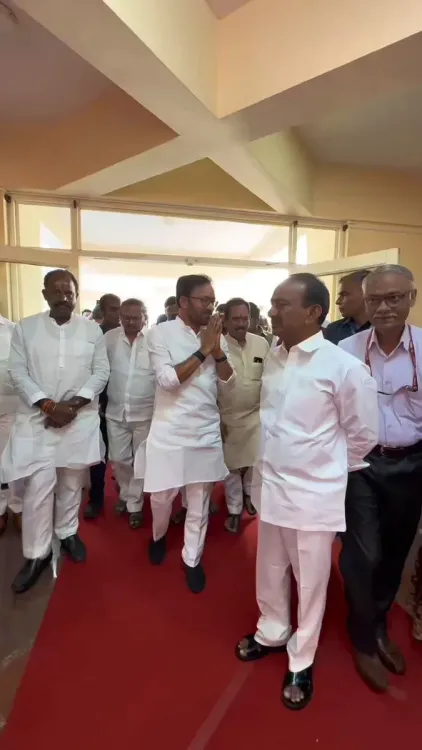
Synopsis
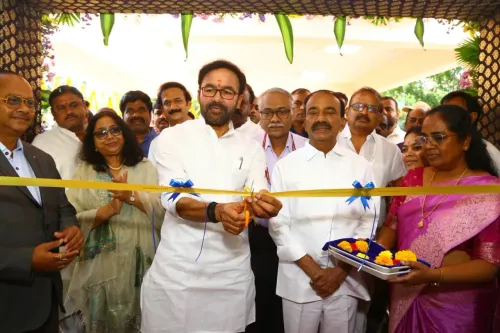
Union Mines Minister G. Kishan Reddy inaugurated three new facilities at the GSI Training Institute in Hyderabad on November 11, 2026, reinforcing India's bid to build a future-ready geological workforce and reduce critical mineral import dependence under the Aatmanirbhar Bharat framework.
Key Takeaways
Three new facilities were inaugurated at the GSI Training Institute, Hyderabad on November 11, 2026 by Union Mines Minister G.
The Geological Survey of India (GSI) , established in 1851 , is India's premier agency for mineral mapping and exploration, operating under the Ministry of Mines .
The upgrade aims to produce a 'future-ready workforce' of geoscientists to accelerate domestic mineral discovery, particularly for critical minerals needed in clean energy.
The inauguration aligns with the Aatmanirbhar Bharat self-reliance initiative and a string of mining reforms including the MMDR Amendment Act 2021 and National Mineral Policy 2019 .
Strengthening GSI's training infrastructure is seen as a key step toward plugging the skilled-geoscientist gap that has slowed private investment in greenfield exploration.
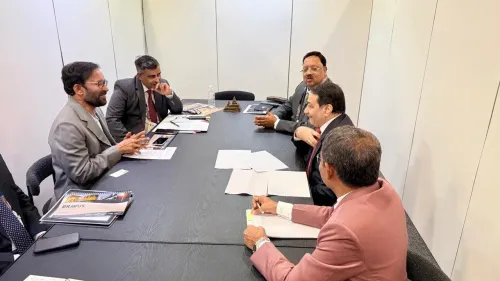
Three new state-of-the-art facilities opened at the Geological Survey of India (GSI) Training Institute in Hyderabad on Wednesday, November 11, 2026 — and Union Coal and Mines Minister G. Kishan Reddy called it a new chapter in India's drive to build world-class geological capacity from the ground up.
What opened at GSI Hyderabad — and why it matters now
The GSI Training Institute is the nerve centre for training India's geoscientists, the professionals who map the country's subsurface wealth and guide mineral block identification. Upgrading its infrastructure signals a direct bet on human capital — not just on licences and auctions — as the foundation of a stronger exploration pipeline.
Reddy framed the inauguration squarely within the Aatmanirbhar Bharat framework, citing 'modern infrastructure, advanced technologies and a future-ready workforce' as the three pillars being reinforced. The Ministry of Mines and Geological Survey of India were both tagged in his post, underscoring that this is an institutional push, not a one-off ribbon-cutting.
GSI's role in India's mineral ambitions
The Geological Survey of India, founded in 1851, is India's oldest scientific agency and the primary engine of national mineral mapping. Despite its vintage, the pressure on GSI has never been greater: India's clean-energy transition — solar panels, EV batteries, wind turbines — depends heavily on critical minerals, many of which are still imported because domestic exploration has lagged behind demand.
The policy scaffolding has been building for years. The National Mineral Exploration Policy 2016 opened greenfield exploration to private players. The National Mineral Policy 2019 doubled down on scientific methods and sustainability. The MMDR Amendment Act 2021 then turbocharged block auctions to get minerals out of the ground faster. What was missing was a parallel investment in the geoscientists who actually find those blocks — which is precisely the gap today's inauguration addresses.
Capacity building as the quiet force behind mineral security
It is easy to announce auction rounds. It is harder to produce the trained geologists who can run airborne surveys, interpret geochemical data, and certify mineral resource estimates to international standards. That skill gap has been a persistent bottleneck in India's mineral exploration ecosystem, frequently cited by industry as a reason why private investment in greenfield exploration has been slower than policy architects hoped.
Modernising the GSI Training Institute — with advanced technology and upgraded physical infrastructure — is a direct response to that critique. A better-trained cohort of exploration geoscientists strengthens every downstream step: more accurate resource estimates, more credible block data, faster auctions, and ultimately less dependence on imports for minerals that underpin everything from defence manufacturing to green-energy rollouts.
The minister's mention of a 'globally competitive mining sector' also signals ambition beyond self-sufficiency. India is actively positioning itself as a destination for international mining investment, and institutional credibility — a GSI whose data and trained personnel meet global benchmarks — is part of that pitch.
The drills may be in the ground elsewhere, but the future of India's mineral story is being shaped, one trained geoscientist at a time, right here in Hyderabad.
Point of View
Policy revisions, block data portals. By investing in the GSI Training Institute's physical and technological infrastructure, the Ministry of Mines is tackling a structural bottleneck that licences alone cannot fix: the shortage of internationally benchmarked exploration geoscientists. For G. Kishan Reddy, the event also carries political geometry — inaugurating a flagship scientific institution in Hyderabad, the capital of his home state Telangana, reinforces his visibility in a state where the BJP is a challenger rather than the incumbent. The broader strategic signal, however, is about India's credibility as a destination for global mining capital: world-class exploration talent is the quiet currency that underpins every other mining-sector reform.
NationPress
11 Nov 2026
Frequently Asked Questions
What was inaugurated at GSI Training Institute Hyderabad in November 2026?
Union Mines Minister G. Kishan Reddy inaugurated three state-of-the-art facilities at the GSI Training Institute in Hyderabad on November 11, 2026 , aimed at advancing mineral exploration training and geological capacity building.
What is the GSI Training Institute and what does it do?
The GSI Training Institute , located in Hyderabad , provides advanced technical training to geoscientists in mineral exploration methods and modern survey technologies. It operates under the Geological Survey of India , which was established in 1851 and falls under the Ministry of Mines .
How does the GSI upgrade connect to India's Aatmanirbhar Bharat goals?
Aatmanirbhar Bharat , launched in 2020 , includes targets to reduce import dependence in critical minerals. Training more skilled geoscientists through an upgraded GSI institute directly supports domestic mineral discovery, reducing the need to import minerals critical for clean energy and manufacturing.
What are the key mining policy reforms behind this push?
India's mineral sector has been reshaped by the National Mineral Exploration Policy 2016 , the National Mineral Policy 2019 , and the MMDR Amendment Act 2021 , which collectively aimed to attract private investment, speed up block auctions, and modernise exploration frameworks.
Who is G. Kishan Reddy and what is his role in India's mining sector?
G. Kishan Reddy is India's Union Minister of Coal and Mines and the BJP Telangana state president . He oversees national mineral policy, geological institutions, and the regulatory environment for India's mining and coal sectors.