Kishan Reddy: State Mining Ministers' Conference Boosts Cooperative Federalism
Synopsis
Union Mines Minister G. Kishan Reddy used the State Mining Ministers' Conference to reinforce cooperative federalism, with states sharing mining ecosystem ideas and reform suggestions to strengthen India's mineral sector under the MMDR framework.
Key Takeaways
Union Coal and Mines Minister G.
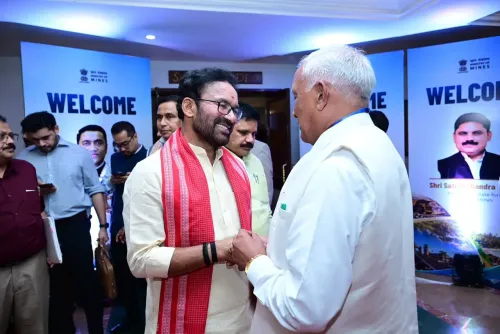
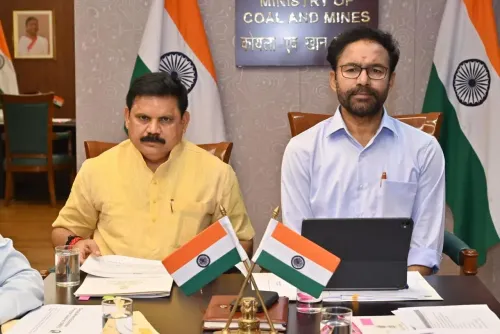
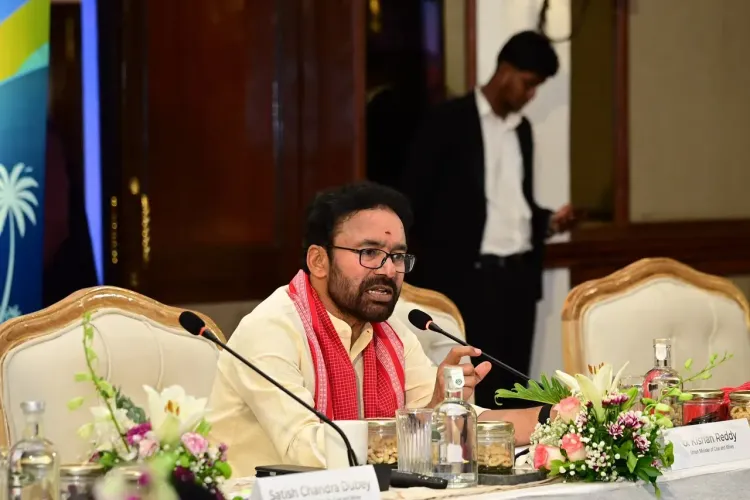
Kishan Reddy hosted a State Mining Ministers' Conference and called it a 'valuable platform for cooperative federalism.' States presented their individual mining ecosystems and shared ideas and suggestions for sector improvement.
Reddy described states as 'the most important stakeholders in India's mining journey.' The conference functions within the policy lineage of the National Mineral Policy 2019 and the MMDR Amendment Act 2021 .
Central government has pursued incremental mining reforms since 2015 to raise domestic mineral output and cut import dependence.
Follow-up actions — rule amendments or administrative orders under the MMDR Act — will determine whether conference outcomes convert to on-ground change.
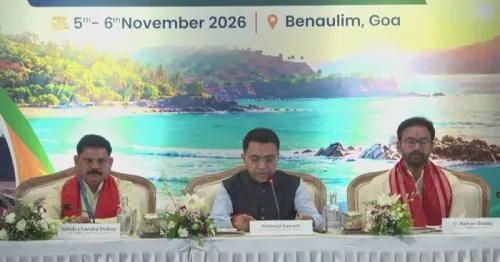
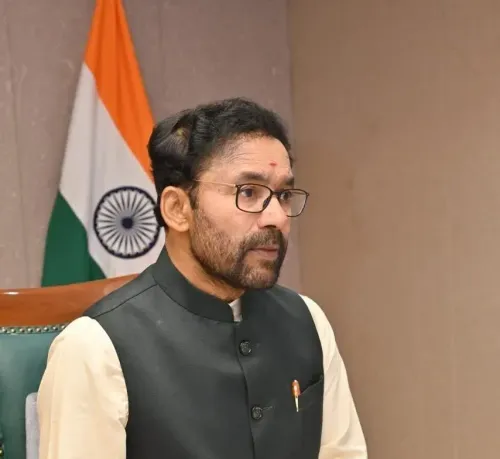
When state governments and the Centre sit in the same room to debate picks, shovels and mineral leases, the entire trajectory of India's resource economy can shift. Union Coal and Mines Minister G. Kishan Reddy convened a State Mining Ministers' Conference and, on Friday, 6 November 2026, reflected on its outcomes — calling it a 'valuable platform for strengthening cooperative federalism and fostering meaningful dialogue on mining sector reforms.'
What Happened Inside the Conference Room
Multiple state governments brought their own mining ecosystems to the table, presenting ground-level realities alongside ideas and suggestions for improvement. Reddy underlined that states are 'the most important stakeholders in India's mining journey' — a pointed acknowledgement that mineral wealth sits in state territory even as central legislation governs its extraction. The forum functioned as a peer-learning exercise: each state's experience, whether a bottleneck or a breakthrough, becoming shared institutional knowledge.
The MMDR Backbone and Why State Buy-In Matters
India's mining governance runs on the Mines and Minerals (Development and Regulation) Act, most recently amended in 2021 to streamline lease transfers, tighten exploration norms and sharpen penalties — changes designed to lift domestic output of everything from iron ore to critical minerals. But central legislation is only as effective as state-level implementation. The National Mineral Policy 2019 — which replaced a 2008 framework — explicitly embedded state-centre coordination as a pillar of sustainable mining and private-sector participation. Conferences like this one are where that policy language meets practical governance.
The Ministry of Mines has been pushing incremental reform since 2015, targeting a broader domestic minerals base and reducing India's import dependence, particularly in critical mineral supply chains. Getting states to exchange notes directly — rather than waiting for top-down circulars — accelerates that agenda without requiring fresh legislation.
Reddy's Cooperative Federalism Signal
The minister's framing was deliberate. By explicitly naming states as the 'most important stakeholders' rather than merely regulatory compliers, Reddy positioned the Centre as a facilitator rather than a dictator of mining policy. That language carries weight for state governments wary of Central encroachment on revenue from mineral-rich districts. The suggestion exchange also sets the stage for follow-up rule-making or administrative orders under the MMDR framework — the real test of whether conference goodwill translates into accelerated approvals and investment on the ground.
The next measure of success will not be in the conference hall — it will be in the lease registries and exploration licences that follow.
Point of View
Reducing state-level resistance to MMDR amendments. With critical mineral supply chains now a geopolitical priority, the Centre needs states to accelerate exploration and lease approvals at a pace that no central circular alone can achieve. The real test is whether the dialogue produces measurable reform in approvals data over the next two quarters.
NationPress
6 Nov 2026
Frequently Asked Questions
What is the State Mining Ministers' Conference?
It is a periodic meeting of the Union Ministry of Mines and state mining ministers designed to discuss sector reforms, share state-level experiences and build a coordinated approach to mineral development across India.
What did G. Kishan Reddy say about the conference?
Kishan Reddy called it a 'valuable platform for strengthening cooperative federalism' and said states are 'the most important stakeholders in India's mining journey,' emphasising the importance of learning from each other's experiences.
What is the MMDR Act and how does it relate to state governments?
The Mines and Minerals (Development and Regulation) Act is the central legislation governing mineral exploration and mining leases in India. Its most recent amendment in 2021 streamlined leases and exploration norms, but implementation depends heavily on state governments, which is why state-centre coordination is critical.
What is India's National Mineral Policy 2019?
The National Mineral Policy 2019 replaced the 2008 policy and emphasised sustainable mining, greater private-sector participation and stronger coordination between the Centre and states to boost domestic mineral production.
Why is cooperative federalism important in India's mining sector?
Mineral deposits sit in state territories but are governed by central legislation, so effective mining policy requires both levels of government to align on leases, exploration approvals and investment frameworks — making cooperative federalism essential to raising domestic output and reducing import dependence.