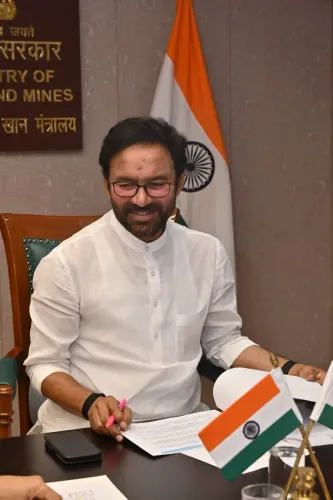
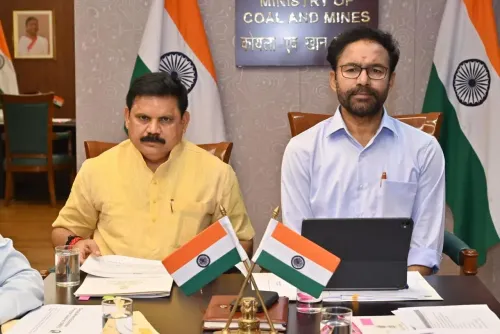
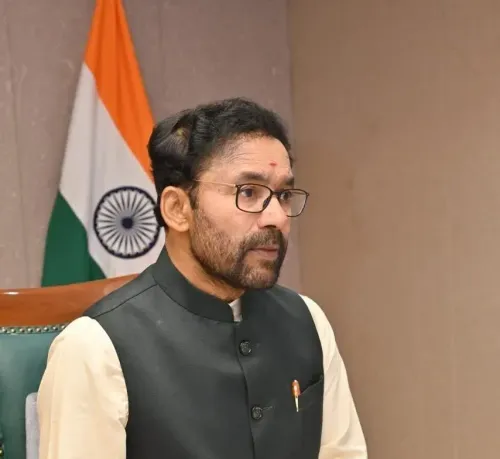
Kishan Reddy calls for coordinated roadmap on mining reforms
Synopsis
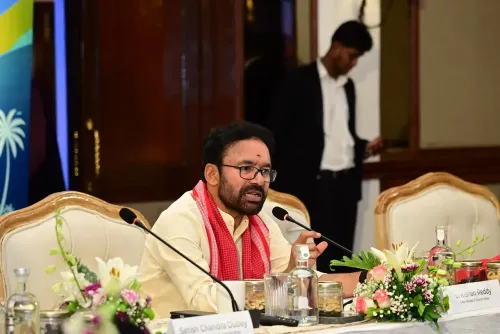
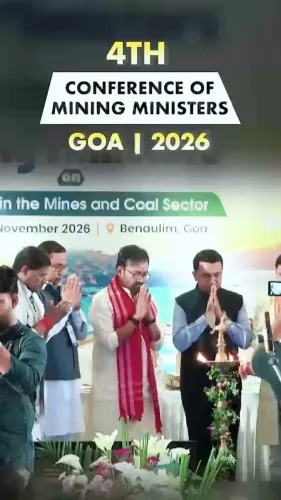
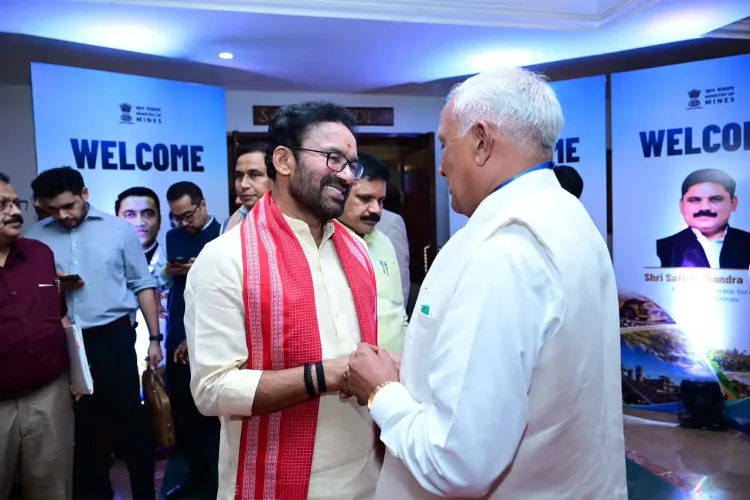
Union Coal and Mines Minister G. Kishan Reddy has concluded a ministerial conference on mining reforms, committing to a Centre-state coordinated roadmap to build a self-reliant mining ecosystem — a critical step given states hold most of India's mining leases.
Key Takeaways
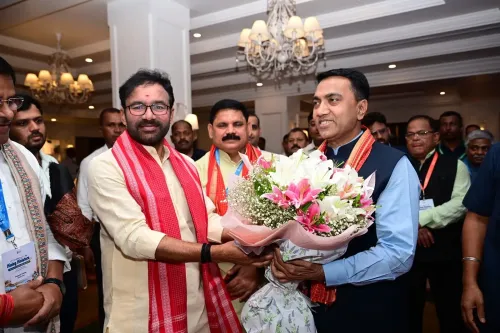
Kishan Reddy thanked ministers and participants at a mining-sector conference and called for a 'coordinated roadmap' for reforms.
The roadmap explicitly frames states and the Centre as joint partners, reflecting the federal reality that states control most mining leases.
Both Ministry of Coal and Ministry of Mines — both under Reddy's charge — are aligned behind the initiative.
The MMDR Amendment Act, 2021 and National Mineral Policy 2019 provide the existing legislative and policy foundation for Centre-state coordination.
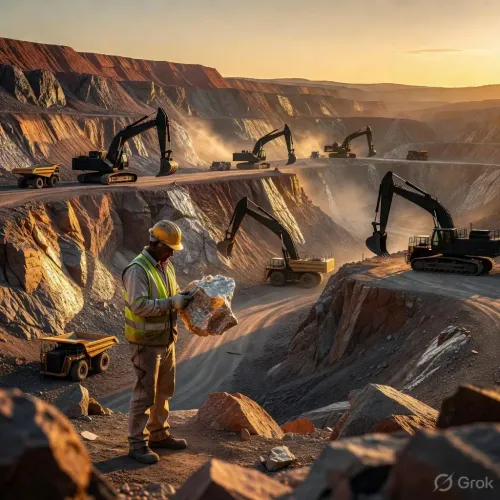
The broader strategic goal is raising domestic mineral output and reducing import dependence, especially for critical minerals vital to clean energy and defence sectors.
A ministerial conference on mining sector reform has concluded with Union Coal and Mines Minister G. Kishan Reddy signalling that the Centre is ready to move in lockstep with state governments toward a 'stronger, more self-reliant mining ecosystem' — a phrase that captures both the ambition and the federal complexity at the heart of India's mineral governance challenge.
What the conference set out to achieve
Reddy thanked the assembled ministers and participants for their 'valuable contributions,' noting that the insights and suggestions gathered would 'help shape a coordinated roadmap for mining sector reforms.' The language is deliberate: coordinated roadmap signals that the Centre is not planning to act unilaterally, but to co-author reform with the states that actually hold most of India's mining leases.
That federal dynamic is not incidental — it is the central tension in Indian mining governance. The Ministry of Coal and the Ministry of Mines, both under Reddy's charge, set policy and auction rules nationally, but the physical leases, environmental clearances, and on-the-ground enforcement sit with state governments. Without state buy-in, even the best-drafted central reform risks stalling at the district collector's desk.
The policy track record behind the pledge
The call for Centre-state coordination did not emerge in a vacuum. The Mines and Minerals (Development and Regulation) Amendment Act, 2021 expanded mineral auctions, eased lease transfers, and introduced composite licences — all designed to accelerate domestic production. The National Mineral Policy 2019 had already flagged sustainable mining and private participation as priorities, and explicitly named state-centre coordination as a prerequisite for unlocking India's resource base.
Successive governments have pursued the same overarching goal: raise domestic mineral output and cut import dependence, particularly for critical minerals — the lithium, cobalt, and rare earths that underpin everything from electric vehicles to defence electronics. India's growing clean-energy ambitions make that push more urgent by the year.
What a 'coordinated roadmap' could mean in practice
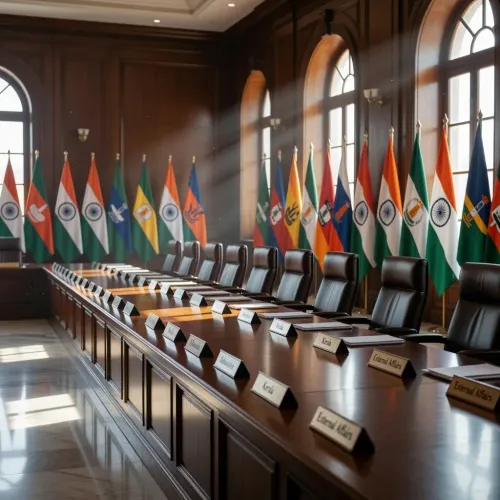
The ministerial conference format — bringing state-level ministers to the table alongside central officials — is itself a signal of method. The next tests will be concrete: follow-up state-centre working groups, draft rules implementing the agreed roadmap, and parliamentary updates on mineral auction outcomes. If the coordination holds, it could translate into faster clearances, more competitive auctions, and a genuinely integrated national mineral supply chain. If it fragments into competing state priorities, the roadmap stays a document.
Reddy's post, addressed from his personal handle and tagging both @CoalMinistry and @MinesMinIndia, underlines that both portfolios are pulling in the same direction — a small but pointed institutional message.
The map is drawn. The real journey begins when the states and the Centre start building the same road.
Point of View
The government is acknowledging a structural truth about Indian mining: the Centre writes the rules, but states hold the keys. This approach fits a broader BJP governance pattern of using ministerial conferences to build political consensus before pushing legislative or regulatory change. The critical variable is follow-through: past policies like the MMDR 2021 amendments created the architecture, but implementation gaps at the state level have often blunted impact. Reddy's dual charge of Coal and Mines gives him unusual leverage to push integrated reform, but converting a conference communiqué into enforceable coordination mechanisms will be the real test of this 'roadmap' rhetoric.
NationPress
6 Nov 2026
Frequently Asked Questions
What was the mining conference G. Kishan Reddy addressed about?
The conference brought together Union and state-level ministers to discuss mining sector reforms. Reddy said the insights shared would help shape a coordinated Centre-state roadmap for a self-reliant mining ecosystem.
Why is Centre-state coordination important for India's mining sector?
States control most mining leases and on-the-ground enforcement, while the Centre sets policy and auction frameworks. Without state cooperation, central reform efforts can stall in implementation.
What is the MMDR Amendment Act 2021 and how does it relate to these reforms?
The Mines and Minerals (Development and Regulation) Amendment Act, 2021 expanded mineral auctions, eased lease transfers, and introduced composite licences to speed up domestic production — forming part of the legislative backbone for the current reform push.
What are critical minerals and why does India want to boost domestic mining?
Critical minerals such as lithium, cobalt, and rare earths are essential for electric vehicles, clean energy, and defence electronics. India is seeking to raise domestic output to cut import dependence as its clean-energy ambitions grow.
What portfolios does G. Kishan Reddy hold?
G. Kishan Reddy is India's Union Minister of Coal and Mines, holding both portfolios simultaneously. He also serves as the BJP's Telangana state president.