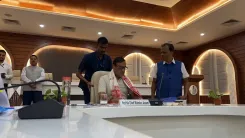
Kishan Reddy Hails India–Indonesia Critical Minerals Pact
Synopsis
Union Coal and Mines Minister G. Kishan Reddy has welcomed the India–Indonesia Comprehensive Strategic Partnership, calling it a milestone for building resilient critical minerals supply chains, supporting clean energy transition, and advancing Aatmanirbhar Bharat and Viksit Bharat goals.
Key Takeaways
Union Coal and Mines Minister G.
Kishan Reddy on 7 July 2026 hailed the India–Indonesia Comprehensive Strategic Partnership as a milestone for critical minerals cooperation.
Enhanced cooperation is expected to strengthen resource security and support India's clean energy transition and advanced manufacturing sectors.
Cooperation spans critical minerals and rare earths , mining , defence , trade , maritime , energy , space , healthcare , and people-to-people exchanges .
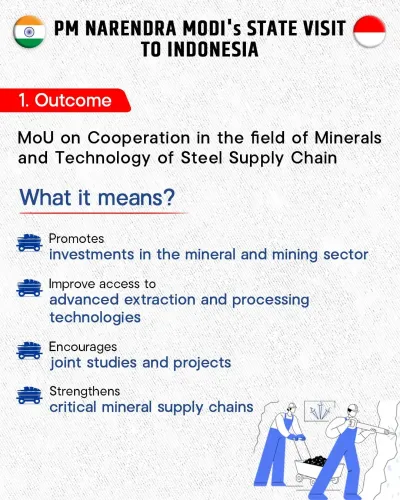
Indonesia is the world's leading nickel producer, making it a strategically vital partner for India's battery-metal and EV supply chains.
The partnership aligns with the Aatmanirbhar Bharat initiative launched in May 2020 to reduce import dependence in strategic sectors.
Progress on mineral-specific MoUs and the bilateral Joint Commission Meeting will be key milestones to watch.
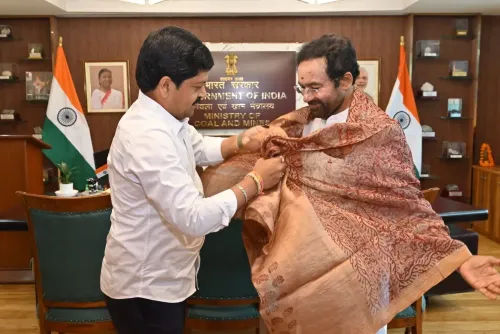
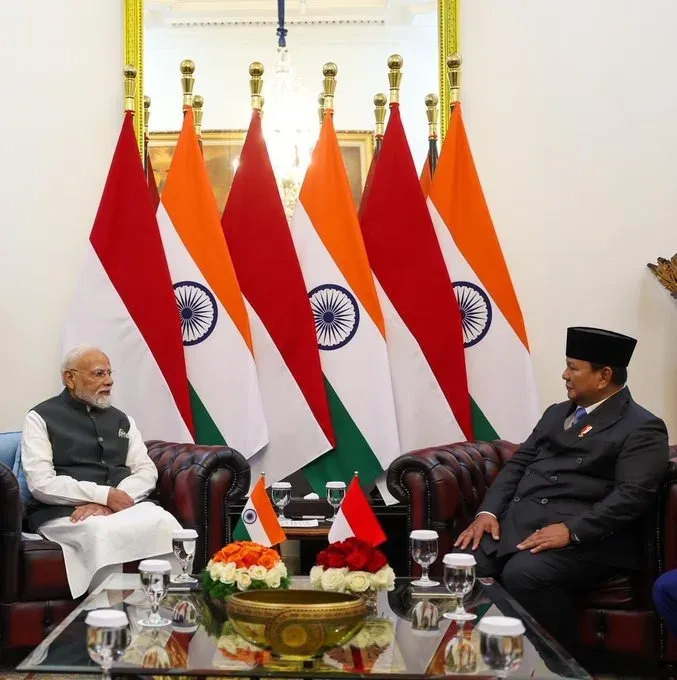
Union Coal and Mines Minister G. Kishan Reddy on Tuesday, 7 July 2026 welcomed the deepening of the India–Indonesia Comprehensive Strategic Partnership, highlighting its significance for building a resilient critical minerals supply chain under the leadership of Prime Minister Narendra Modi.
Context
In his post, the Minister stated that 'enhanced cooperation in critical minerals will strengthen resource security, support the clean energy transition, and accelerate the growth of strategic and advanced manufacturing sectors in both countries.' He listed a broad sweep of cooperation domains — from critical minerals and rare earths and mining to defence and security, trade and investment, maritime cooperation, energy, healthcare and pharmaceuticals, space, technology, culture and tourism, and people-to-people exchanges.
Kishan Reddy framed the partnership as reinforcing India's twin goals of an Aatmanirbhar Bharat (self-reliant India) and a Viksit Bharat (developed India), signalling that the bilateral engagement carries domestic industrial-policy weight alongside its foreign-policy dimension.
Policy Backdrop
India and Indonesia first elevated their bilateral relationship to a Comprehensive Strategic Partnership in 2018, creating a structured framework for high-level cooperation across political, economic, and security domains. Indonesia is the world's leading producer of nickel — a mineral central to electric-vehicle batteries and clean-energy infrastructure — making it a natural anchor for India's supply-chain diversification strategy.
The Aatmanirbhar Bharat initiative, announced in May 2020, set the policy direction for reducing import dependence in strategic sectors, including mining and critical-mineral processing. Securing upstream access through bilateral partnerships with resource-rich nations is a core pillar of that approach. The India–Indonesia engagement also fits within India's broader Act East Policy and its Indo-Pacific framework, which links resource security with maritime and defence cooperation.
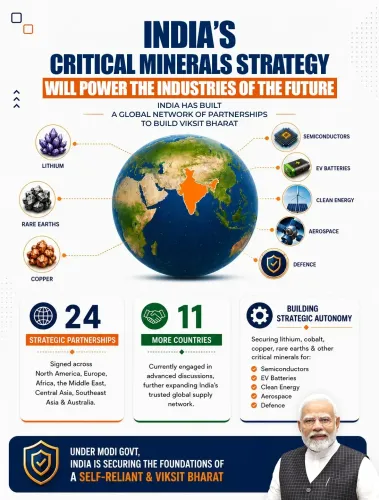
India has been actively expanding its critical-minerals partnerships globally, recognising that concentrated supply chains — particularly for rare earths and battery metals — pose long-term risks to its manufacturing and energy-transition ambitions. Indonesia's reserves of nickel, bauxite, and other strategic minerals position it as a high-priority partner in this diversification effort.
Stakeholders and Impact
The sectors most directly affected by deeper India–Indonesia mineral cooperation include the domestic mining industry, clean energy and electric-vehicle manufacturers, and defence production firms dependent on specialty metals. Joint exploration, processing agreements, and downstream industrial partnerships could reduce India's reliance on third-country intermediaries for critical inputs.
For Indonesia, deeper engagement with India offers a large and growing market for processed minerals and an opportunity to move up the value chain in line with its own industrial-policy goals. The breadth of cooperation domains — spanning pharmaceuticals, space, and tourism alongside minerals — suggests both governments see this as a comprehensive economic relationship rather than a narrow resource deal.
What's Next
Observers will watch for the conclusion of mineral-specific memoranda of understanding and outcomes from the bilateral Joint Commission Meeting mechanism, which serves as the primary platform for translating partnership commitments into actionable programmes. Progress on joint exploration ventures and processing investments will be the clearest indicators of whether the stated ambitions translate into supply-chain outcomes.
As India accelerates its Viksit Bharat agenda toward 2047, securing long-term access to critical minerals through partnerships like the one with Indonesia will remain a structural priority — one that sits at the intersection of energy policy, industrial strategy, and strategic diplomacy.
Point of View
The Minister is signalling that foreign resource partnerships are not at odds with self-reliance — they are instruments of it. The breadth of sectors listed suggests New Delhi is treating Indonesia as a comprehensive strategic node in its Indo-Pacific architecture, not merely a commodity source. The real test will come when diplomatic statements are followed by bankable investment agreements and joint-venture frameworks in nickel and rare-earth processing.
NationPress
6 Oct 2026
Frequently Asked Questions
What is the India–Indonesia Comprehensive Strategic Partnership?
The India–Indonesia Comprehensive Strategic Partnership is a bilateral framework that was established in 2018 to guide structured cooperation across political, economic, security, and people-to-people domains, including critical minerals, defence, maritime cooperation, and trade.
Why is Indonesia important for India's critical minerals strategy?
Indonesia is the world's leading producer of nickel, a key input for electric-vehicle batteries and clean-energy technologies, making it a strategically vital partner as India works to diversify its critical minerals supply chain away from concentrated sources.
What is Aatmanirbhar Bharat and how does it relate to critical minerals?
Aatmanirbhar Bharat, launched in May 2020, is India's self-reliance initiative aimed at reducing import dependence in strategic sectors. Securing upstream access to critical minerals through bilateral partnerships is a core component of this policy.
What did G. Kishan Reddy say about the India–Indonesia partnership?
G. Kishan Reddy stated that enhanced cooperation in critical minerals would strengthen resource security, support the clean energy transition, and accelerate growth in strategic and advanced manufacturing, while also reinforcing the goals of Aatmanirbhar Bharat and Viksit Bharat.
What sectors are covered under the India–Indonesia Comprehensive Strategic Partnership?
The partnership covers critical minerals and rare earths, mining, defence and security, trade and investment, maritime cooperation, energy, healthcare and pharmaceuticals, space, technology, culture and tourism, and people-to-people exchanges.