CM Yogi: Sultanpur gets its own Medical and Nursing College
Synopsis
Uttar Pradesh Chief Minister Yogi Adityanath announced that Sultanpur district now has its own medical and nursing college, enabling local girls to pursue nursing education at home and strengthening the state's push to expand public health education in underserved eastern districts.
Key Takeaways
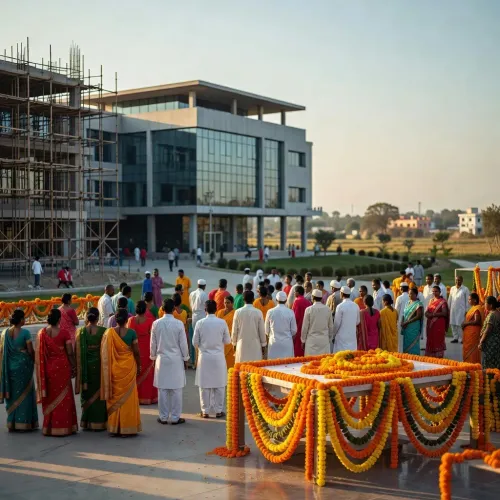
Sultanpur district in eastern Uttar Pradesh now has a dedicated government medical college and nursing college .
Chief Minister Yogi Adityanath specifically highlighted young women ('daughters of the district') as key beneficiaries of nursing education access.
The development is part of a post-2017 state policy to establish medical colleges in districts that previously had none.
The colleges are expected to reduce the need for students to travel to larger cities such as Lucknow for professional health education.
Next steps include admissions cycles , faculty recruitment, and hospital attachment arrangements for clinical training.
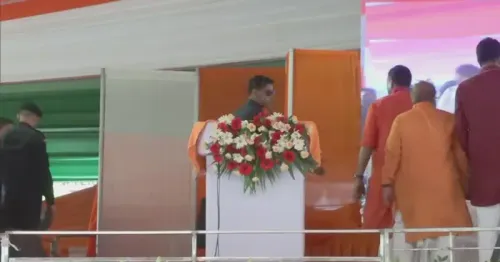
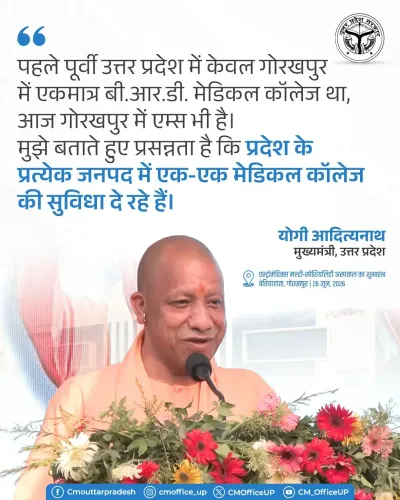
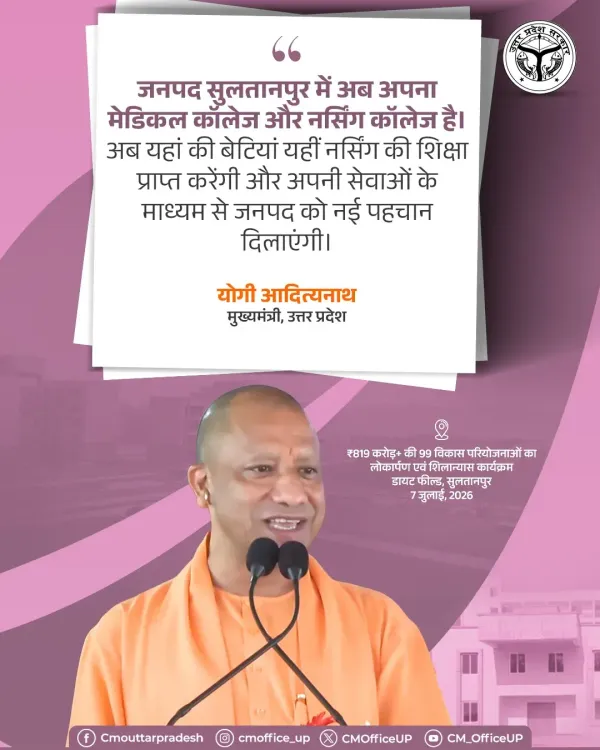
The Chief Minister's Office of Uttar Pradesh announced on Tuesday, 7 July 2026 that Sultanpur district now has its own medical college and nursing college, quoting Chief Minister Yogi Adityanath directly on the development that marks a significant shift in healthcare education access for the eastern district.
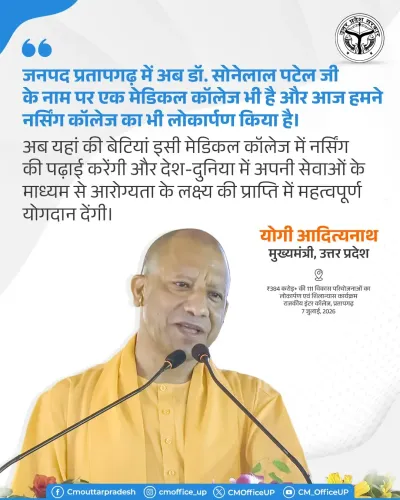
Chief Minister Adityanath stated, 'जनपद सुलतानपुर में अब अपना मेडिकल कॉलेज और नर्सिंग कॉलेज है' — 'Sultanpur district now has its own medical college and nursing college.' He added that the daughters of the district will now pursue nursing education right here and, through their service, give the district a new identity.
Context
Sultanpur, a district in eastern Uttar Pradesh, had until now lacked dedicated government medical and nursing colleges, forcing aspiring healthcare professionals to travel to larger cities such as Lucknow or Allahabad for professional education. The establishment of these institutions addresses a long-standing gap in the region's educational and healthcare infrastructure. The Chief Minister's statement specifically highlighted young women — 'बेटियां' (daughters) — as the primary beneficiaries of this expansion.
Policy Backdrop
Since 2017, the Uttar Pradesh government has pursued an aggressive policy of establishing government medical colleges in districts that previously had none, significantly expanding MBBS and nursing seat capacity across the state. The thrust has been particularly directed at historically underserved eastern districts, which have traditionally depended on a handful of large urban centres for specialist and professional health education. The Sultanpur institutions are the latest additions to this expanding network of public health education infrastructure.
The broader strategy aims to build a stronger public health workforce pipeline within the state, reducing the outflow of students to other states and ensuring that trained professionals are more likely to serve in the regions where they were educated. Nursing colleges, in particular, have been positioned as a vehicle for women's economic empowerment in rural and semi-urban districts.
Stakeholders and Impact
The most direct beneficiaries are local students — especially young women from Sultanpur and surrounding districts — who will now have access to nursing education without relocating. Rural families who could not afford to send daughters to distant cities for professional courses stand to gain considerably from proximity-based access. District-level public health facilities are also expected to benefit over time as locally trained nursing graduates enter the workforce.
The development carries implications for the district's economy as well: nursing colleges generate ancillary employment and can anchor broader investments in healthcare services. For the state government, each new district-level college strengthens its record on health and education metrics ahead of future electoral cycles.
What's Next
Attention will now turn to the commencement of formal admissions cycles for both the medical college and the nursing college, alongside state announcements on faculty recruitment and hospital attachment arrangements that are essential for clinical training. Regulatory approvals from bodies governing medical and nursing education will be a prerequisite for full operationalisation. The pace at which seats are filled and faculty are deployed will determine how quickly the district's residents see tangible benefits from the new institutions.
Point of View
The messaging aligns healthcare expansion with the state's parallel emphasis on women's empowerment, a framing that has become a consistent feature of UP government communications. The focus on nursing colleges specifically reflects an understanding that MBBS expansion alone does not build a functional public health workforce; paramedical and nursing capacity is equally critical. Whether the institutions move swiftly through regulatory and staffing milestones will be the real test of whether the announcement translates into durable impact.
NationPress
7 Jul 2026
Frequently Asked Questions
Does Sultanpur now have a government medical college?
Yes, the Chief Minister's Office of Uttar Pradesh announced on 7 July 2026 that Sultanpur district now has its own medical college and nursing college, as stated by Chief Minister Yogi Adityanath.
Which nursing college has opened in Sultanpur UP?
A new government nursing college has been established in Sultanpur district, enabling local students — particularly young women — to pursue nursing education without leaving the district.
How many medical colleges has UP opened since 2017?
The Uttar Pradesh government has operationalised multiple new government medical colleges across districts since 2017 as part of a policy to expand MBBS and nursing seat capacity, though the precise current total has not been specified in this announcement.
What is CM Yogi Adityanath's policy on medical colleges in UP?
Since 2017, Chief Minister Yogi Adityanath's government has pursued a policy of establishing government medical colleges in districts that previously lacked them, with a focus on historically underserved eastern Uttar Pradesh districts.
How will the Sultanpur nursing college benefit girls in the district?
Local girls will now be able to pursue nursing education within their own district, removing the need to relocate to larger cities, reducing costs for families, and increasing the likelihood that trained nurses serve the local healthcare system.