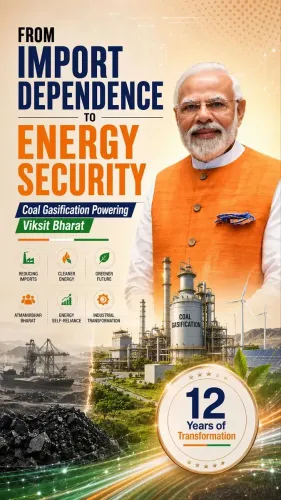
Kishan Reddy Pitches Coal Gasification as India's Energy Future
Synopsis
Union Coal Minister G. Kishan Reddy on 28 May 2026 championed India's coal gasification initiative as a new industrial revolution, tracing the sector's 252-year journey from Raniganj and anchoring the push within the Viksit Bharat 2047 national vision and post-2014 reform momentum.
Key Takeaways
Kishan Reddy described coal gasification as a 'transformative step' for India's energy landscape on 28 May 2026 .
India's coal mining history stretches back 252 years to the first mine at Raniganj, West Bengal in 1774 .
The Coal Mines (Special Provisions) Act, 2015 and the 2020 commercial mining reform are the legislative pillars underpinning the current push.
Coal gasification converts coal into syngas for use in fertilisers, chemicals, and power generation , reducing import dependence.
The initiative is framed as central to the government's Viksit Bharat 2047 development vision.
Key watchpoints include viability-gap funding for pilot projects and potential incentives in the next Union Budget .
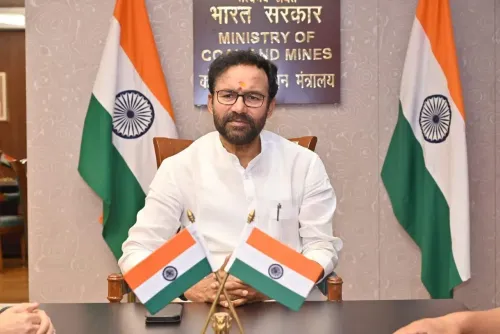
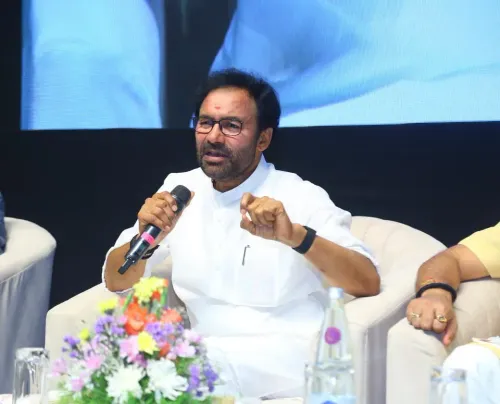
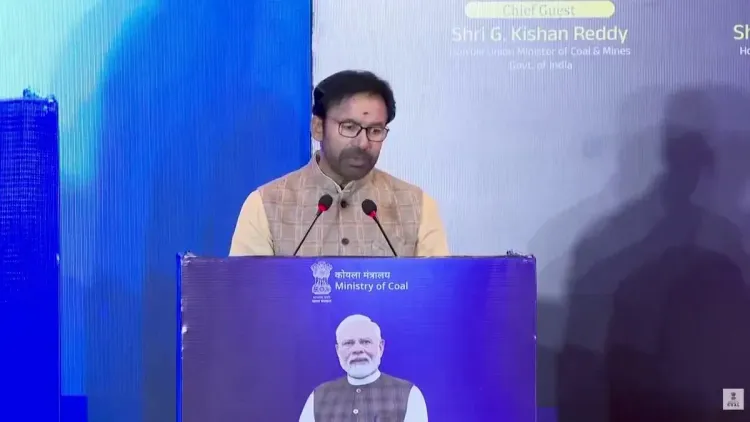
Union Coal and Mines Minister G. Kishan Reddy on Thursday, 28 May 2026 hailed the Government of India's coal gasification initiative as a 'transformative step' for the country's energy landscape, tracing the sector's journey from its origins at Raniganj, West Bengal in 1774 to what he described as a new industrial revolution.
Context
Posting on X, Kishan Reddy noted that coal mining in India began nearly 252 years ago, with the first mine sunk at Raniganj — a site that remains central to the country's coal geography. He framed the present gasification push as a continuation of that long arc, writing that 'through coal gasification, India is witnessing the beginning of a new revolution in the coal sector.'
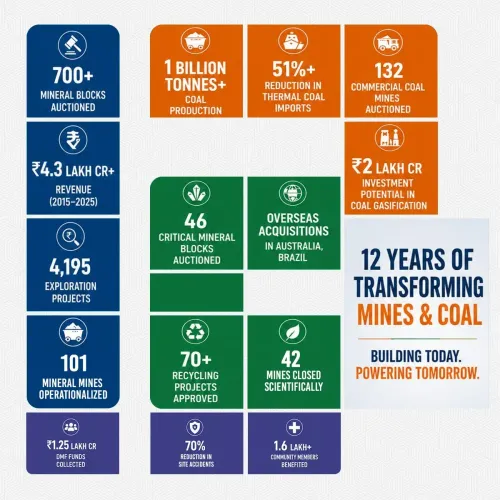
The minister drew a pointed contrast between the pre-2014 era — when, he said, 'news headlines around coal were often associated with uncertainty and negativity' — and the current period of 'confidence, reforms, innovation, and a renewed vision' under Prime Minister Narendra Modi.
Policy Backdrop
The reference to pre-2014 uncertainty alludes to a period that culminated in the Supreme Court's cancellation of coal-block allocations, after which Parliament passed the Coal Mines (Special Provisions) Act, 2015 to introduce e-auctions and transparent allocation of blocks. A further milestone came in 2020 when the Cabinet approved commercial coal mining by private players, ending the long-standing monopoly of state entities and broadening domestic production capacity.
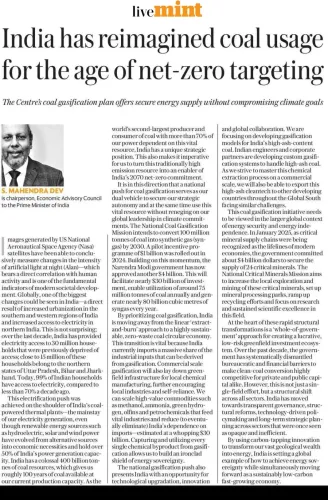
Coal gasification — the conversion of coal into syngas usable for chemicals, fertilisers, and power generation — sits atop this reform stack. The government has positioned it as a route to extend the utility of India's large coal reserves while reducing dependence on imported feedstock for industry, in line with the Atmanirbhar Bharat framework. The 2021 Mines and Minerals (Development and Regulation) Amendment Act further widened the reform agenda across the broader mining sector.
Stakeholders and Impact
The industries with the most direct stake in coal gasification are fertiliser producers, who could substitute imported natural gas with domestically gasified coal, steel manufacturers, and power utilities. Coal mining companies — both public-sector undertakings and the private players who entered after the 2020 commercial-mining reform — would also be affected by any shift in demand patterns or pricing structures that gasification projects introduce.
Kishan Reddy explicitly linked the initiative to the government's Viksit Bharat 2047 vision, stating that 'the coal sector carries a major responsibility' in achieving that goal and that gasification is 'set to play a defining role.' The 2021 mining-law amendments and successive budget allocations have progressively built the regulatory scaffolding for such projects.
What's Next
Attention will now focus on the rollout timelines and viability-gap funding for the pilot gasification projects already approved by the government, as well as any fresh production targets or fiscal incentives that may emerge in the next Union Budget or in a review of the National Coal Gasification Mission. Whether the minister's remarks signal an imminent policy announcement — or set the stage for one — will become clearer in the weeks ahead.
With India balancing its near-term energy security needs against long-term decarbonisation commitments, the pace at which coal gasification scales from pilot to commercial operations will be a key indicator of how the sector navigates the Viksit Bharat 2047 roadmap.
Point of View
The minister frames gasification not as a departure from coal but as its logical evolution — a framing designed to reassure coal-dependent constituencies while signalling modernisation to urban and industrial audiences. The explicit invocation of Viksit Bharat 2047 ties a sector-specific initiative to the government's overarching national-development brand, elevating its political salience ahead of potential budget-cycle decisions. Whether the rhetoric translates into accelerated project timelines and concrete fiscal commitments will determine how durable this narrative proves to be.
NationPress
11 Oct 2026
Frequently Asked Questions
What is coal gasification and why is India pursuing it?
Coal gasification converts solid coal into syngas — a mixture of hydrogen and carbon monoxide — that can be used to produce fertilisers, chemicals, and electricity. India is pursuing it to extract more value from its large coal reserves and reduce dependence on imported natural gas and feedstock.
What did Kishan Reddy say about coal gasification?
On 28 May 2026 , Union Coal Minister G. Kishan Reddy called the initiative a 'transformative step' and described it as the beginning of a 'new revolution' in the coal sector, linking it to the Viksit Bharat 2047 vision.
Where did coal mining in India begin?
Commercial coal mining in India began at Raniganj in West Bengal around 1774 , approximately 252 years ago , making it the site of the country's first coal mine.
What coal sector reforms has the Modi government introduced since 2014?
Key reforms include the Coal Mines (Special Provisions) Act, 2015 that introduced e-auctions for block allocation, the 2020 Cabinet approval of commercial coal mining by private players, and the 2021 Mines and Minerals (Development and Regulation) Amendment Act that broadened the mining-reform agenda.
What is the National Coal Gasification Mission?
The National Coal Gasification Mission is the Government of India's framework to scale up coal-to-syngas conversion projects, with pilot projects already approved and viability-gap funding and production targets expected to be refined in forthcoming budget cycles.