Kishan Reddy Highlights ₹46,000 Cr Coal Gasification Scheme
Synopsis
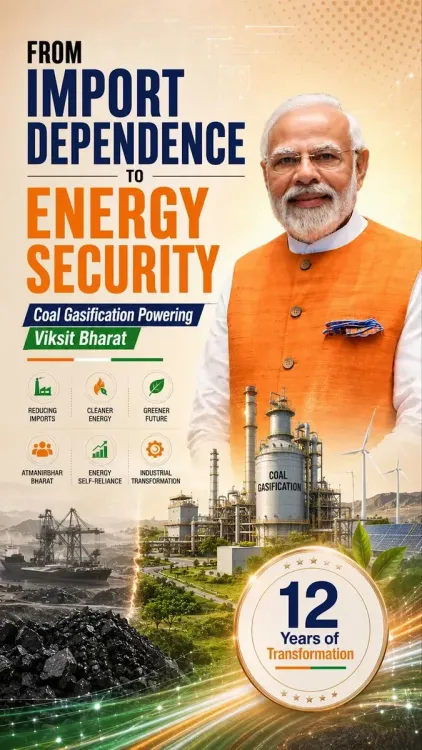
Union Coal and Mines Minister G. Kishan Reddy has spotlighted a ₹46,000 crore coal gasification incentive scheme, citing projected investments of ₹2 lakh crore and 1 lakh jobs, as the Modi government marks 12 years of leveraging India's fifth-largest coal reserves for energy self-reliance.
Key Takeaways
Union Coal and Mines Minister G.
Kishan Reddy posted on 10 June 2026 highlighting 12 years of coal sector policy under the Modi government .
India holds the world's fifth-largest coal reserves , a resource base the government has increasingly sought to monetise domestically.
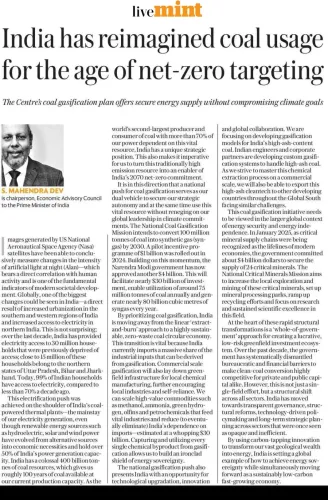
The ₹46,000 crore coal gasification incentive scheme is expected to attract investments of ₹2 lakh crore .
The scheme is projected to generate 1 lakh direct and indirect jobs while reducing India's energy import dependence.
The announcement aligns with the Atmanirbhar Bharat framework launched in 2020 and a government target of 100 MT gasification capacity by 2030 .
Key beneficiary sectors include coal mining firms, power utilities and manufacturing industries dependent on industrial gas feedstock.
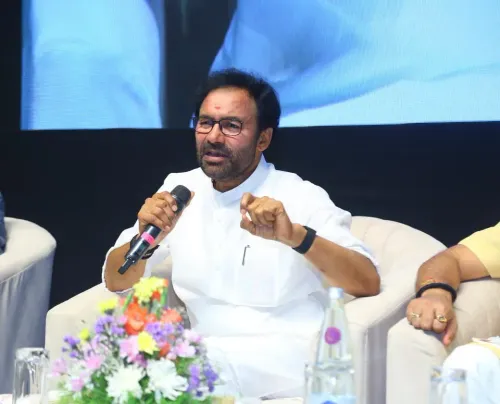
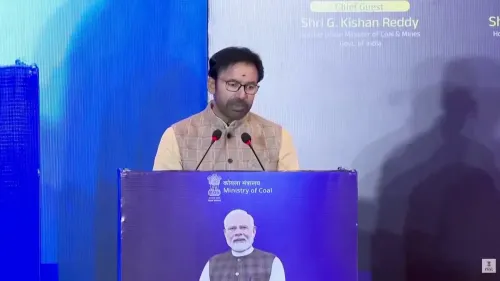
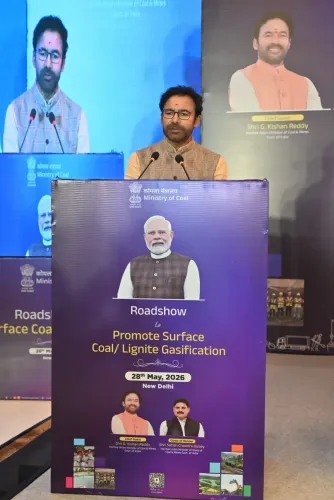
Union Coal and Mines Minister G. Kishan Reddy on Wednesday, 10 June 2026, highlighted India's coal sector transformation over the past 12 years under the Narendra Modi government, pointing to a ₹46,000 crore coal gasification incentive scheme as a flagship step toward energy self-reliance and industrial growth.
Context
In his post, Kishan Reddy stated that India — home to the world's fifth-largest coal reserves — has launched the gasification scheme with the expectation of attracting investments worth ₹2 lakh crore and generating 1 lakh direct and indirect jobs. He described the move as 'a transformative step towards an Atmanirbhar Bharat and a Viksit Bharat,' framing domestic coal utilisation as central to reducing import dependence.
The minister tagged both the Ministry of Coal and the Ministry of Mines in the post, signalling a coordinated messaging effort across the two portfolios he holds.
Policy Backdrop
The coal gasification push sits within a broader decade-long policy arc. The Modi government opened commercial coal mining to private sector participation through auctions beginning in 2020, the same year the Atmanirbhar Bharat self-reliance framework was launched. Policy documents from that period set a target of reaching 100 million tonnes (MT) of coal gasification capacity by 2030.
Coal gasification converts coal into synthetic gas, which can substitute for imported natural gas and petrochemicals, directly addressing India's dependence on energy imports. Successive Union Budgets have linked coal sector modernisation with employment generation and industrial feedstock supply, making the ₹46,000 crore incentive scheme a continuation of that legislative and fiscal intent.
The Ministry of Coal serves as the nodal body overseeing production targets, gasification pilots and the investment frameworks that underpin these announcements.
Stakeholders and Impact
The scheme's projected beneficiaries span coal mining firms, power utilities and manufacturing industries that rely on industrial gas as a feedstock. If the ₹2 lakh crore investment projection materialises, it would represent one of the larger capital deployments in the domestic energy sector in recent years.
The 1 lakh jobs figure — covering both direct and indirect employment — is significant in the context of coal-belt regions such as Jharkhand, Chhattisgarh, Odisha and Telangana, where coal-dependent communities have long sought economic diversification alongside continued mining activity.
Reduced import dependence in the energy sector also carries macroeconomic implications, potentially easing pressure on India's current account deficit, which has historically been sensitive to global energy price swings.
What's Next
Attention will now turn to the pace of project approvals and actual fund disbursement under the gasification scheme, as well as parliamentary scrutiny of implementation timelines. Progress toward the 100 MT gasification capacity target by 2030 will serve as a key benchmark for evaluating whether the scheme's stated projections translate into on-ground outcomes. Any updates from the Ministry of Coal on approved projects or private-sector tie-ups will be closely watched by industry and policy observers alike.
Point of View
Timed to frame 12 years of Modi-era governance through the lens of energy sovereignty — a politically resonant theme as India navigates global commodity volatility. The ₹46,000 crore gasification scheme is positioned not merely as an industrial policy but as proof of the Atmanirbhar Bharat doctrine delivering tangible outcomes in a legacy sector. For Reddy personally, amplifying both the Coal and Mines ministries in a single post underscores his consolidation of two high-visibility portfolios ahead of any political or electoral cycle. The emphasis on job creation in coal-belt states also signals an awareness that the energy transition narrative must be paired with livelihood assurances to retain political capital in mining-dependent constituencies.
NationPress
13 Sept 2026
Frequently Asked Questions
What is India's coal gasification incentive scheme?
It is a central government scheme offering financial incentives worth ₹46,000 crore to promote coal gasification projects in India, with the aim of attracting ₹2 lakh crore in private investment and generating 1 lakh jobs while reducing energy import dependence.
What rank does India hold in global coal reserves?
India holds the fifth-largest coal reserves in the world, a resource base the government has been actively seeking to utilise for domestic energy security and industrial feedstock supply.
What is Atmanirbhar Bharat and how does it relate to coal?
Atmanirbhar Bharat is a self-reliance policy framework launched by the Modi government in 2020 . In the coal sector, it translates into maximising domestic production, opening commercial mining to private players, and investing in technologies like gasification to reduce dependence on imported energy.
Who is G. Kishan Reddy?
G. Kishan Reddy is the Union Minister of Coal and Mines in the Modi government and serves as the BJP's Telangana state president . He has been a senior figure in the party's southern outreach strategy.
What is India's coal gasification capacity target?
The government has set a target of achieving 100 million tonnes (MT) of coal gasification capacity by 2030 , as part of its broader energy security and industrial modernisation agenda.