CM Soren raises Jharkhand's aspirations at NITI Aayog meet
Synopsis
Jharkhand CM Hemant Soren attended the 11th NITI Aayog Governing Council meeting in New Delhi on 11 June 2026, presenting the state's case for linking mineral wealth to human capital and positioning Jharkhand as a Manufacturing Hub, Green Economy, and Knowledge Economy under Vision 2050.
Key Takeaways
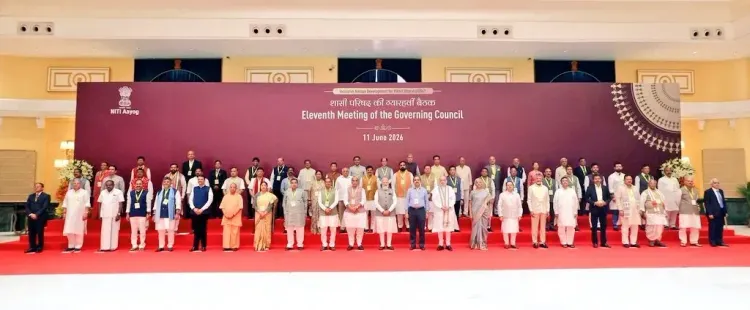
Jharkhand CM Hemant Soren attended the 11th NITI Aayog Governing Council meeting in New Delhi on 11 June 2026 , chaired by PM Narendra Modi .
The meeting's theme was 'Inclusive Human Development for Vikasit Bharat @2047' .
Soren stated he represented the aspirations of over 4 crore Jharkhand residents at the meeting.
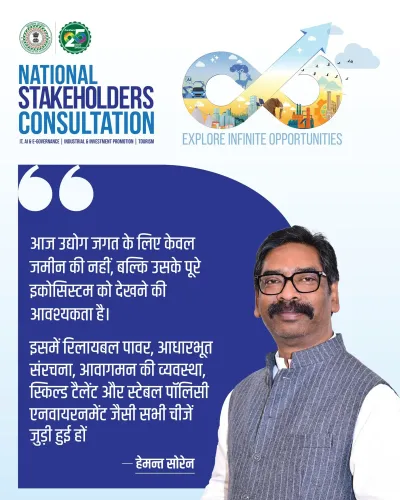
He argued that mineral wealth must be linked to education, health, and skill development for development to be meaningful.
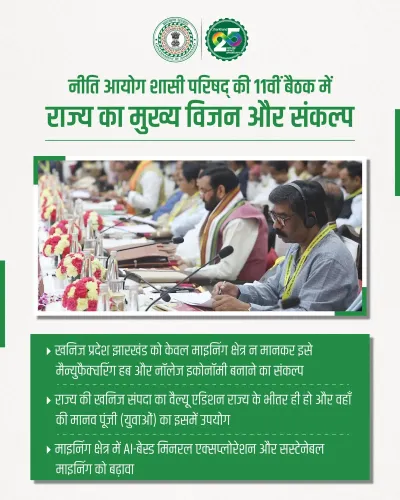
Jharkhand's goal is to emerge as a Manufacturing Hub, Green Economy, and Knowledge Economy aligned with both Vision 2050 and Viksit Bharat @2047.
The intervention reflects a broader pattern of resource-rich states pushing for human capital gains alongside extraction-based growth at national forums.
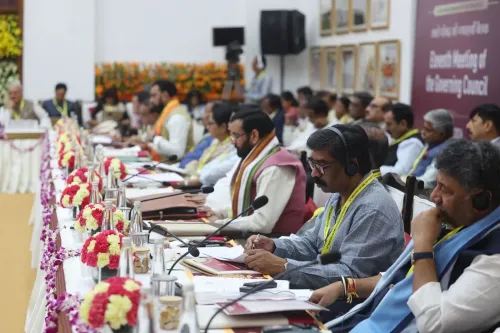
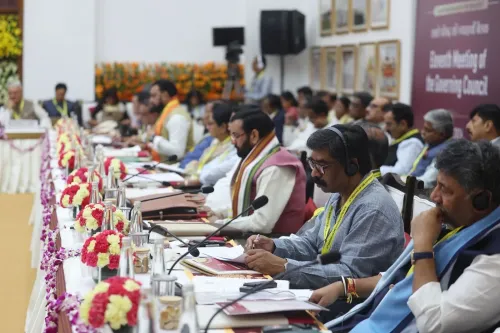
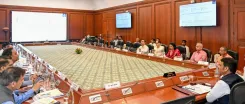
Jharkhand Chief Minister Hemant Soren on Thursday, 11 June 2026, represented the aspirations of the state's over 4 crore residents at the 11th NITI Aayog Governing Council meeting held in New Delhi, chaired by Prime Minister Narendra Modi. The meeting was themed 'Inclusive Human Development for Vikasit Bharat @2047', bringing together chief ministers and senior central government officials to align national and state development priorities.
Context
Soren took to X to share his experience at the high-level conclave, writing in Hindi: 'Aaj Nayi Dilli mein... NITI Aayog ki 11vi Governing Council baithak mein Jharkhand ki 4 crore se adhik janta ki akankshaaon ko rakhne ka avsar mila' — ('Today in New Delhi, I got the opportunity to place the aspirations of more than 4 crore people of Jharkhand before the 11th NITI Aayog Governing Council meeting'). He also stressed that Jharkhand has long energised India's industrial progress through its mineral wealth, labour force, and natural resources.
The Chief Minister, who also serves as executive president of the Jharkhand Mukti Morcha (JMM), underlined that development would remain incomplete unless mineral wealth is linked to investments in human capital, education, health, and skill development.
Policy Backdrop
NITI Aayog was established in January 2015, replacing the erstwhile Planning Commission, with an explicit mandate to promote cooperative federalism and bring states to the centre of national policymaking. Its Governing Council — which includes all chief ministers — meets periodically to synchronise state and central development agendas.
The Viksit Bharat @2047 vision, articulated prominently in 2023–24 budget and policy documents, targets transforming India into a fully developed economy by the centenary of independence, with inclusive human development as a core pillar alongside economic growth metrics. States such as Jharkhand, historically dependent on resource extraction, have consistently used these platforms to argue that mineral revenues must translate into measurable gains in human development indices.
Stakeholders and Impact
Jharkhand is among India's most mineral-rich states, supplying significant volumes of coal, iron ore, and other critical resources to national industry. Yet the state has faced persistent gaps in education, healthcare, and employment outcomes relative to the national average — a tension that Soren explicitly named at the meeting.
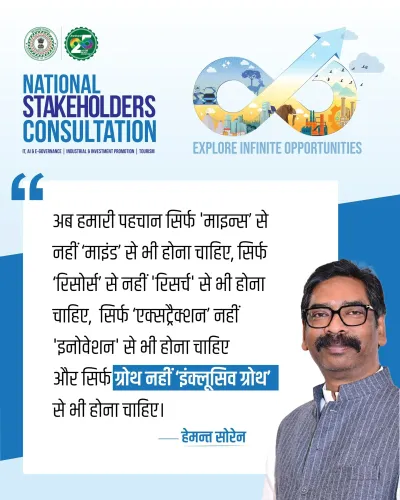
The Chief Minister outlined an ambition for Jharkhand's Vision 2050 to dovetail with the national Viksit Bharat @2047 framework, positioning the state as a Manufacturing Hub, Green Economy, and Knowledge Economy. This framing signals an intent to diversify beyond extraction-led growth toward sectors that can generate broader, more durable prosperity for the state's residents, particularly its youth and industrial workforce.
What's Next
Observers will watch for follow-up action in Jharkhand's state budget allocations and policy announcements that operationalise the Vision 2050 commitments on education, health, and skills articulated at the Governing Council. The outcomes of the 11th Governing Council meeting — including any centre-state agreements on human development targets — will be a key indicator of whether the aspirations presented in New Delhi translate into binding policy commitments.
For a state that has long powered India's industrial engine, the shift in political messaging toward green economy and knowledge sectors could shape Jharkhand's negotiating posture in future fiscal federalism discussions, including demands around mineral royalties and central transfers.
Point of View
He is staking a claim to be seen as a proactive development partner rather than a passive resource provider. The emphasis on green economy and knowledge sectors also signals a political repositioning ahead of future fiscal federalism negotiations, particularly around mineral royalties. Whether this translates into concrete central commitments or remains aspirational will define the real significance of this intervention.
NationPress
26 Oct 2026
Frequently Asked Questions
What was discussed at the 11th NITI Aayog Governing Council meeting?
The 11th NITI Aayog Governing Council meeting , held in New Delhi on 11 June 2026 and chaired by PM Narendra Modi , was themed 'Inclusive Human Development for Vikasit Bharat @2047', focusing on aligning state and national development priorities around human capital, education, and inclusive growth.
What did Hemant Soren say at the NITI Aayog meeting?
CM Hemant Soren said he represented the aspirations of over 4 crore Jharkhand residents and argued that the state's mineral wealth must be linked to investments in human capital, education, health, and skill development for development to be complete.
What is Jharkhand's Vision 2050?
Jharkhand's Vision 2050 is the state government's long-term development roadmap, which CM Soren has outlined as positioning Jharkhand as a Manufacturing Hub, Green Economy, and Knowledge Economy , aligned with the national Viksit Bharat @2047 framework.
What is the NITI Aayog Governing Council?
The NITI Aayog Governing Council is the apex body of India's national policy think tank, comprising all chief ministers and chaired by the Prime Minister. It was established when NITI Aayog replaced the Planning Commission in January 2015 to promote cooperative federalism.
Why does Jharkhand emphasise human development at national policy meetings?
Jharkhand is a mineral-rich state that has historically powered national industrial growth through coal and iron ore, yet faces persistent gaps in education and healthcare. CM Soren and the state government have consistently argued that mineral revenues must translate into tangible human development gains for the state's population.