Goyal, Maldives Minister discuss BIT, FTA at 60-year mark
Synopsis
Union Commerce Minister Piyush Goyal met Maldives' Economic Development Minister Mohamed Saeed on 8 July 2026, committing to expedite a Bilateral Investment Treaty and Free Trade Agreement as India and the Maldives celebrate 60 years of diplomatic ties, with cooperation expanding into tourism, digital payments, startups, and MSMEs.
Key Takeaways
Piyush Goyal held bilateral talks with Maldives Minister Mohamed Saeed on 8 July 2026 .
Both sides reaffirmed commitment to expediting the signing of a Bilateral Investment Treaty (BIT) .
A proposed Free Trade Agreement (FTA) between India and the Maldives was also discussed.
Cooperation areas include tourism, startups, digital payments, MSMEs, and trade .
The talks coincide with 60 years of diplomatic relations between the two countries, established in 1965 .
Formalising the BIT and FTA would represent the deepest institutionalisation of India-Maldives economic ties to date.
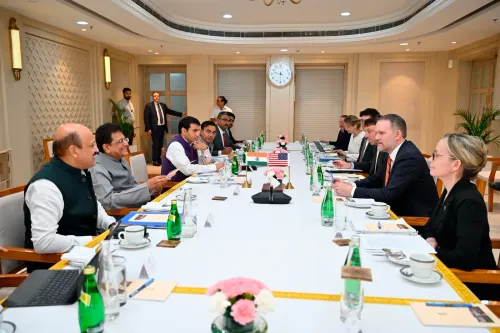
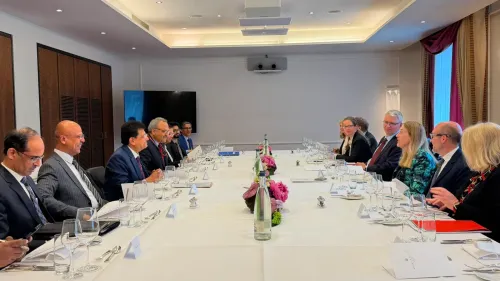
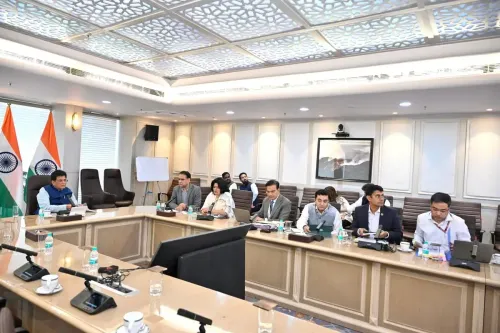
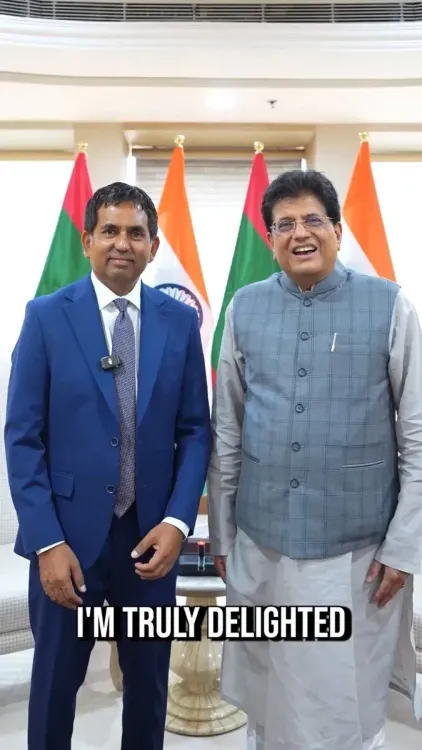
Union Commerce and Industry Minister Piyush Goyal held bilateral talks with Mohamed Saeed, Minister of Economic Development, Transport and Trade of the Maldives, on Wednesday, 8 July 2026, reaffirming both nations' commitment to expediting a Bilateral Investment Treaty (BIT) and a proposed Free Trade Agreement (FTA) as the two countries mark 60 years of diplomatic relations.
Context
India and the Maldives established diplomatic ties in 1965, building a relationship anchored in geography, development assistance, and people-to-people links. The current engagement elevates that relationship to a more structured economic footing, with both sides signalling urgency around formal investment and trade frameworks. Minister Goyal described the discussions as 'productive' and referred to Minister Saeed as a 'good friend,' reflecting the personal rapport that has accompanied the diplomatic outreach.
In his post on X, Goyal wrote that the two sides reaffirmed their commitment to 'expediting the signing of the Bilateral Investment Treaty (BIT) and the proposed Free Trade Agreement (FTA), while further deepening cooperation in tourism, startups, digital payments, MSMEs, and trade to unlock new opportunities for both our countries.'
Policy Backdrop
The push for a BIT and an FTA with the Maldives fits within India's broader economic diplomacy framework in the Indian Ocean region, where New Delhi has pursued structured trade and investment arrangements with smaller island neighbours. A BIT would provide a legal framework to protect cross-border investments, while an FTA would reduce tariff and non-tariff barriers on goods and services traded between the two countries. Both instruments are seen as tools to institutionalise what has largely been an assistance-driven relationship.
The emphasis on digital payments and startups mirrors India's wider services-sector diplomacy, in which platforms such as the Unified Payments Interface (UPI) have been extended to partner nations as a soft-power and commercial instrument. The inclusion of MSMEs signals that both governments are looking beyond large-ticket infrastructure to create business opportunities for smaller enterprises on either side.
Stakeholders and Impact
Indian MSME exporters, particularly those in food processing, pharmaceuticals, and consumer goods, stand to benefit from reduced trade barriers if an FTA is concluded. The tourism sector — a pillar of the Maldivian economy — could see greater integration with Indian travel platforms and payment systems, while Indian tourists, already among the largest visitor groups to the archipelago, may find smoother transactional experiences. Startups in both countries could gain from easier cross-border investment flows once a BIT is in place.
For the Maldives, the talks come at a time when the island nation has been diversifying its external economic partnerships. Deeper ties with India on investment protection and trade could provide a stable, rules-based anchor for foreign capital in a small, tourism-dependent economy.
What's Next
Both sides have committed to expediting the formal signing of the BIT and advancing FTA negotiations, making progress in upcoming bilateral meetings or joint commission sessions the key milestone to watch. The 60-year diplomatic anniversary provides a symbolic and political window to convert stated commitments into signed agreements. If concluded, the BIT and FTA would mark the most substantial formalisation of India-Maldives economic ties since the establishment of diplomatic relations in 1965, potentially setting a template for similar arrangements with other Indian Ocean island states.
Point of View
They could serve as a replicable model for India's economic engagement with other small Indian Ocean island states.
NationPress
8 Jul 2026
Frequently Asked Questions
What did Piyush Goyal discuss with the Maldives minister?
Commerce Minister Piyush Goyal discussed expediting the signing of a Bilateral Investment Treaty (BIT) and a Free Trade Agreement (FTA) with Maldives Minister Mohamed Saeed , along with deeper cooperation in tourism, startups, digital payments, and MSMEs.
What is the India-Maldives Bilateral Investment Treaty?
The Bilateral Investment Treaty (BIT) is a proposed agreement between India and the Maldives designed to provide a legal framework protecting cross-border investments made by nationals and companies of either country.
Is there a Free Trade Agreement between India and Maldives?
As of the 8 July 2026 talks, the Free Trade Agreement (FTA) between India and the Maldives remains a proposal; both sides committed to advancing negotiations toward its conclusion.
How long have India and Maldives had diplomatic relations?
India and the Maldives established diplomatic relations in 1965 , meaning the two countries are celebrating 60 years of ties in 2025-2026 .
How does India's digital payments push connect to the Maldives talks?
India has been extending platforms such as UPI to partner nations as part of its services-sector diplomacy; the Maldives talks specifically highlighted digital payments as a cooperation area to benefit both tourism and trade.