Piyush Goyal Highlights Trade and Investment Ties with Japan
Synopsis
Commerce Minister Piyush Goyal on July 2, 2026 publicly highlighted the twin pillars of the India-Japan relationship — trade and investment — signalling New Delhi's intent to pursue a comprehensive bilateral agenda with Tokyo anchored in the 2011 CEPA and the Act East Policy.
Key Takeaways
Union Commerce and Industry Minister Piyush Goyal on July 2, 2026 described the India-Japan relationship as having both trade and investment dimensions.
The India-Japan CEPA , signed in February 2011 and in force since August 2011 , remains the primary framework governing bilateral goods trade.
India's Act East Policy (launched 2014 ) elevated Japan as a strategic economic priority alongside ASEAN partners.
Japan is one of India's top sources of foreign direct investment , particularly in automobiles, electronics, and infrastructure.
The next India-Japan Annual Summit or CEPA Joint Working Group meeting is the key event to watch for concrete policy announcements.
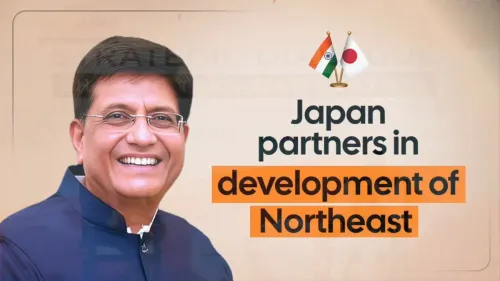
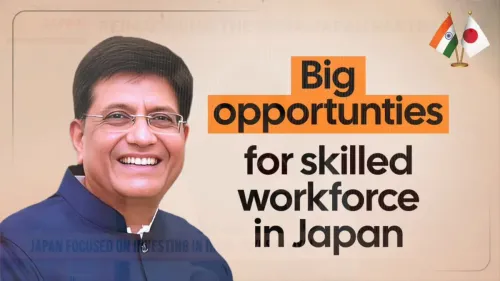
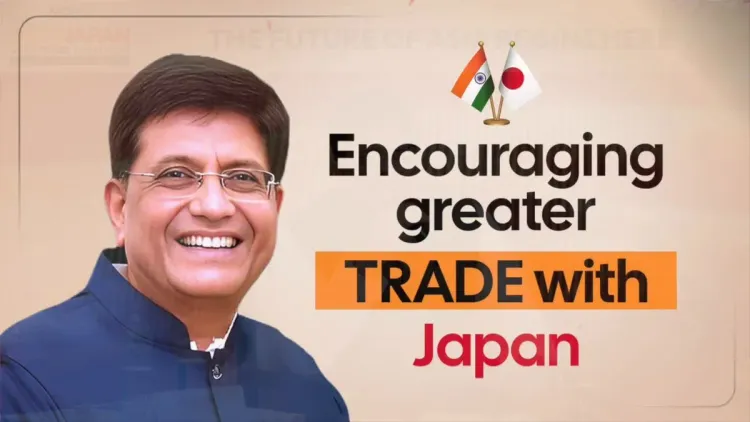
Union Commerce and Industry Minister Piyush Goyal on Thursday, July 2, 2026, underscored the dual dimensions of the India-Japan bilateral relationship, emphasising that it encompasses both trade and investment linkages. The post, shared on X, was accompanied by a video and the national flags of both countries.
Context
Minister Goyal's remark — 'The India-Japan relationship has both trade and investment dimensions' — is brief but pointed, signalling that New Delhi views its engagement with Tokyo as a two-track agenda rather than a single-issue dialogue. India's commerce ministry has long distinguished between trade flows, governed by formal agreements, and foreign direct investment, which follows a separate facilitation framework.
The statement comes against the backdrop of sustained diplomatic engagement between the two countries, with India keen to deepen its integration into East Asian supply chains while attracting Japanese capital into manufacturing and infrastructure.
Policy Backdrop
The foundational instrument governing bilateral goods trade is the India-Japan Comprehensive Economic Partnership Agreement (CEPA), signed in February 2011 and in force since August 2011. The agreement eliminated or reduced tariffs across a broad range of goods categories and remains the primary framework for bilateral trade.
India's Act East Policy, launched in 2014, explicitly elevated Japan as a priority partner alongside ASEAN nations, embedding the bilateral relationship within a larger strategic and economic architecture. Under this policy, Japan has emerged as one of India's top sources of foreign direct investment, particularly in automobiles, electronics, and infrastructure.
India has pursued a deliberate strategy of diversifying its trade and investment sources, and Japan — viewed as a reliable, technology-rich partner — fits squarely into that calculus. For Japan, India represents a key alternative manufacturing and consumer destination amid ongoing regional supply-chain realignments.
Stakeholders and Impact
Indian exporters stand to benefit from any deepening of the CEPA framework, which could open additional market access in Japan for sectors such as pharmaceuticals, textiles, and engineering goods. Japanese investors, meanwhile, have shown sustained interest in India's manufacturing corridors, including the Delhi-Mumbai Industrial Corridor and dedicated freight zones developed with Japanese collaboration.
Small and medium enterprises on both sides, as well as workers in sectors targeted by Japanese investment, are among the stakeholders who would feel the most direct impact of any new facilitation measures. The emphasis on 'both dimensions' by a senior minister signals that policy attention will not be confined to tariff negotiations alone.
What's Next
Observers will watch closely for any announcements at the next India-Japan Annual Summit or meetings of the Joint Working Group on CEPA review, where tariff liberalisation and investment facilitation are typically on the agenda. Minister Goyal's public framing of the relationship as trade-plus-investment could signal a preparatory posture ahead of such engagements.
As India continues to position itself as a preferred destination for global capital and a competitive exporter in high-value sectors, the India-Japan partnership is likely to remain a centrepiece of New Delhi's economic diplomacy in the years ahead.
Point of View
He signals that New Delhi is not content with managing the existing CEPA framework alone but is actively seeking to expand Japanese capital flows into Indian manufacturing. This framing fits a broader pattern in which India's commerce ministry has sought to reposition bilateral partnerships as comprehensive economic arrangements rather than mere tariff dialogues. The timing — mid-2026 — suggests preparatory groundwork ahead of a high-level bilateral engagement, consistent with India's practice of ministerial signalling before summit-level announcements. Cumulatively, it reinforces the Act East Policy's evolution from a diplomatic slogan into a concrete investment-attraction strategy.
NationPress
1 Oct 2026
Frequently Asked Questions
What is the India-Japan CEPA and how does it affect trade?
The India-Japan Comprehensive Economic Partnership Agreement (CEPA), signed in February 2011 and in force since August 2011, is the primary framework governing bilateral goods trade. It eliminated or reduced tariffs on a wide range of products, boosting exports and imports between the two countries.
What did Piyush Goyal say about India and Japan?
On July 2, 2026, Union Commerce and Industry Minister Piyush Goyal stated that 'The India-Japan relationship has both trade and investment dimensions,' highlighting the two-track nature of bilateral economic engagement.
What is India's Act East Policy and how does Japan fit in?
India's Act East Policy, launched in 2014, prioritises deeper economic and strategic engagement with East and Southeast Asian nations. Japan is a key pillar of this policy, serving as one of India's top sources of foreign direct investment in sectors such as automobiles, electronics, and infrastructure.
Which sectors see the most Japanese investment in India?
Japanese investment in India has been concentrated in automobiles, electronics, and infrastructure, including projects developed under the Delhi-Mumbai Industrial Corridor and dedicated freight zones built with Japanese collaboration.
What should I watch for next in India-Japan economic relations?
The next India-Japan Annual Summit and meetings of the Joint Working Group on CEPA review are the key events to monitor. These forums are where tariff liberalisation and new investment facilitation measures are typically announced.