Goyal flags big Japan job opportunities for skilled Indians
Synopsis
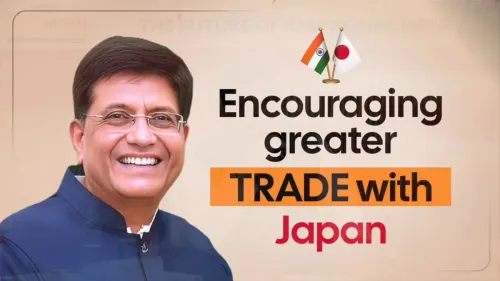
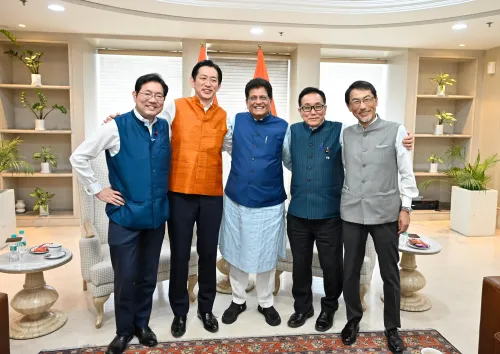
Union Commerce Minister Piyush Goyal on 2 July 2026 flagged major employment opportunities for India's skilled workforce in Japan, spotlighting the bilateral labour mobility framework built on the 2011 CEPA and Japan's 2019 Specified Skilled Worker visa programme.
Key Takeaways
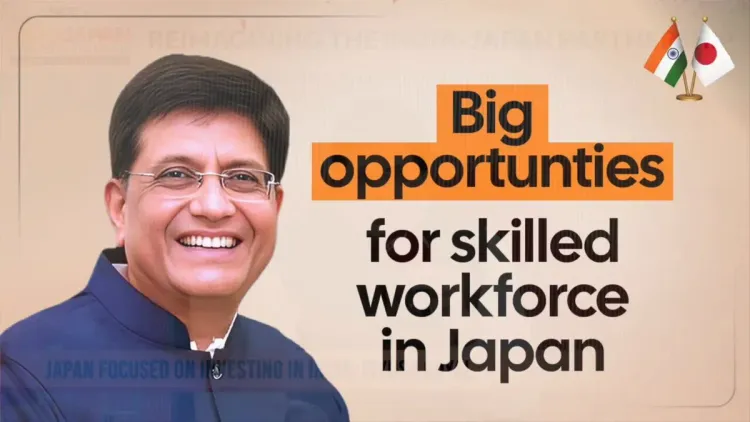
Union Commerce and Industry Minister Piyush Goyal on 2 July 2026 publicly highlighted 'big opportunities' for India's skilled workforce in Japan .
The India-Japan Comprehensive Economic Partnership Agreement (CEPA) , signed in 2011 , provides the legal foundation for movement of professionals between the two countries.
Japan's Specified Skilled Worker programme , launched in 2019 , opens formal visa pathways for Indian workers across 14 designated sectors including manufacturing, healthcare and construction.
India's Skill India Mission (launched 2015 ) is the primary domestic mechanism for training workers suited to overseas placements such as those in Japan.
Japan's ageing population has created acute labour shortages, making it an increasingly significant destination for India's large and young working-age population.
Any concrete follow-up — expanded quotas, new MoUs, or sector additions — is expected to be formalised at the next India-Japan Annual Summit .
Union Commerce and Industry Minister Piyush Goyal on Thursday, 2 July 2026 highlighted expanding employment prospects for India's skilled workforce in Japan, signalling fresh momentum in bilateral labour mobility between the two countries.
Context
Minister Goyal's post — 'Big opportunities for skilled workforce in Japan' — comes against the backdrop of deepening India-Japan economic ties and Japan's well-documented struggle with an ageing population that has left critical sectors chronically understaffed. Japan has increasingly looked to countries such as India to fill gaps in manufacturing, healthcare, construction and allied industries.
India, home to one of the world's largest and youngest working-age populations, has actively positioned itself as a reliable source of trained manpower for advanced economies facing demographic decline. Goyal's statement fits squarely within that strategic posture.
Policy Backdrop
The foundation for formal labour mobility between the two countries was laid with the India-Japan Comprehensive Economic Partnership Agreement (CEPA), signed in 2011, which liberalised flows of goods, services and professionals. Building on that, Japan introduced the Specified Skilled Worker (SSW) programme in 2019, creating a structured visa pathway for foreign nationals — including Indians — across 14 designated sectors.
On the supply side, India's Skill India Mission, launched in 2015, has worked to equip young workers with industry-relevant competencies aligned with both domestic needs and overseas demand. Together, these frameworks provide the institutional scaffolding through which Indian workers can access Japanese employers through verified, regulated channels.
Japan has incrementally eased its historically restrictive immigration rules for skilled personnel, reflecting the severity of its labour shortage. India has run parallel efforts to expand such bilateral arrangements with other advanced economies in Europe, the Middle East and the Indo-Pacific, making the Japan corridor one of several strategic labour-export pipelines.
Stakeholders and Impact
The most direct beneficiaries are skilled Indian workers — particularly those trained in manufacturing, nursing, caregiving, construction and food services — who stand to gain access to well-paying, regulated employment in Japan. For Japanese employers in sectors facing acute shortages, a larger and better-organised pipeline of Indian workers addresses an existential operational challenge.
The broader India-Japan strategic relationship, anchored in frameworks such as the Quad and regular bilateral summits, provides a high-level political umbrella that lends stability to these economic arrangements. Increased people-to-people movement through formal labour channels is also seen as a soft-power asset for both governments.
What's Next
Attention will now turn to whether Goyal's signal translates into concrete follow-up: expanded worker quotas under the Specified Skilled Worker programme, new sector-specific memoranda of understanding, or enhanced cooperation between Indian skilling bodies and Japanese industry associations. The next India-Japan Annual Summit is expected to be a key venue for any formal announcements on labour mobility.
Worker welfare mechanisms — including pre-departure orientation, grievance redressal and wage protection — will be closely watched by civil society groups as recruitment volumes potentially scale up. India's track record in negotiating robust welfare safeguards in similar bilateral arrangements will be a benchmark against which any new Japan-specific framework is measured.
Point of View
A priority that has gained urgency as domestic job creation faces scrutiny. The Japan corridor is strategically significant not just economically but geopolitically, given both countries' alignment within the Quad framework. Whether the signal converts into measurable outcomes — larger worker quotas, new sector agreements, stronger welfare safeguards — will determine its real policy weight.
NationPress
1 Oct 2026
Frequently Asked Questions
What job opportunities are available for Indians in Japan?
Japan's Specified Skilled Worker programme, launched in 2019, offers Indian workers formal visa pathways in 14 sectors including manufacturing, healthcare, construction, food services and caregiving, with India listed as an approved source country.
What is the India-Japan CEPA and how does it help Indian workers?
The India-Japan Comprehensive Economic Partnership Agreement, signed in 2011, liberalised trade in goods and services and included provisions for the temporary movement of professionals, creating an early legal basis for Indian workers to seek employment in Japan.
What did Commerce Minister Piyush Goyal say about Japan?
On 2 July 2026, Minister Piyush Goyal posted on X that there are 'big opportunities for skilled workforce in Japan,' signalling fresh government focus on the bilateral labour mobility corridor.
How does Skill India Mission connect to overseas employment in Japan?
The Skill India Mission, launched in 2015, trains Indian youth in industry-relevant competencies that align with the specific requirements of Japan's Specified Skilled Worker visa categories, making Indian candidates eligible for formal placements in Japan.
Why is Japan hiring workers from India?
Japan faces an acute labour shortage driven by an ageing population and declining birth rate, leaving sectors such as manufacturing, healthcare and construction chronically understaffed; India's large, young and increasingly trained workforce makes it a natural partner.