India–Japan Tokyo seminar targets 50,000-person workforce exchange over 10 years
Synopsis
A 250-strong gathering in Tokyo has put a number to India–Japan workforce ambitions: 50,000 people exchanged over 10 years. With Japan's ageing workforce and India's demographic surplus converging, this seminar marks a shift from diplomatic intent to employer-led demand — and the sectors on the table, from caregiving to green economy, reveal just how structural the need has become.
Key Takeaways
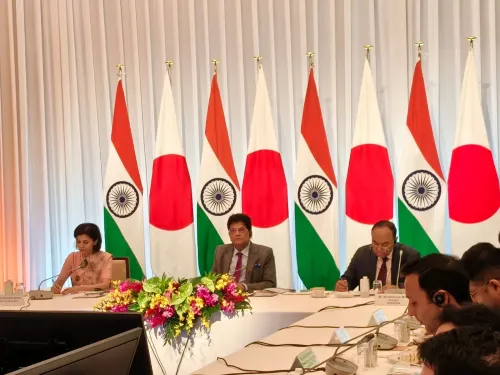
A joint seminar in Tokyo on 26 May 2025 drew 250 representatives from Japanese companies, academic institutions and workforce stakeholders.
Toshiaki Nishikawa , Chairman & CEO of ASEAN GROUP Co.
Ltd. , proposed a Japan–India personnel exchange programme of 50,000 people over 10 years .
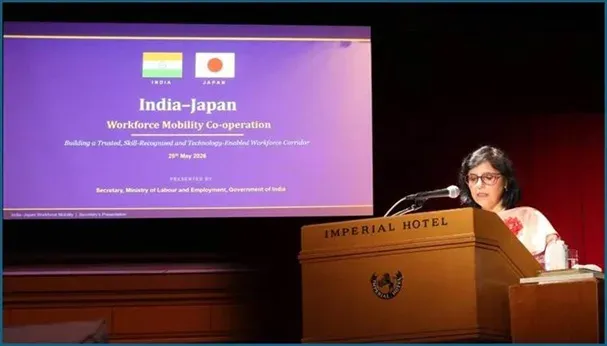
Vandana Gurnani , Secretary, Ministry of Labour & Employment , highlighted India's demographic strength and skilling infrastructure as key enablers.
Priority sectors include manufacturing, caregiving, construction, IT, hospitality, agriculture and green economy .
Both sides agreed to expand Japanese language and testing centres in India and strengthen institutional collaboration on skill recognition and ethical recruitment.
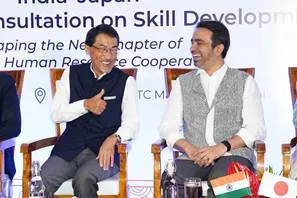
A joint seminar held in Tokyo on 26 May 2025 brought together 250 representatives from leading Japanese companies, academic institutions and workforce mobility stakeholders to advance structured cooperation between India and Japan on skilled labour mobility and human resource development. The event was organised by the Embassy of India in Japan and ASEAN ONE Co. Ltd., Japan, under the aegis of India's Ministry of Labour & Employment.
Key Developments
Toshiaki Nishikawa, Chairman & CEO of ASEAN GROUP Co. Ltd., expressed strong optimism about the bilateral workforce partnership, conveying his enthusiasm for realising a Japan–India personnel exchange programme involving 50,000 people over the next 10 years. The target signals a significant scaling-up of ambitions beyond existing bilateral labour agreements.
Both sides agreed to explore expanding Japanese language and testing centres in India, improving demand visibility from Japan, and building trusted workforce mobility pathways through closer institutional ties — measures that address longstanding bottlenecks in India-to-Japan labour migration.
What India's Government Said
Vandana Gurnani, Secretary, Ministry of Labour & Employment, highlighted India's growing stature as a trusted global workforce partner. She pointed to the country's demographic advantage, robust skilling ecosystem and institutional reforms as key enablers for ethical, scalable international labour mobility.
Gurnani elaborated on India's workforce preparation infrastructure — spanning higher education institutions, industrial training institutes (ITIs), apprenticeship systems, digital skilling platforms and career services — as a foundation for meeting structured demand from economies like Japan. She stressed the urgency of strengthening Japanese language readiness, sector-specific skilling, and ethical recruitment practices.
Sectors in Focus
Participants identified strong bilateral potential across manufacturing, caregiving, construction, automobile maintenance, hospitality, agriculture, IT and digital services, and emerging green economy sectors. The breadth of sectors reflects Japan's acute demographic challenge — an ageing population with a shrinking domestic labour force — and India's surplus of young, trainable workers.
Discussions also underlined the role of digital public infrastructure and employment facilitation systems in creating transparent and scalable mobility pathways, pointing toward technology-enabled matching mechanisms as a future priority.
Why This Matters
India–Japan workforce cooperation has gained momentum in recent years as Japan moves to liberalise its immigration and skilled-worker visa frameworks. This seminar, notably convening 250 industry and institutional stakeholders in one room, signals a shift from government-to-government dialogue toward employer-led demand aggregation — a more durable model for sustained labour mobility. This is among the largest structured engagements between the two countries on workforce issues to date.
With India's working-age population set to remain the world's largest for decades, formalising high-quality outbound pathways — complete with skill recognition and occupational alignment — could generate significant remittance flows and knowledge transfer. The next steps will test whether the ambition of a 50,000-person exchange can be backed by institutional follow-through.
Point of View
000-person target is eye-catching, but the harder work lies in the plumbing: occupational alignment, Japanese language readiness, and mutual skill recognition are where past India–Japan labour initiatives have stalled. The seminar's real value is the shift from government communiqués to a room of 250 employers — that demand-side signal is more credible than any bilateral MoU. India's challenge is not supply; it is quality-assurance at scale, particularly in caregiving and construction where Japan's standards are exacting. If the Ministry of Labour can institutionalise ethical recruitment and verifiable skill certification before the pipeline scales, this could be a model for India's broader outbound labour strategy. If not, it risks replicating the Gulf corridor's informal-migration problems in a new geography.
NationPress
22 Oct 2026
Frequently Asked Questions
What was the India–Japan seminar in Tokyo about?
The seminar, held in Tokyo on 26 May 2025, focused on advancing skilled workforce mobility and human resource development cooperation between India and Japan. It was organised by the Embassy of India in Japan and ASEAN ONE Co. Ltd., drawing 250 representatives from Japanese companies, academic institutions and workforce stakeholders.
What is the 50,000-person Japan–India personnel exchange programme?
Toshiaki Nishikawa, Chairman & CEO of ASEAN GROUP Co. Ltd., proposed a Japan–India personnel exchange programme targeting 50,000 people over the next 10 years. The proposal reflects Japan's growing demand for skilled foreign workers amid its ageing population and shrinking domestic labour force.
Which sectors are targeted under India–Japan workforce cooperation?
Participants identified potential across manufacturing, caregiving, construction, automobile maintenance, hospitality, agriculture, IT and digital services, and emerging green economy sectors. These align with Japan's documented labour shortages in care and construction, and India's strengths in IT and manufacturing.
What did India's Labour Ministry commit to at the seminar?
Secretary Vandana Gurnani committed to strengthening Japanese language readiness, sector-specific skilling, testing infrastructure, ethical recruitment practices and institutional collaboration. She also highlighted India's existing ecosystem of ITIs, apprenticeship systems and digital skilling platforms as a foundation for meeting Japanese employer demand.
Why is India–Japan workforce cooperation significant?
Japan is liberalising its skilled-worker visa frameworks to address demographic decline, while India holds the world's largest working-age population. Formalising structured, ethical mobility pathways between the two countries could generate significant economic and knowledge-transfer benefits for both sides, and set a template for India's broader outbound labour strategy.