Piyush Goyal holds India-Japan trade talks, eyes MSME and CEPA boost
Synopsis
Commerce Minister Piyush Goyal's meeting with Japan's LDP policy chief Takayuki Kobayashi goes beyond diplomatic courtesy — it is a concrete push to position India as a production base for Japanese mid-sized firms, with semiconductors, automobiles, and CEPA pathways all on the table as global supply chains shift away from China.
Key Takeaways
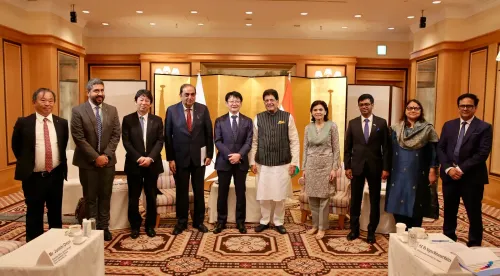
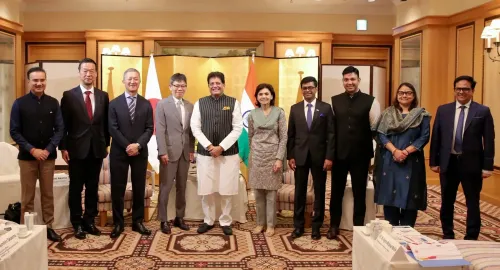
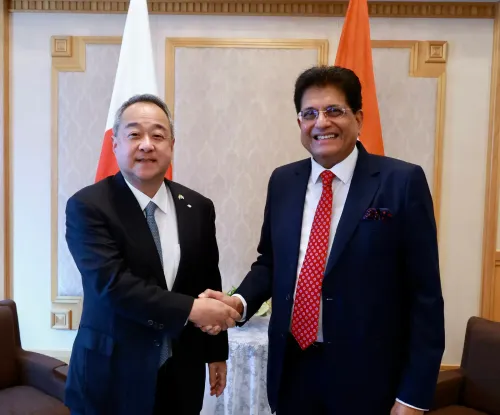
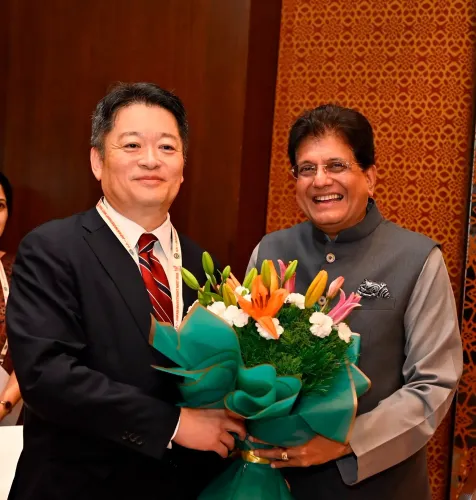
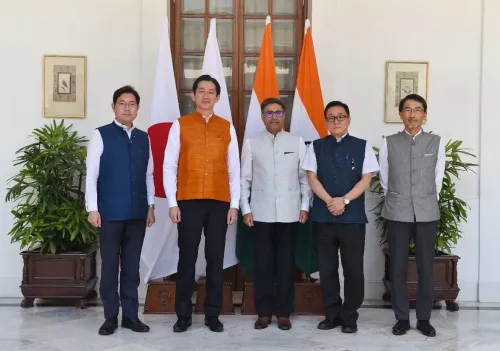
Commerce Minister Piyush Goyal met a Japanese delegation led by Takayuki Kobayashi (LDP Policy Research Council Chairperson) on 4 May 2025 in New Delhi .
Talks focused on MSME partnerships , CEPA pathways, and sectoral collaboration in automobiles, infrastructure, pharmaceuticals, and advanced manufacturing .
The India–Japan Joint Vision for the Next Decade , adopted during PM Modi's Tokyo visit in August 2025 , forms the strategic backbone of the engagement.
Semiconductors and electronics identified as among the most promising new areas for bilateral cooperation.
Japan is actively looking to position India as a production and export base for its mid-sized companies, capitalising on India's trade network and geopolitical reach.
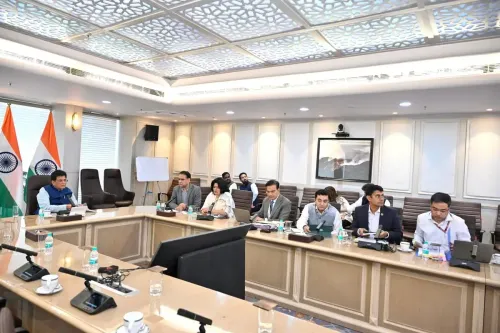
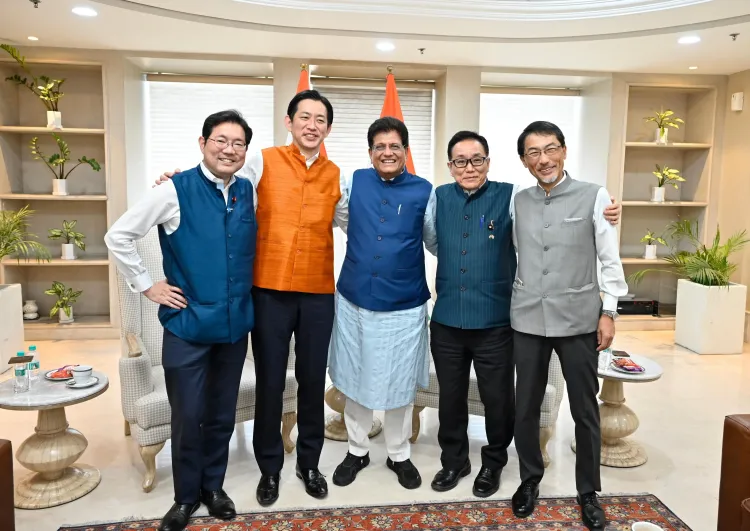
Commerce and Industry Minister Piyush Goyal on Monday, 4 May 2025, held high-level talks with a Japanese parliamentary delegation in New Delhi to strengthen bilateral trade, investment, and industrial cooperation. The meeting signals a fresh push to deepen the India–Japan economic partnership at a time when global supply chains are being actively restructured away from China.
Who Was in the Room
The Japanese side was led by Takayuki Kobayashi, Member of the House of Representatives and Chairperson of the ruling Liberal Democratic Party (LDP)'s Policy Research Council. Goyal shared details of the meeting on X, noting that discussions spanned a broad range of economic themes — from trade architecture to sectoral collaboration.
Key Areas of Discussion
According to Goyal, the talks covered strengthening India–Japan economic engagement, enhancing MSME partnerships, and deepening collaboration in sectors including automobiles, infrastructure, pharmaceuticals, and advanced manufacturing. The minister also highlighted the need to boost Indian exports and improve market access for Indian goods in Japan.
Goyal reaffirmed India's commitment to strengthening its business ecosystem and explored future pathways under the Comprehensive Economic Partnership Agreement (CEPA) and broader Indo-Pacific economic cooperation frameworks. These frameworks have gained strategic importance as economies seek alternatives to China-centric supply chains.
Strategic Context: India as a Production Base
Japan has been increasingly looking to position India as a manufacturing and export hub for its mid-sized companies. The India–Japan Joint Vision for the Next Decade, adopted during Prime Minister Narendra Modi's visit to Tokyo in August 2025, explicitly encourages cooperation among small and medium enterprises (SMEs) by facilitating Japanese SME visits to India and expanding downstream industries.
Notably, Japan aims to help its companies view India not just as a consumer market but as a production base, leveraging India's export-focused policies and extensive trade agreement network. India's large domestic market also provides a buffer against global volatility — an increasingly valuable attribute in the current geopolitical climate.
Semiconductors and New Sectors in Focus
Several emerging sectors have been identified as high-priority areas for bilateral acceleration. Semiconductors and electronics top the list, with Japan's upstream semiconductor strengths aligning well with India's rapidly expanding electronics market and strong government policy support. India's strategic geopolitical positioning — offering access to markets in the Middle East and Africa — further enhances its appeal for Japanese firms seeking to expand their international footprint.
India's current and upcoming free trade agreements and bilateral partnerships with major global economies have opened new market avenues, making it an attractive base for Japanese manufacturers navigating global uncertainties. As both governments build on the Joint Vision framework, the pace of sectoral agreements and investment commitments is expected to accelerate through 2025 and beyond.
Point of View
Accelerating pattern: Japan is no longer just a financier of Indian infrastructure — it is increasingly looking at India as a manufacturing partner in a post-China supply chain world. The mention of CEPA pathways is significant; the India–Japan CEPA has existed since 2011 but remains underutilised by MSMEs on both sides. The real question is whether this round of talks produces binding sectoral roadmaps or remains at the level of intent. With semiconductors and electronics now explicitly on the table, and India's PLI incentives in place, the structural alignment is stronger than at any previous point — but execution timelines and ease-of-doing-business gaps continue to be the friction India must resolve to convert Japanese interest into factory floors.
NationPress
20 Sept 2026
Frequently Asked Questions
What did Piyush Goyal discuss with the Japanese delegation on 4 May 2025?
Commerce and Industry Minister Piyush Goyal discussed strengthening India–Japan economic engagement, enhancing MSME partnerships, and deepening collaboration in automobiles, infrastructure, pharmaceuticals, and advanced manufacturing. He also explored future pathways under CEPA and Indo-Pacific economic cooperation frameworks.
Who led the Japanese delegation that met Piyush Goyal?
The delegation was led by Takayuki Kobayashi, Member of Japan's House of Representatives and Chairperson of the ruling Liberal Democratic Party's (LDP) Policy Research Council.
What is the India–Japan Joint Vision for the Next Decade?
It is a bilateral framework adopted during Prime Minister Narendra Modi's visit to Tokyo in August 2025, which encourages SME cooperation, Japanese firm visits to India, and the expansion of downstream industries. It forms the strategic foundation for current India–Japan economic engagement.
Why is Japan looking at India as a production base?
As global supply chains realign away from China, Japan is increasingly viewing India as a strategic manufacturing and export hub. India's large domestic market, export-focused policies, extensive trade agreement network, and geopolitical access to Middle East and African markets make it attractive for Japanese mid-sized companies.
Which new sectors are being prioritised for India–Japan cooperation?
Semiconductors and electronics are among the most promising new areas, with Japan's upstream semiconductor strengths aligning with India's expanding electronics market and government policy support. Automobiles, pharmaceuticals, infrastructure, and advanced manufacturing are also key focus sectors.