Goyal meets UAE Trade Minister at BRICS India 2026 sidelines
Synopsis
Commerce Minister Piyush Goyal met UAE Trade Minister Dr. Thani Al Zeyoudi at the BRICS India 2026 ministerial to strengthen the India-UAE CEPA, which targets US$100 billion in bilateral trade, and explore new sectors for collaboration.
Key Takeaways
Piyush Goyal met UAE Minister of Foreign Trade Dr.
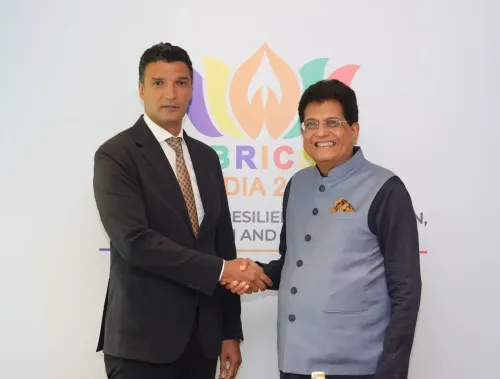
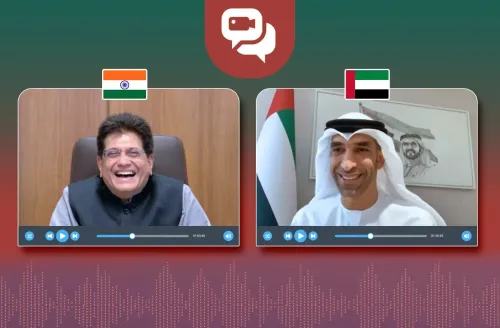
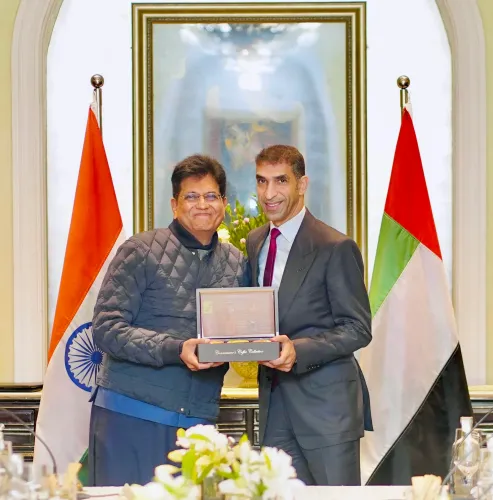
Thani Al Zeyoudi on 7 August 2026 on the sidelines of the BRICS India 2026 Trade and Industry Ministers' Meeting .
Talks centred on deepening momentum under the India-UAE Comprehensive Economic Partnership Agreement (CEPA) , signed February 2022 and in force from May 2022 .
The CEPA carries a bilateral trade target of US$100 billion within five years of signing.
The UAE joined BRICS in 2024 , creating overlapping bilateral and plurilateral channels for India-UAE trade engagement.
Both sides explored collaboration across diverse sectors, with follow-up expected through the joint CEPA implementation committee.
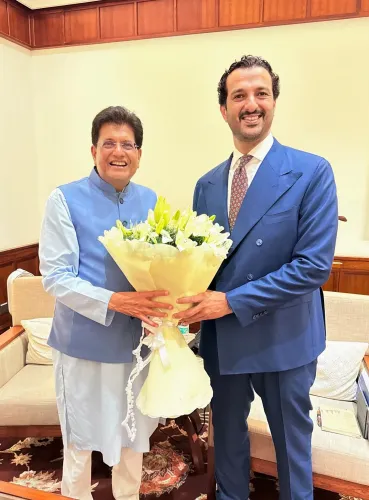
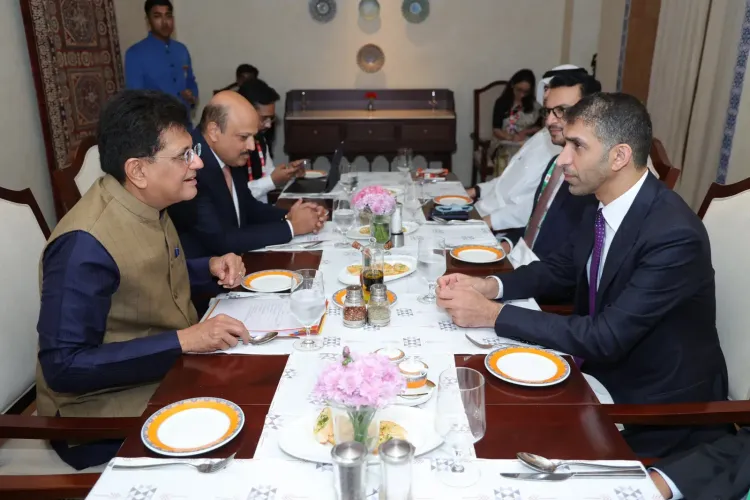
On the margins of a high-stakes multilateral gathering, Union Commerce and Industry Minister Piyush Goyal sat down with H.E. Dr. Thani Al Zeyoudi, UAE Minister of Foreign Trade, to press forward on one of India's most consequential trade relationships — and the setting itself told a story.
The meeting took place on 7 August 2026 on the sidelines of the BRICS India 2026 Trade and Industry Ministers' Meeting, a format that has become a preferred channel for advancing bilateral agendas without the formality of a standalone summit. Goyal described the talks as focused on 'ways to further strengthen the momentum of our trade and investment ties under the India-UAE CEPA, and explored avenues for collaboration across diverse sectors.'
The CEPA engine — and why momentum matters now
The India-UAE Comprehensive Economic Partnership Agreement, signed in February 2022 and in force from May 2022, set an ambitious target: push bilateral trade to US$100 billion within five years. That five-year clock is ticking. Ministerial-level check-ins like this one are precisely how governments keep implementation on track — identifying bottlenecks, unlocking stuck sectors, and signalling political will to the business communities on both sides. Dr. Al Zeyoudi is the UAE's point-man on exactly these negotiations, having steered the Emirates through a wave of bilateral trade deals. His presence at the BRICS ministerial and his bilateral with Goyal underscores that Abu Dhabi views the CEPA not as a signed-and-shelved document but as a living instrument.BRICS as the new bilateral arena
There is a structural logic to this encounter that goes beyond the handshake. The UAE joined BRICS in 2024, creating a new layer of institutional overlap between New Delhi and Abu Dhabi. India and the UAE now share both a dedicated bilateral trade treaty and a common seat at the BRICS table — a rare double channel that trade negotiators can work simultaneously. Sideline bilaterals at BRICS ministerials have emerged as a standard operating format: the multilateral event provides political cover and logistical convenience, while the real granular work happens in the room-next-door conversations. This meeting fits that pattern precisely. Watch for any follow-up announcements from the joint CEPA implementation committee, or fresh bilateral trade data that will reveal how close the two sides are tracking toward the $100 billion target.Point of View
Capital-surplus partners while diversifying away from China-centric supply chains. The UAE's 2024 entry into BRICS has given New Delhi a new institutional lever: bilateral trade priorities can now be advanced inside a multilateral room, compressing diplomatic bandwidth. The $100 billion trade target under CEPA is the real scorecard here, and ministerial-level visibility signals that both governments are under self-imposed pressure to deliver numbers before the five-year window closes. If joint committee meetings follow, this sideline chat will look less ceremonial and more strategic.
NationPress
22 Sept 2026
Frequently Asked Questions
What is the India-UAE CEPA?
The India-UAE Comprehensive Economic Partnership Agreement (CEPA) was signed in February 2022 and came into force in May 2022. It is designed to expand bilateral trade and investment, with a target of reaching US$100 billion in two-way trade within five years.
Why did Piyush Goyal meet the UAE minister at BRICS?
The BRICS India 2026 Trade and Industry Ministers' Meeting provided a multilateral forum where Goyal held a sideline bilateral with UAE Trade Minister Dr. Thani Al Zeyoudi to advance the India-UAE CEPA agenda and explore new sectors for cooperation.
When did the UAE join BRICS?
The UAE joined BRICS in 2024, making it both a CEPA partner and a fellow BRICS member of India — a combination that creates overlapping channels for bilateral trade diplomacy.
What is the India-UAE bilateral trade target under CEPA?
The CEPA sets a target of US$100 billion in bilateral trade within five years of the agreement entering into force in May 2022.
Who is Dr. Thani Al Zeyoudi?
Dr. Thani Al Zeyoudi is the UAE Minister of Foreign Trade, also referred to as Minister of State for Foreign Trade, and is the Emirates' lead official for external trade negotiations and bilateral economic agreements.