India-Japan investments set to grow, says Piyush Goyal at Indo-Japan Summit
Synopsis
At the Indo-Japan Strategic Dialogue, Commerce Minister Piyush Goyal made the case that the India-Japan partnership is built on investment, not just trade — with Maruti Suzuki's four-decade presence and the bullet train corridor as proof points. The most striking signal: Japan's ageing crisis could become a career opportunity for Indian healthcare workers fluent in Japanese.
Key Takeaways
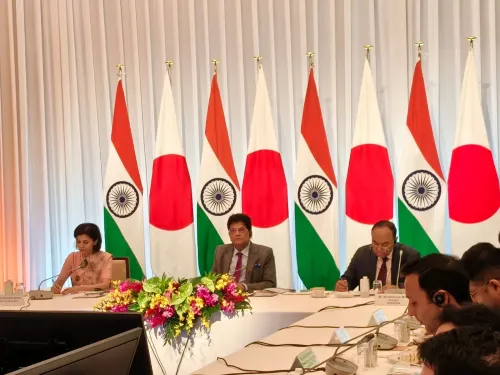
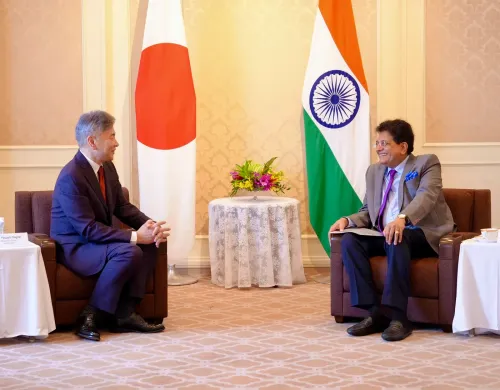
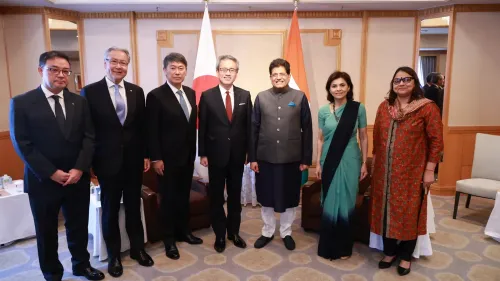
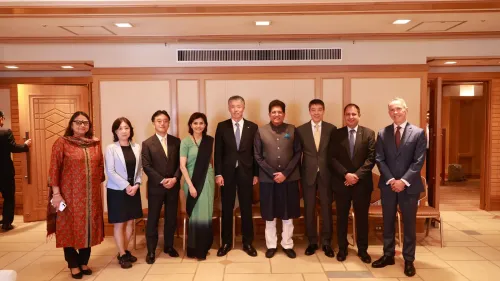
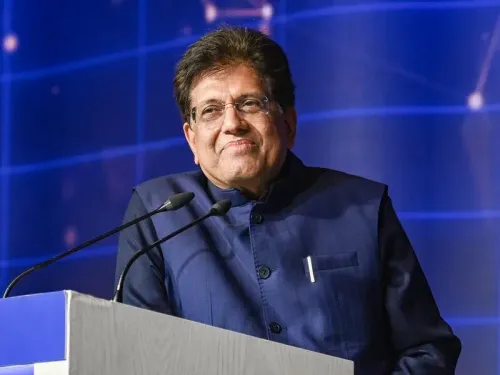
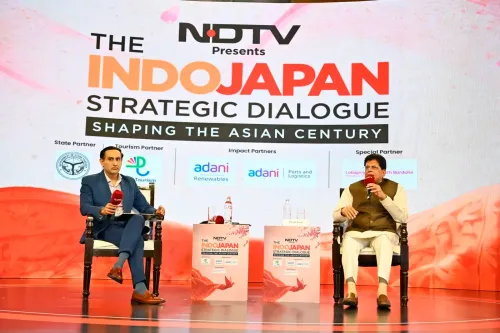
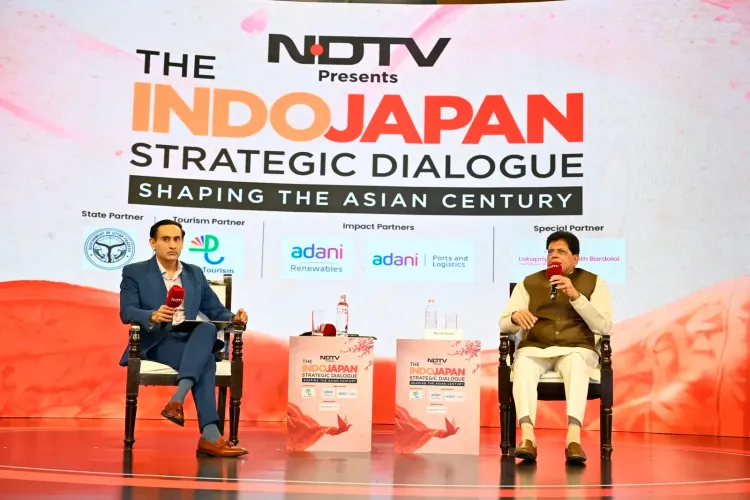
Commerce Minister Piyush Goyal spoke at the Indo-Japan Strategic Dialogue in New Delhi on 2 July , ahead of the 16th India-Japan Summit .
Maruti Suzuki sold 1.47 lakh cars out of 4 lakh total passenger vehicles in India in May , illustrating Japan's deep investment footprint.
The 508-km Mumbai-Ahmedabad high-speed rail corridor , using Shinkansen technology at 320 km/h , is targeted for completion by 2029 .
Goyal blamed delays on the previous MVA government led by Uddhav Thackeray for stalling land acquisition.
India exports precision-engineered goods, auto components, and electronic components to Japan — not raw materials.
Japan's ageing population is creating demand for Indian healthcare professionals with Japanese language skills.
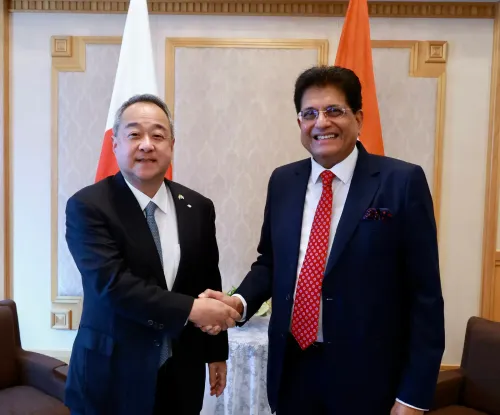
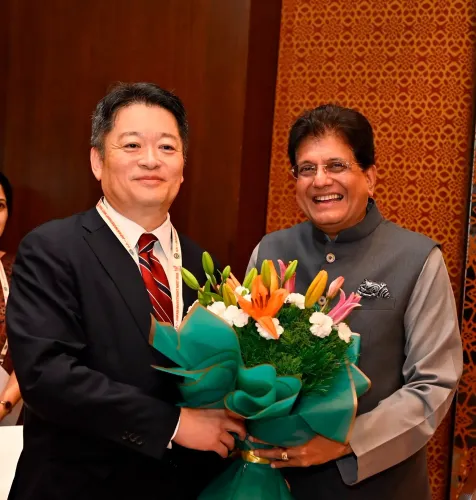
Commerce and Industry Minister Piyush Goyal on Thursday, 2 July said investments have been the cornerstone of India's partnership with Japan, and are poised to deepen further. Speaking at 'The Indo-Japan Strategic Dialogue' in New Delhi, Goyal outlined the breadth of bilateral ties spanning automobiles, infrastructure, trade, and skilled migration — even as the two nations prepared for the 16th India-Japan Summit, coinciding with Japanese Prime Minister Sanae Takaichi's arrival in Delhi.
Japan's Investment Footprint in India
Goyal pointed to Maruti Suzuki as the defining symbol of Japan's long-term commitment to India. 'Maruti Suzuki came to India nearly 40 years ago and brought modern, affordable, technology-driven automobiles, which ultimately set India on track to become a global power in the auto sector,' he said. The numbers bear this out: in May, Maruti Suzuki accounted for 1.47 lakh cars out of 4 lakh passenger vehicles sold across India — a market share that underscores the depth of Japanese industrial presence.
Trade: Beyond Raw Materials
Goyal described the trade relationship as genuinely multi-dimensional. India imports technology-intensive products from Japan while exporting precision-engineered goods in return. 'We are not selling raw materials or intermediates. We're selling Japan high-quality, precision-engineered material, auto components, and electronic components. So, this relationship has both trade and investment dimensions,' he said. He also cited Japan's role in building India's first dedicated freight corridor in Odisha, which facilitated iron ore evacuation — an early example of infrastructure partnership that has since expanded significantly.
Mumbai-Ahmedabad Bullet Train: Back on Track for 2029
One of the most high-profile symbols of the bilateral partnership is the 508-kilometre Mumbai-Ahmedabad high-speed rail corridor, built using Japanese Shinkansen technology. Trains on the corridor are designed to run at 320 km/h, cutting travel time between the two cities from over six hours to just over two hours. Goyal acknowledged delays in the project but attributed them to the previous Maha Vikas Aghadi (MVA) government in Maharashtra. He accused the Uddhav Thackeray-led administration of stalling land acquisition for political reasons. 'The MVA government, maybe out of spite for the people of Maharashtra, didn't allot land for key stations. We lost a lot of time in the process,' he said. With the BJP-led government now in power in the state, Goyal expressed confidence the project is back on schedule for the 2029 deadline. 'The land for the station has been given. My sense is the project is now on track,' he added.
Opportunities for Indian Professionals in Japan
Goyal also flagged a growing human capital dimension to the partnership. Japan's rapidly ageing population has created strong demand for skilled caregivers, and Goyal said Indian healthcare professionals are well-positioned to fill this gap — provided they invest in language and cultural preparation. 'Japan is looking for highly skilled caregivers. But one prerequisite, and rightly so, is that the person should know Japanese. Otherwise, how will they provide nursing care to the elderly in Japan?' he said. He added that proficiency in Japanese language and familiarity with Japanese culture would further strengthen an applicant's prospects.
What Comes Next
The 16th India-Japan Summit is expected to produce fresh commitments across infrastructure, technology, and skilled mobility. Goyal signalled that the government is actively encouraging deeper trade and investment flows. 'We encourage more trade and investments with Japan,' he said. This comes at a moment when India is recalibrating its global partnerships, and Japan — a long-standing strategic and economic ally — is increasingly central to that calculus.
Point of View
Which he pins squarely on the Thackeray government, also exposes a recurring vulnerability: flagship bilateral infrastructure projects in India remain hostage to state-level political cycles. The caregiver mobility angle is genuinely underreported and could be the most consequential near-term outcome of the partnership, given Japan's demographic emergency. Whether the two governments translate that opportunity into a structured, scalable mobility corridor — rather than leaving it to individual initiative — will be the real test of the partnership's depth.
NationPress
1 Oct 2026
Frequently Asked Questions
What did Piyush Goyal say about India-Japan investments?
Commerce and Industry Minister Piyush Goyal said investments have been the primary driver of India's partnership with Japan and are set to grow further. He cited Maruti Suzuki's four-decade presence and Japan's role in building India's first dedicated freight corridor in Odisha as key examples.
What is the current status of the Mumbai-Ahmedabad bullet train project?
The 508-km Mumbai-Ahmedabad high-speed rail corridor, using Japanese Shinkansen technology, is targeted for completion by 2029. Goyal said the project is back on track after delays he attributed to the previous MVA government's stalling of land acquisition in Maharashtra.
How significant is Maruti Suzuki's presence in India?
Maruti Suzuki sold 1.47 lakh cars out of 4 lakh total passenger vehicles sold in India in May, reflecting the enduring scale of Japanese automotive investment in the country nearly 40 years after its entry.
What opportunities exist for Indian professionals in Japan?
Japan's ageing population has created strong demand for skilled caregivers, and Goyal highlighted this as an opening for Indian healthcare professionals. He noted that knowledge of the Japanese language and culture is a key prerequisite for working in elder care in Japan.
What is the 16th India-Japan Summit about?
The 16th India-Japan Summit brought Japanese Prime Minister Sanae Takaichi to New Delhi for high-level talks covering trade, investment, infrastructure, and strategic cooperation. The summit provided the backdrop for Goyal's remarks at the Indo-Japan Strategic Dialogue.