Piyush Goyal at Indo-Japan Dialogue: FTAs, Investment, West Asia
Synopsis
Commerce Minister Piyush Goyal addressed the NDTV Indo-Japan Strategic Dialogue on 2 July 2026, spotlighting Japan's role as a top investment partner, India's multi-FTA strategy, skilled workforce opportunities, and the government's handling of West Asia-linked supply-chain risks.
Key Takeaways
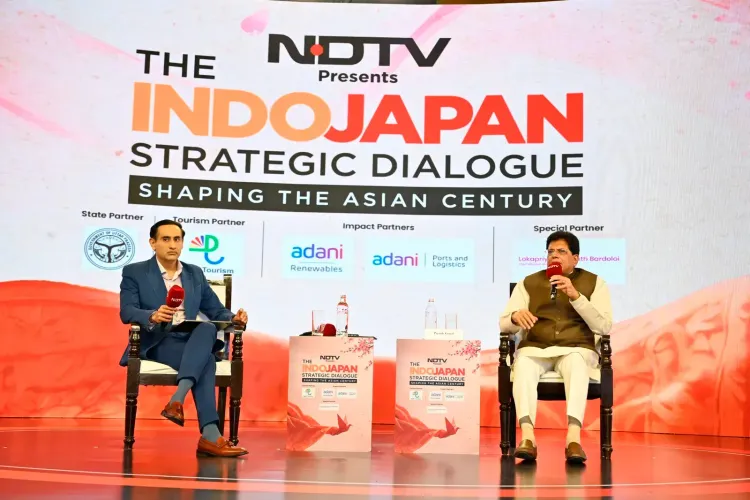
Commerce Minister Piyush Goyal spoke at the NDTV Indo-Japan Strategic Dialogue on Shaping the Asian Century on 2 July 2026 .
Goyal called investments a 'big driver' of the India-Japan partnership and said the relationship is 'set to strengthen.' He highlighted 'significant opportunities' opening for India's skilled workforce through the bilateral relationship.
The minister addressed the government's management of supply-chain impact from the West Asia crisis .
India's multi-FTA strategy since 2021 and the Comprehensive Economic Partnership Agreement with Japan since 2011 form the policy foundation for these ties.
The Act East Policy (from 2014 ) has positioned Japan as a core partner for connectivity, technology, and security cooperation.
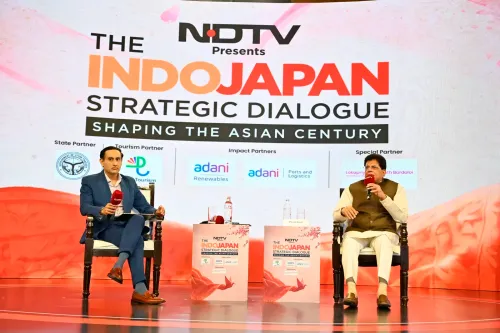
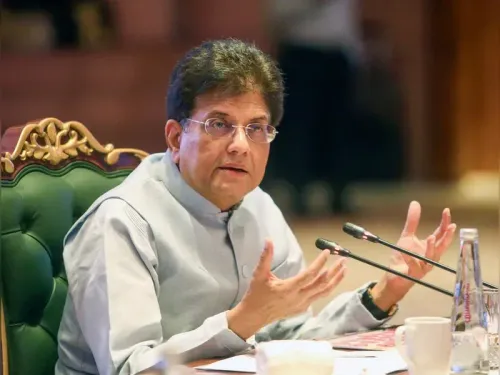
Union Commerce and Industry Minister Piyush Goyal participated in the NDTV Indo-Japan Strategic Dialogue on Shaping the Asian Century on Thursday, 2 July 2026, addressing questions on India's deepening partnership with Japan, the country's free trade agreement strategy, and the government's management of supply-chain disruptions stemming from the West Asia crisis.
Context
Speaking at the dialogue, Goyal underscored that investments have been a 'big driver' of the India-Japan partnership and that the bilateral relationship is 'set to strengthen.' He also flagged that 'significant opportunities are opening up for India's skilled workforce,' framing labour mobility as an emerging pillar of the relationship alongside trade and capital flows.
The minister further noted the Modi government's focus on 'equitable development for all,' signalling that the gains from international economic partnerships are being presented as broadly distributed rather than concentrated in specific sectors or geographies.
Policy Backdrop
India and Japan formalised their economic relationship through the Comprehensive Economic Partnership Agreement (CEPA) signed in 2011, which liberalised trade and investment flows between the two countries. The annual India-Japan Summit mechanism, in place since 2006, has served as the primary channel for bilateral strategic and economic coordination.
Since 2014, India's Act East Policy has explicitly elevated Japan as a core partner for connectivity, technology, and security cooperation. Japanese FDI has consistently ranked among India's top sources of foreign investment, supporting flagship infrastructure corridors and manufacturing clusters in sectors such as automobiles, electronics, and green energy.
Goyal's reference to managing the impact of the West Asia crisis aligns with broader government efforts to secure alternative sourcing routes and promote resilient value chains, including through the Production Linked Incentive (PLI) framework. India has pursued a multi-FTA strategy since 2021 to diversify its trade partnerships while deepening capital and technology inflows from key partners.
Stakeholders and Impact
Japanese investors active in India's infrastructure, automotive, and electronics sectors stand to benefit from continued policy signals of a stable, investment-friendly environment. Indian skilled workers — particularly in sectors where Japan faces demographic-driven labour shortages — represent a growing constituency that bilateral mobility frameworks could serve.
Exporters linked to India's existing FTA network are also watching closely, as Goyal's remarks on 'diverse FTAs' suggest the government is actively managing trade flows across multiple agreements simultaneously. Any disruption to West Asia supply chains directly affects Indian importers of energy and raw materials, making the government's stated management of that risk a point of interest for industry.
What's Next
Attention will now turn to the outcomes of the next India-Japan Annual Summit, where investment facilitation, skilled mobility provisions, and potential updates to digital trade chapters in existing agreements are expected to feature. Goyal's public articulation of Japan as a strengthening investment partner suggests New Delhi will continue to position the bilateral relationship as central to its broader economic diplomacy agenda.
With the West Asia crisis continuing to generate supply-chain uncertainty, the government's approach to alternative sourcing and value-chain resilience will remain under scrutiny from both domestic industry and international partners.
Point of View
The minister is threading a needle — reassuring Japanese investors of India's supply-chain resilience while also pitching labour mobility as the next frontier of the partnership. The emphasis on 'equitable development' suggests the government is conscious of domestic political messaging around the benefits of economic diplomacy. Taken together, the intervention fits a pattern of senior ministers personally stewarding marquee bilateral relationships through public forums rather than leaving them to diplomatic channels alone.
NationPress
1 Oct 2026
Frequently Asked Questions
What did Piyush Goyal say at the Indo-Japan Strategic Dialogue?
Piyush Goyal said investments have been a 'big driver' of the India-Japan partnership, highlighted opportunities for India's skilled workforce, and addressed the government's management of supply-chain disruptions caused by the West Asia crisis.
What is the NDTV Indo-Japan Strategic Dialogue?
The NDTV Indo-Japan Strategic Dialogue on Shaping the Asian Century is a forum bringing together Indian and Japanese policymakers and business leaders to discuss bilateral and regional issues; the 2026 edition was held on 2 July.
What is India's free trade agreement with Japan?
India and Japan signed the Comprehensive Economic Partnership Agreement (CEPA) in 2011, which liberalised trade and investment flows and remains the primary framework governing bilateral economic relations.
How has the West Asia crisis affected India's trade?
The West Asia crisis has created supply-chain disruptions, particularly for energy and raw material imports; the Indian government has responded by seeking alternative sourcing routes and promoting resilient value chains under frameworks such as the Production Linked Incentive scheme.
What is India's Act East Policy and how does Japan fit in?
India's Act East Policy, articulated from 2014 onward, elevated Japan as a core partner for connectivity, technology, and security cooperation, making it central to India's broader Indo-Pacific economic strategy.