Anurag Thakur Hails Modi's Melbourne Visit, India-Australia Ties
Synopsis
BJP MP Anurag Thakur on 9 July 2026 hailed PM Modi's Melbourne visit with a post celebrating India-Australia ties, spotlighting the Comprehensive Strategic Partnership and ECTA that have anchored one of India's most consequential Indo-Pacific relationships.
Key Takeaways
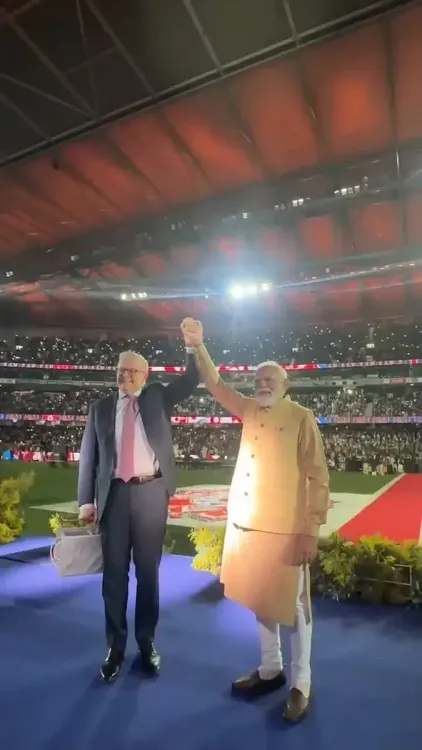
BJP MP Anurag Thakur posted on 9 July 2026 highlighting PM Modi 's engagement in Melbourne, Australia .
India and Australia formalised a Comprehensive Strategic Partnership in 2020 , elevating defence, education, and trade cooperation.
The India-Australia ECTA , signed in 2022 , provides preferential market access for goods and services on both sides.
Both nations are Quad members, collaborating on Indo-Pacific security and critical minerals supply chains.
Melbourne hosts a large Indian diaspora and thousands of Indian university students, making it a key hub for people-to-people ties.
Upcoming focus areas include ECTA implementation reviews , new education and sports MoUs, and the next Quad leaders' summit .
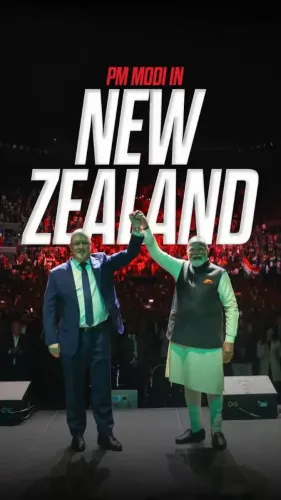
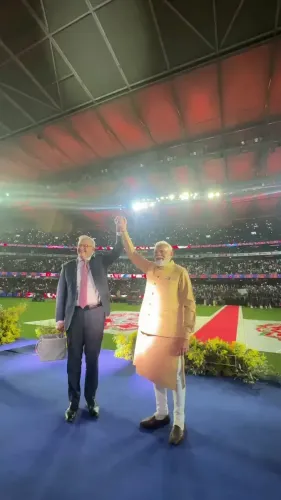
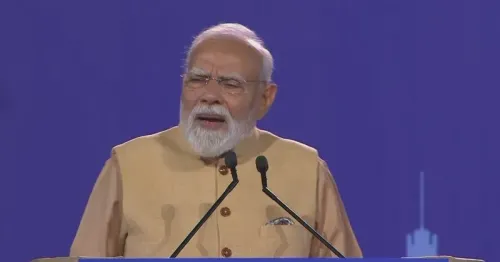
BJP MP Anurag Thakur on Thursday, 9 July 2026 took to X to mark what he described as a significant diplomatic moment between India and Australia, posting 'Melbourne Meets Modi! India 🤝🏻 Australia' — a pointed reference to Prime Minister Narendra Modi's engagement in Melbourne, one of Australia's largest cities and home to a substantial Indian diaspora.
Context
Thakur's post captures the spirit of a relationship that has grown from a standard bilateral partnership into a Comprehensive Strategic Partnership — a designation formalised during PM Modi's 2020 engagement with Australian leadership. Melbourne, with its large Indian-origin community and thousands of Indian students enrolled in its universities, has become a symbolic as well as practical hub for people-to-people ties between the two nations.
Parliamentary figures such as Thakur have consistently used social media to amplify India-Australia cooperation to domestic audiences, framing the relationship in terms of shared values, sporting culture, and strategic alignment in the Indo-Pacific.
Policy Backdrop
The India-Australia relationship has been underpinned by two landmark agreements. The Comprehensive Strategic Partnership, announced in 2020, elevated the bilateral framework to cover defence, science, education, and trade. This was followed by the India-Australia Economic Cooperation and Trade Agreement (ECTA), signed in 2022, which created preferential market access for goods and services exporters on both sides.
Both countries are also members of the Quad — the strategic grouping that includes India, Australia, the United States, and Japan — which has emerged as a key vehicle for Indo-Pacific security cooperation, supply chain resilience, and critical minerals coordination. Melbourne and other Australian cities have hosted Indian cultural and sporting events that reinforce these formal diplomatic structures with grassroots connectivity.
Stakeholders and Impact
The most directly invested stakeholders in deepening India-Australia ties are the Indian diaspora in Australia, estimated to be among the fastest-growing migrant communities in the country, as well as Indian students who constitute one of the largest international student cohorts at Australian universities. For Indian exporters, the ECTA has opened avenues in sectors ranging from textiles and pharmaceuticals to IT services.
On the strategic side, defence establishments in both countries have expanded joint exercises and information-sharing arrangements. The critical minerals sector — where Australia holds significant reserves and India seeks supply chain diversification — represents one of the most consequential emerging dimensions of the partnership.
What's Next
Diplomatic watchers will look to any new education or sports memoranda of understanding that may emerge from high-level engagements in Melbourne, as well as progress on ECTA implementation reviews that assess whether trade targets are being met. The next Quad leaders' summit will also be a key marker of how the India-Australia axis within that grouping continues to evolve.
As bilateral engagement deepens across defence, trade, and education, posts like Thakur's signal that India's political class views the Australia relationship not merely as a diplomatic formality but as a strategic priority worth communicating actively to domestic constituencies.
Frequently Asked Questions
Why did Anurag Thakur post about Melbourne and Modi?
Thakur posted on 9 July 2026 to mark PM Modi's engagement in Melbourne, Australia, celebrating the strength of India-Australia bilateral ties under their Comprehensive Strategic Partnership.
What is the India-Australia Comprehensive Strategic Partnership?
It is a bilateral framework formalised in 2020 that elevated India-Australia cooperation across defence, science, education, trade, and Indo-Pacific strategy, including shared Quad membership.
What is the India-Australia ECTA?
The Economic Cooperation and Trade Agreement, signed in 2022, provides preferential market access for Indian and Australian goods and services exporters, aiming to significantly boost two-way trade.
Why is Melbourne significant for India-Australia relations?
Melbourne is home to one of Australia's largest Indian diaspora communities and hosts thousands of Indian university students, making it a key centre for people-to-people ties between the two countries.
What is the Quad and how do India and Australia fit in?
The Quad is a strategic grouping of India, Australia, the United States, and Japan focused on Indo-Pacific security, supply chain resilience, and critical minerals cooperation, in which India and Australia are central partners.