PTI chief slams governor's rule in Khyber Pakhtunkhwa as political victimisation
Synopsis
Pakistan's federal government has suspended the only opposition-led provincial government in the country — imposing emergency and governor's rule in Khyber Pakhtunkhwa — just as PTI was gearing up to protest Imran Khan's detention. PTI chairman Gohar Ali Khan calls it political victimisation dressed up as counter-terrorism, and Pakistan's Human Rights Commission agrees, demanding the restoration of the provincial assembly and the release of all detained elected officials.
Key Takeaways
PTI chairman Gohar Ali Khan on 27 October condemned the imposition of governor's rule and emergency in Khyber Pakhtunkhwa as political victimisation.
Pakistan President Asif Ali Zardari approved the emergency on 11 October on the recommendation of PM Shehbaz Sharif's cabinet, suspending the PTI-led provincial government.
Chief Minister Sohail Afridi and several cabinet members were detained on 12 October .
Khyber Pakhtunkhwa is the only opposition-governed province in Pakistan, making the federal intervention particularly controversial.
The Human Rights Commission of Pakistan (HRCP) has demanded an end to the emergency, restoration of the provincial assembly, and immediate release of all arbitrarily detained individuals.
Khan also criticised the 30-day extension in the detention of Imran Khan's sister Aleema Khan , describing her as a non-political figure.
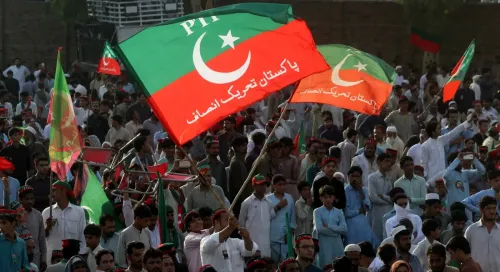
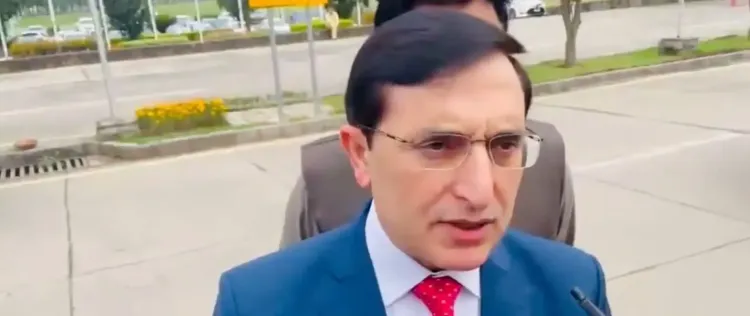
Pakistan Tehreek-e-Insaf (PTI) chairman Gohar Ali Khan on Monday, 27 October condemned the federal government's imposition of governor's rule and emergency in Khyber Pakhtunkhwa, calling it a pretext for political victimisation rather than a genuine counter-terrorism measure. Speaking to reporters outside parliament in Islamabad, Khan said the party categorically rejects both the emergency and the governor's rule imposed on the province.
PTI's Rejection and Key Demands
'You have imposed governor's rule and an emergency, both of which we reject. Terrorism must be eliminated; there can be no two opinions on that,' Khan was quoted as saying by The Express Tribune. He stressed that while PTI stands firmly against terrorism, the federal government's measures appear designed to dismantle the party's political base rather than address security concerns in the province.
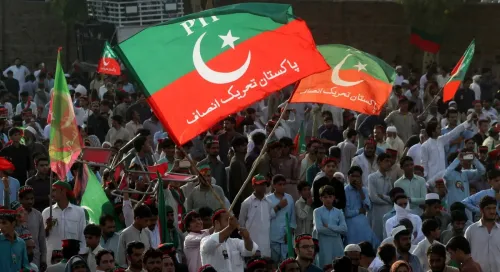
Khan also criticised the 30-day extension in the detention of Imran Khan's sister Aleema Khan, describing her as a non-political figure who has been subjected to what he characterised as arbitrary prolonged detention. PTI founder Imran Khan remains in custody, and the party had been mobilising major protests demanding his release when the federal government moved to impose emergency measures.
How the Crisis Unfolded
The emergency and governor's rule in Khyber Pakhtunkhwa were approved by Pakistan President Asif Ali Zardari on 11 October, following recommendations by the cabinet of Prime Minister Shehbaz Sharif. The action suspended the PTI-led provincial government and placed the province under federal control, with the deployment of forces also announced.
Khyber Pakhtunkhwa Chief Minister Sohail Afridi and several cabinet members were detained on 12 October, according to reports in Pakistani daily Dawn. Notably, Khyber Pakhtunkhwa is the only province in Pakistan currently governed by an opposition party, a fact that has drawn sharp scrutiny from rights groups and democratic observers.
Human Rights Commission Raises Alarm
The Human Rights Commission of Pakistan (HRCP) has issued a strong statement demanding an immediate end to the emergency and governor's rule, the restoration of the provincial assembly, and the unconditional release of the elected chief executive and all others it described as arbitrarily detained.
'Two weeks on, we reiterate our unequivocal opposition to these measures. Our concerns remain the erosion of democratic space, the disenfranchisement of the province's electorate, arbitrary and preventive detention, and the disproportionate impact of security measures on civilians,' the HRCP posted on X.
The commission also flagged reports of police raids on PTI workers in Khyber, Peshawar, and Swat, as well as the arrest of women PTI workers in Punjab, which it described as evidence of a broader crackdown on political activity.
Rights Body Draws the Line on Counter-Terrorism Rationale
While the HRCP said it condemns militancy and terrorism, it warned that counter-terrorism measures must be taken within the law and must not become a pretext for collective punishment or the suppression of fundamental rights. 'Preventive and unlawful detention must not become a tool for silencing opposition or bypassing judicial safeguards,' it stated, adding that detainees must be given access to lawyers and families and produced before a court within the legally mandated timeframe.
The HRCP specifically flagged the province's history of opaque internment centres as making these safeguards 'particularly urgent'. It urged both the Pakistan government and PTI to resume political dialogue to address militancy while protecting democratic rights and local ownership of resources.
Wider Implications
This comes amid a prolonged political and constitutional crisis in Pakistan, with the PTI-federal standoff intensifying since Imran Khan's imprisonment. The suspension of an elected provincial government — one that controls a strategically significant border province — represents a significant escalation. Analysts warn the move risks deepening public grievance in a region already burdened by security challenges, potentially undermining the very counter-terrorism goals the federal government cites as justification. The HRCP and PTI have both called for a return to political dialogue; whether Islamabad responds remains to be seen.
Point of View
And detaining its elected chief minister, strips away the ambiguity. The HRCP's intervention is significant precisely because it is not a PTI voice: it represents a cross-institutional consensus that democratic norms have been breached. If the federal government's calculation was to neutralise PTI ahead of a protest cycle, it may instead have handed the party its most potent grievance yet — the dismantling of elected governance in a strategically volatile border province.
NationPress
27 Oct 2026
Frequently Asked Questions
Why has governor's rule been imposed in Khyber Pakhtunkhwa?
Pakistan's federal government imposed emergency and governor's rule in Khyber Pakhtunkhwa on 11 October, citing security challenges in the province. President Asif Ali Zardari approved the measures on the recommendation of PM Shehbaz Sharif's cabinet, suspending the PTI-led provincial government and deploying federal forces.
What is PTI's response to the governor's rule in Khyber Pakhtunkhwa?
PTI chairman Gohar Ali Khan has categorically rejected both the emergency and governor's rule, calling them a pretext for political victimisation rather than a genuine security measure. He said the move targets PTI politically at a time when the party was preparing major protests demanding Imran Khan's release.
What has the Human Rights Commission of Pakistan said about the Khyber Pakhtunkhwa emergency?
The HRCP has strongly condemned the emergency and governor's rule, calling the detention of the elected chief minister a 'grave affront to democratic norms.' It has demanded the immediate release of all arbitrarily detained individuals, the lifting of the emergency, and the restoration of the provincial assembly.
Who has been detained since the emergency was imposed in Khyber Pakhtunkhwa?
Khyber Pakhtunkhwa Chief Minister Sohail Afridi and several cabinet members were detained on 12 October. The HRCP also reported raids on PTI workers in Khyber, Peshawar, and Swat, and arrests of women PTI workers in Punjab, pointing to what it described as a broader crackdown on political activity.
Why is Khyber Pakhtunkhwa's case seen as particularly significant?
Khyber Pakhtunkhwa is the only province in Pakistan currently governed by an opposition party — PTI. The HRCP has described the federal government's intervention in that specific province as 'particularly troubling,' arguing it disenfranchises the province's electorate and undermines the constitutional balance between federal and provincial governance.