Shivraj accuses Congress of disrupting Diwali trade for political agenda
Synopsis
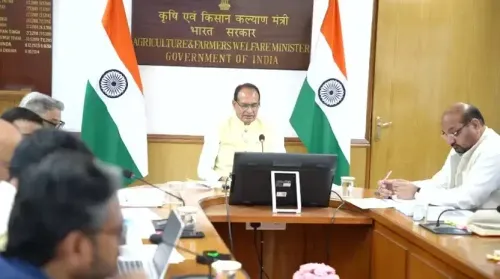
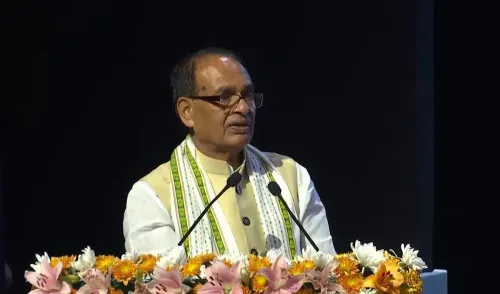
Union Agriculture Minister Shivraj Singh Chouhan attacked Congress on October 27, 2026, accusing the party of putting its political agenda above the interests of traders, citizens, and the economy during the peak Diwali-Dhanteras festival season.
Key Takeaways
Shivraj Singh Chouhan posted on X on October 27, 2026 , accusing Congress of prioritising political agenda over the economy.
He said traders are pleading to be allowed to do business during Diwali and Dhanteras , India's highest-volume retail period.
Chouhan used the phrase baal hath ('child's stubbornness') to characterise Congress's stance — a colloquial, populist framing.
No specific Congress protest or action was named in the post; the attack targets a general political posture.
The BJP has a consistent record of framing opposition agitations as economically harmful, especially during festival seasons.
Trader associations and potential state-level responses remain a key watch-point in the days ahead.
With Diwali and Dhanteras upon the country and bazaars bracing for their biggest sales rush of the year, Union Agriculture Minister Shivraj Singh Chouhan fired a sharp rebuke at the Indian National Congress on Tuesday, October 27, 2026 — accusing the principal opposition party of prioritising its political agenda over the livelihoods of traders and the health of the economy.
Posting on X in Hindi, Chouhan said: 'कांग्रेस को न देश की चिंता है, न देशवासियों की और न ही देश की अर्थव्यवस्था की।' ('Congress cares neither for the country, nor for its citizens, nor for the economy.') He added that traders are explicitly asking to be allowed to do business and celebrate the festival — but Congress, he charged, is throwing a 'child's tantrum' (baal hath) for its own agenda.
Traders caught in the crossfire during peak festival season
Diwali and the preceding Dhanteras represent the single most lucrative trading window of the Indian calendar. From gold and electronics to clothing and home goods, merchant associations across the country depend on this fortnight to recover sluggish quarterly numbers. Any political disruption — street protests, parliamentary deadlocks, or supply-chain interruptions — directly dents that window.
Chouhan's post amplifies a voice he attributed to the trading community itself: 'Traders are saying — it is Diwali-Dhanteras, let us do business, let us celebrate the festival.' By foregrounding the merchant's plea rather than a party line, the message is crafted to reframe the dispute as a conflict between opposition politics and everyday economic life.
BJP's recurring charge: opposition protests hurt common people
The broadside follows a well-worn pattern in Indian political discourse. Ruling-party leaders have repeatedly accused opposition parties of timing agitations to inflict maximum economic pain — and opposition leaders have just as consistently argued that democratic protest cannot be held hostage to a festival calendar.
What is notable here is the specific framing: Chouhan, a four-term former Chief Minister of Madhya Pradesh with deep roots in small-town BJP politics, invokes the language of baal hath — a stubborn child refusing to relent — a colloquial jab designed to land in living rooms, not merely on political talk shows. The vocabulary is deliberate: it paints Congress not as a principled opposition, but as an irresponsible party indifferent to the economic calendar that governs millions of small traders.
No specific Congress action cited — but the political signal is unmistakable
The post does not name a specific Congress protest, demand, or parliamentary action. That ambiguity is itself telling: the attack is aimed at a general posture rather than a single incident, making it harder to rebut on factual grounds and easier to resonate with a broad audience of traders and consumers already deep in festival preparations.
For the BJP, the festival-economy frame is both emotionally resonant and politically convenient — it ties patriotism, prosperity, and cultural celebration into a single package, and positions the opposition as an obstacle to all three. Whether Congress responds with its own counter-framing, or whether trader associations publicly align with either side, will determine how far this particular charge travels beyond a single social media post.
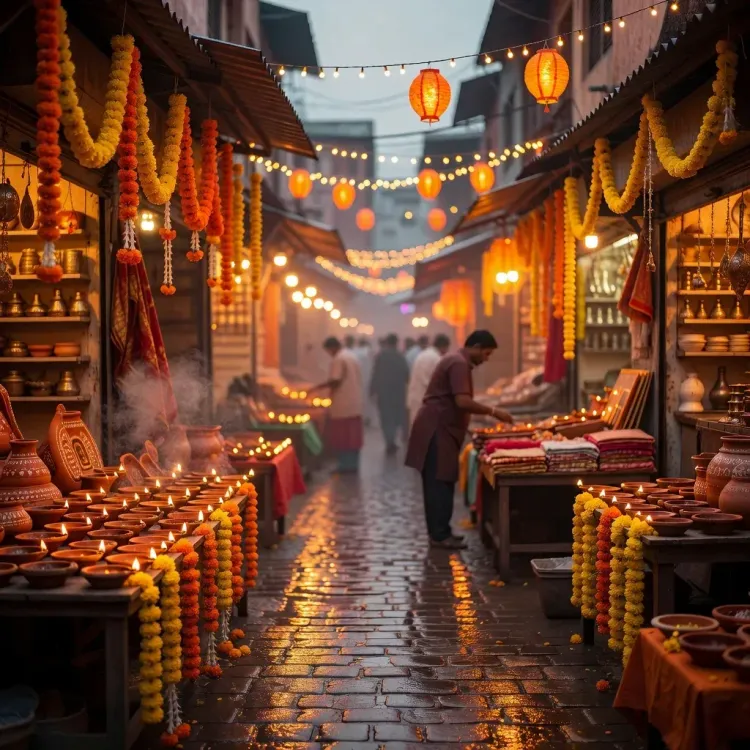
The country's bazaars are lit, the diyas are burning, and India's political temperature is rising to match. The fight over who speaks for the trader — and who is silencing them — has only just begun.
Point of View
It converts a political dispute into a cultural and livelihood grievance that resonates far beyond party loyalists. The deliberate vagueness about which specific Congress action prompted the post actually strengthens its shelf-life — it becomes a general indictment rather than a rebuttal of a single event. For the BJP, with assembly elections perpetually on the horizon in one state or another, cementing the image of Congress as anti-business and anti-festival is long-term brand maintenance, not just a news-cycle move. The real test is whether trader bodies — historically a critical BJP support base — publicly echo the charge, which would transform social-media rhetoric into organised political pressure.
NationPress
27 Oct 2026
Frequently Asked Questions
What did Shivraj Singh Chouhan say about Congress and Diwali?
On October 27, 2026, Chouhan accused Congress of caring only for its political agenda and ignoring traders who want to do business during the Diwali-Dhanteras festival season.
Why is Congress being criticised for disrupting Diwali trade?
Chouhan's post claims Congress is pursuing a political agenda during a peak festival period, which traders say is hurting their ability to conduct business. No specific Congress action was named in the post.
What is Dhanteras and why does it matter for traders?
Dhanteras falls two days before Diwali and is one of the highest-grossing retail days of the year in India, with massive purchases of gold, electronics, and household goods.
Who is Shivraj Singh Chouhan?
Shivraj Singh Chouhan is the Union Minister of Agriculture and Farmers Welfare and Rural Development, a senior BJP leader, and a former four-term Chief Minister of Madhya Pradesh.
Does BJP often accuse Congress of disrupting festivals for political reasons?
Yes, accusing the opposition of timing protests to inflict economic harm during peak festive or agricultural seasons is a recurring pattern in Indian ruling-party political discourse.