CM Sawant Hails Padma Shri Farmer Sanjay Patil's 35-Year Journey

Synopsis
Goa CM Pramod Sawant celebrated Padma Shri awardee Sanjay Anant Patil, a farmer practising sustainable agriculture since 1991, connecting his use of Jeevamrut bio-fertiliser and government schemes to the Swayampurna Goa and Atmanirbhar Bharat missions.
Key Takeaways
Sanjay Anant Patil has been farming sustainably since 1991 and has been awarded the Padma Shri , India's fourth-highest civilian honour.
Patil produces Jeevamrut , a bio-fertiliser made from cow dung and cow urine , reducing dependency on synthetic chemical inputs.
CM Pramod Sawant explicitly links Patil's work to the state's Swayampurna Goa mission and the national Atmanirbhar Bharat campaign.
Patil actively shares agricultural knowledge with young students and fellow farmers , acting as a grassroots mentor.
The Atmanirbhar Bharat programme, launched in May 2020 , promotes domestic production and sustainable practices including reduced chemical farming.
A farmer who began tilling Goa's soil in 1991 has ended up holding one of India's most coveted civilian honours — and Goa Chief Minister Pramod Sawant wants every young agricultural student in the state to know why that story matters.
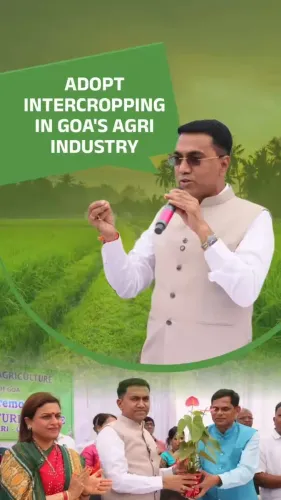
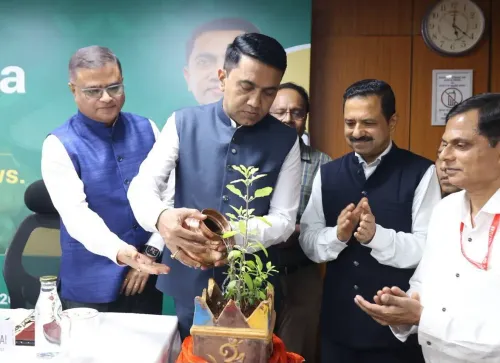
On Tuesday, 27 October 2026, CM Sawant took to X to pay tribute to Sanjay Anant Patil, a Goan farmer awarded the Padma Shri for his decades-long commitment to sustainable agriculture. The post frames Patil's journey not merely as a personal achievement but as a living proof-of-concept for two flagship programmes: the state's own Swayampurna Goa mission and the national Atmanirbhar Bharat campaign.
The man behind Jeevamrut — and why it matters
At the core of Patil's practice is Jeevamrut, a bio-fertiliser brewed from cow dung and cow urine, fermented with natural additives to enrich soil microbiota and reduce dependency on synthetic chemicals. It is a centuries-old input that mainstream Indian agriculture largely abandoned during the Green Revolution — and that the Atmanirbhar Bharat framework is now actively trying to revive.
Patil's adoption of Jeevamrut positions him squarely within a national push to cut chemical input costs for smallholders and improve long-term soil health. The approach also aligns with the Zero Budget Natural Farming model that has gained traction across several Indian states, making his Padma Shri recognition a signal, not just a salute.
Swayampurna Goa finds its farmer-ambassador
The Swayampurna Goa mission, rolled out by Sawant's government, targets village- and state-level self-sufficiency by leveraging local resources and knowledge. Patil's model — drawing on government schemes, sharing techniques with fellow farmers and students, and producing inputs from on-farm materials — reads almost like a blueprint for the programme's ambitions.
Sawant's post explicitly connects Patil's work to both Swayampurna Goa and Atmanirbhar Bharat, a framing that elevates a single farmer's story into a policy exhibit. It is the kind of ground-up success story governments need when pitching organic-transition programmes to sceptical farming communities.
Passing the knowledge forward
Perhaps the detail CM Sawant most wants amplified is this: Patil actively mentors young students and neighbouring farmers, turning his fields into informal classrooms. In a state where agricultural land competes with tourism and real-estate pressure, that knowledge-transfer function is genuinely rare.
The Padma Shri — India's fourth-highest civilian honour, conferred annually across fields from arts to public service — carries an endorsement that travels far beyond Goa's borders, lending Patil's methods national visibility and giving state officials a credible face for their organic-farming outreach.
Thirty-five years in the soil, one national award, and a generation of farmers watching: Sanjay Anant Patil's harvest may ultimately be the movement he leaves behind.
Point of View
The Chief Minister signals that sustainable agriculture will remain a visible pillar of his government's identity. The spotlight on Jeevamrut also quietly endorses natural-input farming as a scalable model, not a fringe practice, at a time when several Indian states are debating chemical-input subsidies. Patil's mentorship angle gives the government a human face for what might otherwise be an abstract self-reliance agenda.
NationPress
27 Oct 2026
Frequently Asked Questions
Who is Sanjay Anant Patil and why did he receive the Padma Shri?
Sanjay Anant Patil is a Goan farmer who has practised sustainable agriculture since 1991. He received the Padma Shri — India's fourth-highest civilian honour — for his distinguished contribution to natural farming, particularly his production and promotion of Jeevamrut bio-fertiliser made from cow dung and cow urine.
What is Jeevamrut and how is it made?
Jeevamrut is a natural, liquid bio-fertiliser prepared using cow dung and cow urine, typically fermented with other organic ingredients. It enriches soil microorganisms and reduces the need for synthetic chemical fertilisers, making it a key input in Zero Budget Natural Farming and sustainable agriculture models across India.
What is the Swayampurna Goa mission?
Swayampurna Goa is a Goa government programme launched under Chief Minister Pramod Sawant to achieve village- and state-level self-sufficiency by leveraging local resources, traditional knowledge, and community participation across sectors including farming.
How does Sanjay Patil's work connect to Atmanirbhar Bharat?
Atmanirbhar Bharat, launched by Prime Minister Narendra Modi in May 2020, promotes self-reliance including in agriculture through reduced chemical dependency and revival of traditional farming inputs. Patil's use of Jeevamrut and government schemes, combined with his knowledge-sharing with younger farmers, directly embodies the programme's goals.
What did Goa CM Pramod Sawant say about Sanjay Anant Patil?
CM Sawant described Patil as someone who exemplifies how 'passion, knowledge, and perseverance can transform agriculture,' noting that his journey reflects the potential of sustainable farming for building a 'Swayampurna Goa' and contributing to 'Atmanirbhar Bharat.'