CM Sawant Pledges 10 Lakh Trees for Green, Clean Goa

Synopsis
Goa Chief Minister Pramod Sawant on World Environment Day announced a people's movement to plant 10 lakh trees, linking the state's 'Harit Goem Ek Zaad Roi' drive to the national Ek Ped Maa Ke Naam campaign as part of a long-term commitment to conserve Goa's natural heritage.
Key Takeaways
Goa CM Pramod Sawant announced a target of planting 10 lakh trees across the state.
The announcement was made on World Environment Day, June 5, 2026 .
The drive is branded as a 'people's movement' under the dual slogan Green Goa, Clean Goa .
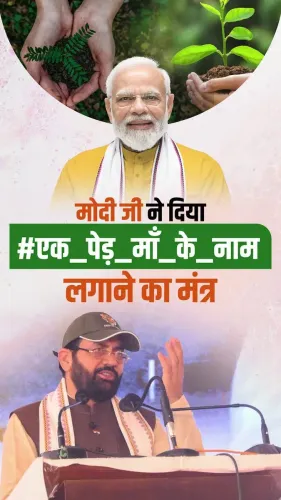
It links the state-level Harit Goem Ek Zaad Roi campaign to the national Ek Ped Maa Ke Naam initiative launched from 2024.
Goa's Western Ghats ecosystem faces ongoing pressure from tourism and urbanisation, making afforestation efforts ecologically significant.
Actual impact will depend on post-plantation survival rates, species diversity, and state budget allocations for maintenance.
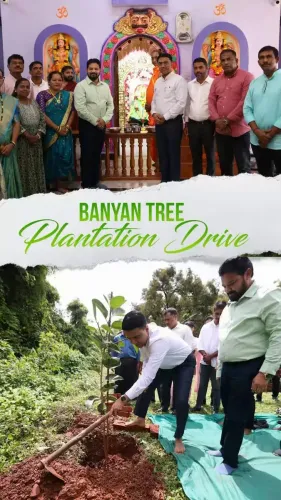
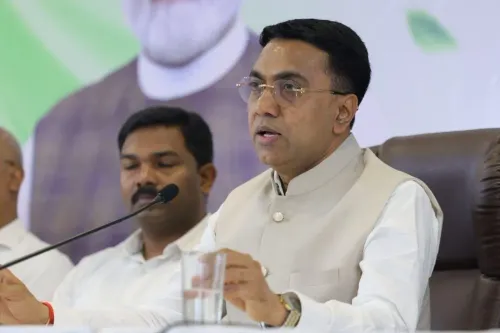
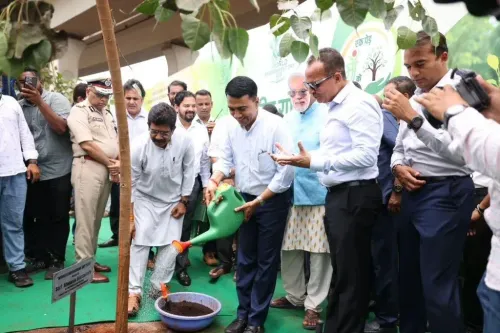
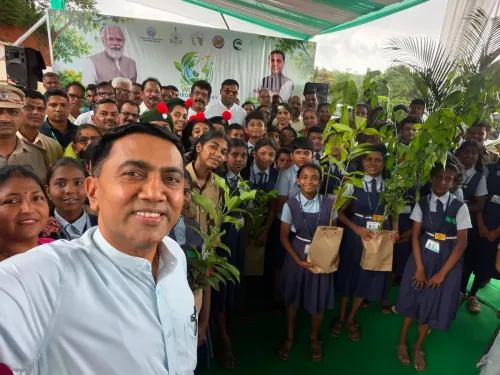
Goa Chief Minister Pramod Sawant on Friday, June 5, 2026 — World Environment Day — announced a people's movement to plant 10 lakh trees across the state, framing it as a generational commitment to preserve Goa's natural heritage under the dual banner of 'Green Goa, Clean Goa.'
Context
CM Sawant posted on X invoking two campaigns: the national Ek Ped Maa Ke Naam initiative and the Konkani-language Harit Goem Ek Zaad Roi — translating roughly to 'Green Goa, Plant One Tree.' The post calls for a 'people's movement for a sustainable future,' signalling that the plantation drive is intended as a broad civic effort rather than a purely government-run programme. The announcement coincides with World Environment Day, lending it symbolic weight on the global conservation calendar.
Policy Backdrop
The Ek Ped Maa Ke Naam campaign was launched nationally from 2024 onwards by the Government of India to expand green cover by encouraging citizens to plant trees in honour of their mothers. Goa's participation aligns with India's broader afforestation targets under national climate missions, which seek to increase forest and tree cover as part of the country's climate commitments. Several BJP-governed states have run parallel local campaigns that link plantation drives to cultural and emotional themes, and Goa's 'Harit Goem' branding follows that pattern by anchoring the effort in a Konkani identity.
Goa sits at the edge of the Western Ghats, one of the world's biodiversity hotspots. The state's forest cover faces sustained pressure from urbanisation, coastal tourism infrastructure, and mining activity, making afforestation pledges particularly consequential here compared with less ecologically sensitive states.
Stakeholders and Impact
Goan citizens are positioned as the primary agents of this movement, with the CM's framing explicitly calling it a 'people's movement' rather than a departmental exercise. The state forest department is expected to coordinate logistics, including species selection, nursery supply, and site allocation across the state's 3,702 square kilometres. If the 10 lakh target is met and survival rates are maintained, the drive could contribute meaningfully to the state's green cover, though conservationists have consistently noted that plantation numbers alone do not equal ecological restoration — species diversity and long-term maintenance matter equally.
Tourism stakeholders and local communities in coastal and hinterland areas stand to benefit from improved canopy cover, which moderates temperatures and supports water retention. Environmental groups in Goa have historically advocated for native-species planting over monoculture drives, a distinction the state government will need to address as implementation details emerge.
What's Next
The credibility of the 10 lakh tree pledge will hinge on transparent progress reporting — specifically, how many saplings are planted, their survival rate at one year and three years, and what budget allocation is earmarked for post-plantation maintenance. Goa's monsoon season, which typically arrives in June, provides a natural planting window, and the timing of this announcement suggests the drive may be formally launched over the coming weeks. With World Environment Day providing international visibility, the state government faces added scrutiny to move from announcement to measurable ground action.
Point of View
Survival rates, maintenance funding — will matter far more than the headline number. If follow-through is weak, the announcement risks reinforcing a pattern of high-visibility green pledges that conservationists in the state have repeatedly flagged as insufficient.
NationPress
20 Oct 2026
Frequently Asked Questions
What is Goa CM Pramod Sawant's 10 lakh tree plantation plan?
Chief Minister Pramod Sawant announced a people's movement to plant 10 lakh trees across Goa under the 'Green Goa, Clean Goa' initiative, linking it to the national Ek Ped Maa Ke Naam campaign and the state's own Harit Goem Ek Zaad Roi drive.
What is Ek Ped Maa Ke Naam?
Ek Ped Maa Ke Naam is a national tree plantation campaign promoted by the Government of India from 2024 onwards, encouraging citizens to plant trees in honour of their mothers as part of a broader afforestation effort.
What does Harit Goem Ek Zaad Roi mean?
Harit Goem Ek Zaad Roi is a Konkani-language phrase meaning roughly 'Green Goa, Plant One Tree,' used as the local branding for Goa's state-level plantation campaign.
When did CM Sawant announce the Green Goa tree plantation drive?
CM Sawant made the announcement on Friday, June 5, 2026, which is observed globally as World Environment Day.
Why is tree plantation important for Goa?
Goa borders the Western Ghats, a global biodiversity hotspot, and its forest cover faces pressure from tourism, urbanisation, and mining. Afforestation efforts are considered critical to maintaining water resources, biodiversity, and climate resilience in the state.