Shivraj Singh Chouhan: Rules Must Serve Farmers, Not Block Them
Synopsis
Union Agriculture Minister Shivraj Singh Chouhan declared on 29 May 2026 that rules exist to serve farmers, not the other way around, and called for reforming any procedures that block eligible farmers from accessing government welfare benefits — signalling a push for structural simplification in scheme delivery.
Key Takeaways
Union Agriculture Minister Shivraj Singh Chouhan posted on 29 May 2026 that procedures must serve farmers, not obstruct them.
He called for changing any rule that prevents eligible farmers from receiving welfare benefits.
PM-KISAN , which provides Rs 6,000 annually to landholding farmer families, has faced criticism for Aadhaar-linkage and documentation barriers excluding some eligible beneficiaries.
The statement aligns with the Modi government's decade-long shift toward technology-enabled direct transfers in agricultural welfare.
Small and marginal farmers — the most documentation-vulnerable group — stand to benefit most from any procedural simplification.
Formal amendments to scheme guidelines and state-level implementation before the next kharif season will be the key indicators of follow-through.
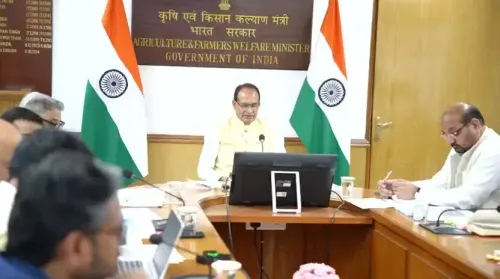
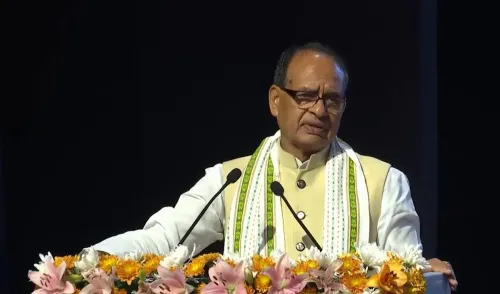
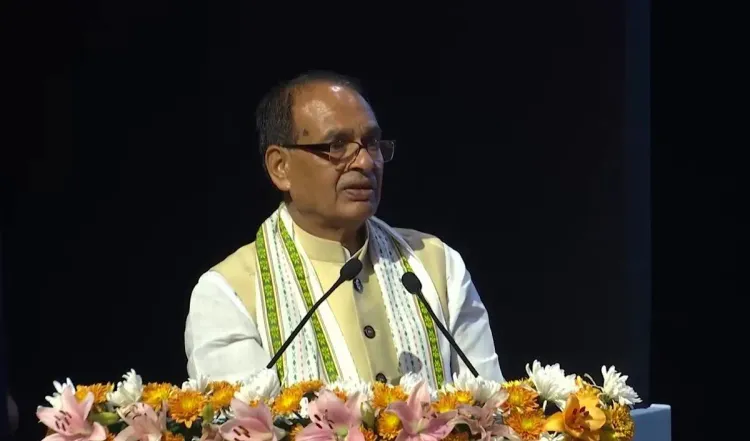
Union Agriculture Minister Shivraj Singh Chouhan on Friday, 29 May 2026, called for reforming procedural barriers that prevent eligible farmers from accessing government welfare benefits, posting a pointed policy statement on X that has drawn wide attention across agricultural and governance circles.
In the post, Chouhan wrote in Hindi: 'नियम-प्रक्रिया किसान के लिए है, किसान नियम-प्रक्रिया के लिए नहीं है।' — 'Rules and procedures exist for the farmer; the farmer does not exist for rules and procedures.' He added that wherever rules become an obstacle to delivering benefits to eligible farmers, change is necessary.
Context
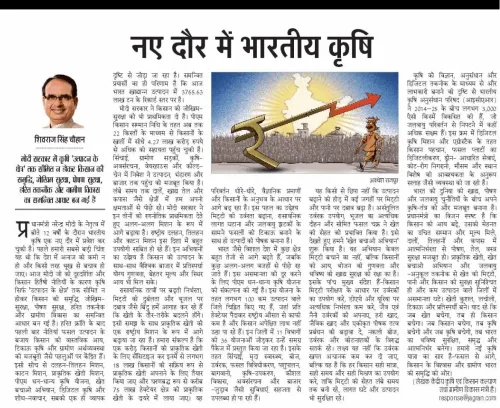
The statement reflects a long-standing tension in India's agricultural welfare architecture: schemes designed to help small and marginal farmers are often filtered through layers of documentation, verification, and bureaucratic compliance that exclude the very beneficiaries they target. Chouhan's framing places procedural reform squarely at the centre of the ministry's agenda.
The minister's remarks come against the backdrop of persistent complaints from farmer groups across states about delayed or rejected applications under central schemes, often on technical grounds such as mismatched land records or Aadhaar-seeding errors.
Policy Backdrop
The Pradhan Mantri Kisan Samman Nidhi (PM-KISAN) scheme, launched in 2019, provides Rs 6,000 annually in direct income support to landholding farmer families. While mandatory Aadhaar linkage and direct benefit transfer (DBT) were introduced to cut intermediary leakages, they also introduced new procedural checkpoints that have, in practice, delayed payments to a segment of eligible farmers.
Between 2014 and 2024, the Ministry expanded platforms such as e-NAM and soil-health card digitisation to reduce physical verification delays. However, critics have noted that digitisation without simplification can replicate bureaucratic friction in a new form. Chouhan's statement signals an intent to move beyond digitisation toward genuine procedural simplification.
Successive Union budgets have also funded land-record computerisation and single-window portals with the stated goal of removing friction from subsidy delivery — a goal Chouhan's post now frames as a non-negotiable ministerial priority.
Stakeholders and Impact
Small and marginal farmers — who constitute the overwhelming majority of India's agricultural households — stand to gain most directly from any procedural relaxation. These groups are disproportionately affected by documentation gaps, irregular land records, and limited digital literacy, making compliance with scheme requirements harder.
State governments, which serve as the first point of contact for scheme implementation, will be key to translating any central directive on procedural reform into ground-level change. The statement implicitly puts pressure on state agriculture departments to audit and remove rules that function as barriers rather than safeguards.
The fertiliser subsidy and crop-insurance portals have already seen simplification drives in recent years, and Chouhan's framing suggests that a similar logic may now be applied systematically across all farmer-facing welfare delivery channels.
What's Next
Parliamentary scrutiny of the upcoming agriculture budget and any proposed amendments to PM-KISAN and related scheme guidelines will be the immediate test of whether this stated intent translates into concrete rule changes. Observers will also watch for state-level rollout of simplified application procedures ahead of the next kharif season.
If the ministry follows through with formal amendments to scheme eligibility and verification norms, it could mark a significant shift in how India's agricultural welfare state balances accountability with accessibility — prioritising farmer outcomes over procedural compliance.
Point of View
He pre-empts criticism that welfare schemes are exclusionary by design. This mirrors a broader BJP governance narrative that casts procedural reform as pro-poor action, a frame that has proved electorally effective in agrarian states. The real test will be whether the sentiment produces measurable changes in PM-KISAN rejection rates and disbursement timelines before the next kharif cycle.
NationPress
12 Oct 2026
Frequently Asked Questions
What did Shivraj Singh Chouhan say about farmer welfare rules?
Chouhan stated on 29 May 2026 that rules and procedures exist to serve farmers, not the other way around, and that wherever procedures block eligible farmers from receiving benefits, those rules must be changed.
What is PM-KISAN and why are some farmers excluded from it?
PM-KISAN is the Pradhan Mantri Kisan Samman Nidhi scheme, launched in 2019, which provides Rs 6,000 annually to eligible landholding farmer families. Some farmers are excluded due to Aadhaar-seeding errors, mismatched land records, or documentation gaps that fail procedural checks.
How does Chouhan's statement affect small and marginal farmers?
Small and marginal farmers are most affected by documentation and compliance barriers in welfare schemes. A simplification of procedures could reduce rejected applications and speed up direct benefit transfers to this group.
What schemes could be affected by agricultural procedure reforms in India?
PM-KISAN, crop-insurance portals, and fertiliser subsidy channels are the primary welfare delivery systems that have already seen partial simplification and could be further reformed in line with Chouhan's stated direction.
What should farmers watch for after Chouhan's 29 May 2026 statement?
Farmers and observers should watch for formal amendments to PM-KISAN scheme guidelines, changes to state-level verification procedures, and any ministry circulars issued ahead of the next kharif season that ease eligibility or documentation requirements.