Khyber Pakhtunkhwa emergency rule: Is Pakistan seeing a coup without tanks?
Synopsis
Pakistan's federal government has imposed emergency rule in Khyber Pakhtunkhwa — PTI's last major political stronghold — and arrested its Chief Minister, prompting accusations of a 'coup without tanks.' With no direct evidence of military orders but a clear pattern of democratic rollback, the crisis tests whether constitutional tools can achieve what generals once needed armoured vehicles to accomplish.
Key Takeaways
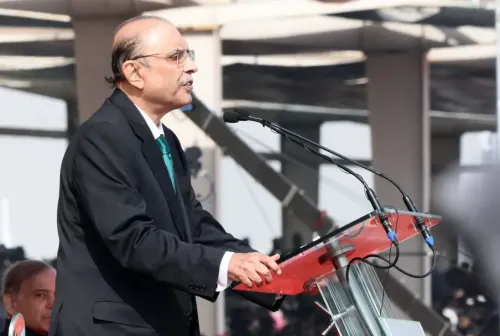
Pakistan President Asif Ali Zardari imposed emergency rule in Khyber Pakhtunkhwa , citing Tehreek-e-Taliban Pakistan (TTP) violence.
PTI Chief Minister Sohail Afridi and senior leader Junaid Akbar were arrested following the emergency declaration.
PTI spokesperson Zulfikar Bukhari called the move a 'coup disguised as emergency or Governor rule.' An EU Today analysis notes no direct public evidence of military orders, but warns democratic institutions can be hollowed out through ostensibly lawful decisions.
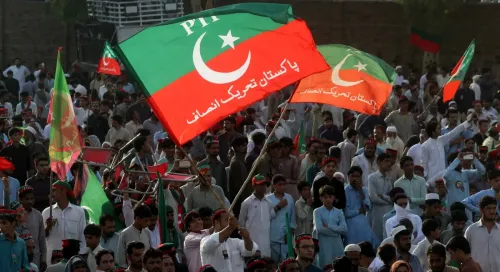
Khyber Pakhtunkhwa is one of PTI's most significant remaining political strongholds, heightening suspicions of political targeting.
The episode reinforces Pakistan's long-standing pattern of civilian-military tension, encapsulated in the adage: 'In Pakistan, the army has a country.'
The imposition of emergency rule in Pakistan's Khyber Pakhtunkhwa province — long governed by the Pakistan Tehreek-e-Insaf (PTI), the party of imprisoned former Prime Minister Imran Khan — has reignited a fundamental question about Pakistani democracy: whether the country is witnessing a military-backed political takeover dressed in constitutional clothing, according to an analysis published by EU Today.
The Emergency and What Triggered It
Pakistan President Asif Ali Zardari ordered the imposition of emergency rule in Khyber Pakhtunkhwa, citing deteriorating security conditions and a sustained rise in violence attributed to the Tehreek-e-Taliban Pakistan (TTP). Under Pakistan's constitutional framework, federal authorities do hold the power to impose emergency rule under specified circumstances, and the federal government carries a formal responsibility to protect citizens from terrorist attacks.
However, the timing of the decision has drawn intense scrutiny. Khyber Pakhtunkhwa remains one of PTI's most significant political strongholds, and the dismissal of its elected provincial government — at a moment when Imran Khan's imprisonment has already generated widespread civil unrest — has led critics to question whether national security is being used as a political instrument.
PTI Calls It a 'Coup Disguised as Emergency'
PTI spokesperson Zulfikar Bukhari condemned the move in unequivocal terms. 'Strongly condemn the arrest of the only mandated Chief Minister Sohail Afridi and of Junaid Akbar. This coup disguised as emergency or Governor rule has squashed the only little bit of democracy left in Pakistan. Further instability and collateral damage to follow. The regime must be feeling very proud,' Bukhari wrote on X.
The arrests of both the Chief Minister and a senior PTI figure have amplified concerns that the emergency declaration is less about security and more about neutralising an opposition that has refused to capitulate to pressure from Islamabad's political and military establishment.
The Military's Shadow — But No Smoking Gun
The EU Today analysis is careful to note a crucial caveat: direct evidence that the military ordered the takeover has not emerged in the public record. 'Accusations of military involvement should be investigated rather than treated as established fact,' the report stated. 'Nevertheless, a coup need not always involve soldiers removing a Prime Minister. Democratic institutions can also be progressively hollowed out through ostensibly lawful decisions that concentrate authority and deprive opposition parties of meaningful power.'
This framing reflects a well-documented pattern in Pakistan's political history, captured in the oft-cited observation: 'Most countries have an army, but in Pakistan the army has a country.' That aphorism, however cynical, has outlasted successive governments, constitutional crises, and outright military interventions.
The Core Constitutional Test
The EU Today report identifies the essential legal and democratic distinction at stake: 'The crucial distinction is between responding to a genuine emergency and exploiting that emergency to neutralise an inconvenient opposition. Pakistan's authorities must demonstrate not merely that a security threat exists, but that the removal of elected provincial leadership is necessary and proportionate.'
This standard is difficult to meet in a province where TTP violence has indeed intensified — but where the political targeting of PTI has also intensified in parallel. Critics argue the two cannot be cleanly separated in intent.
What Comes Next
The emergency in Khyber Pakhtunkhwa places Pakistan's civilian-military compact under fresh international scrutiny, particularly from observers in Europe and the United States who have been monitoring the post-Imran political crackdown. Whether the Supreme Court of Pakistan moves to review the emergency declaration, and whether PTI can mount a legal challenge from outside the province, will shape the next phase of the crisis. For now, the province that gave PTI its most durable democratic mandate finds itself under federal control — and the debate over whether that constitutes a coup, constitutional or otherwise, is unlikely to be settled quickly.
Point of View
Governor's rule, security justifications — to do what tanks once did openly. The absence of a smoking gun linking the military to this specific order is less reassuring than it appears; the hollowing of democratic institutions rarely requires a visible hand. The real accountability gap is that Pakistan's courts and civil society now face the same pressure as the province they might seek to protect. If this emergency survives legal challenge, it will confirm that the post-Imran crackdown has found a durable template — and that Khyber Pakhtunkhwa was the test case.
NationPress
15 Oct 2026
Frequently Asked Questions
Why was emergency rule imposed in Khyber Pakhtunkhwa?
Pakistan President Asif Ali Zardari imposed emergency rule in Khyber Pakhtunkhwa citing deteriorating security conditions linked to Tehreek-e-Taliban Pakistan (TTP) violence. Critics argue the move also serves a political purpose: removing the last major PTI-governed province at a time when imprisoned former PM Imran Khan's party remains a significant opposition force.
Is Pakistan experiencing a military coup in Khyber Pakhtunkhwa?
No tanks or generals have appeared on television, and direct evidence of military orders is absent from the public record. However, an EU Today analysis argues that democratic institutions can be progressively hollowed out through ostensibly lawful decisions — and PTI has described the move as a 'coup disguised as emergency.'
Who has been arrested following the emergency declaration?
PTI Chief Minister Sohail Afridi and senior party leader Junaid Akbar were arrested following the imposition of emergency rule. PTI spokesperson Zulfikar Bukhari condemned both arrests and called the situation the destruction of 'the only little bit of democracy left in Pakistan.'
What is the PTI's response to the emergency rule in Khyber Pakhtunkhwa?
PTI spokesperson Zulfikar Bukhari strongly condemned the move, calling it a 'coup disguised as emergency or Governor rule.' He warned of further instability and collateral damage, and accused the government of eliminating the last vestige of democratic opposition in Pakistan.
How does this episode fit Pakistan's broader political history?
Pakistan has a long history of civilian governments operating under the shadow of the military establishment, captured in the well-known saying that 'in Pakistan, the army has a country.' Analysts note this is not the first time security justifications have coincided with politically convenient outcomes for the federal establishment — making independent scrutiny of the emergency's true rationale especially important.