Pakistan's Khyber Pakhtunkhwa emergency: Amnesty flags detentions, internet cuts
Synopsis
Pakistan's federal government has suspended the PTI-led Khyber Pakhtunkhwa government, detained its chief minister and cabinet members, and triggered internet blackouts — prompting Amnesty International to warn that emergency powers are being used to silence dissent rather than respond to a genuine national threat. With the Governor House set ablaze and police action reported across the province, the crisis is escalating rapidly.
Key Takeaways
Pakistan's federal government declared a state of emergency and imposed governor's rule in Khyber Pakhtunkhwa on Sunday, 12 October 2025 , suspending the PTI -led provincial government.
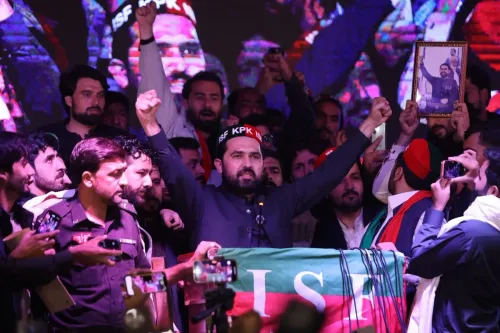
Chief Minister Sohail Afridi and several cabinet members were detained following the suspension, according to local media reports.
Amnesty International 's Deputy Director for South Asia, Babu Ram Pant , condemned the emergency declaration and raised concerns over arbitrary detentions and internet disruptions.
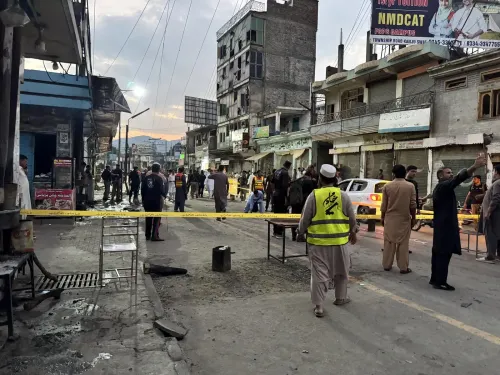
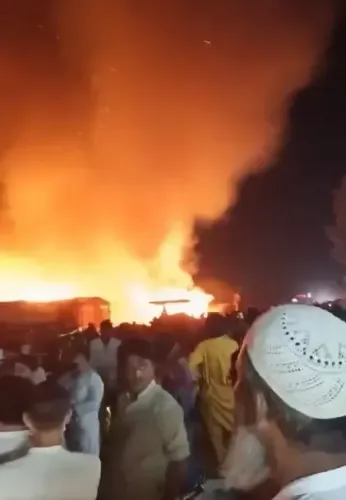
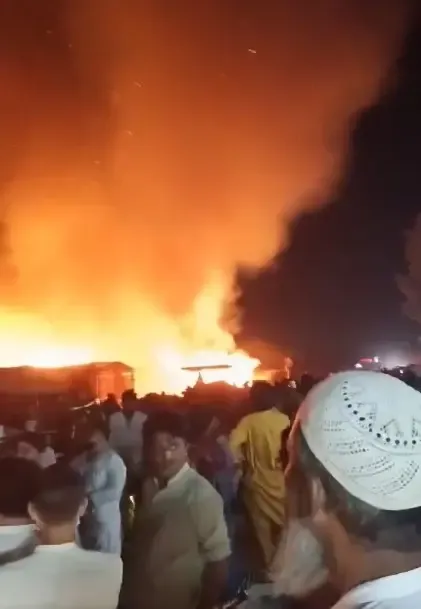
The Governor House in Khyber Pakhtunkhwa was set on fire amid escalating unrest; videos on social media showed police firing and shelling in cities across the province.
PTI described the move as a 'dangerous precedent' and political victimisation, pledging legal and public challenges.
Minister of State for Interior Talal Chaudhry confirmed detained leaders will face pending legal cases.
Amnesty International has expressed serious concern over the arbitrary detention of senior leaders in Pakistan's Khyber Pakhtunkhwa province — including the provincial chief minister — and widespread internet disruptions, following the federal government's declaration of a state of emergency and imposition of governor's rule in the region. The rights body questioned whether the emergency measures were proportionate to the situation on the ground.
The Emergency Declaration and Its Immediate Fallout
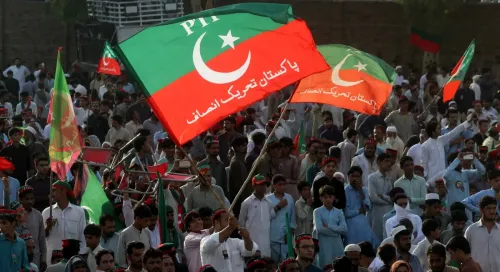
Pakistan's federal government declared a state of emergency on Sunday, 12 October 2025, suspending the provincial government in Khyber Pakhtunkhwa, which had been led by the party of jailed former Prime Minister Imran Khan, the Pakistan Tehreek-e-Insaf (PTI). Governor's rule was imposed in its place, triggering swift political and civil unrest across the province.
Chief Minister Sohail Afridi and several cabinet members were detained after the suspension of the provincial government, according to local media reports. Pakistan's Minister of State for Interior Talal Chaudhry told reporters that the detained leaders would be charged and tried in legal cases already pending against them.
Amnesty International's Warning
Babu Ram Pant, Amnesty International's Deputy Director for South Asia, condemned both the emergency declaration and the deployment of armed forces in the province. 'Reports of arbitrary detentions of key leaders — including the provincial chief minister — and internet disruptions across the province raise concerns about the proportionality of these emergency measures,' he said.
Pant cautioned that while states may, in strictly limited circumstances, derogate from their human rights obligations during a genuine national emergency, such measures are 'not a blank cheque to crack down on human rights, silence dissent, or concentrate power.' He warned that the army's deployment risks further militarising Khyber Pakhtunkhwa and creating conditions for unlawful use of force, particularly given the armed forces' documented history of enforced disappearances and extrajudicial executions during counterterrorism operations.
He called on Pakistani authorities to avoid deploying military personnel for ordinary policing duties and to ensure independent oversight of all actions taken under the emergency framework, with every measure being 'strictly necessary and proportionate to the situation.'
Violence and Unrest on the Ground
The situation in Khyber Pakhtunkhwa deteriorated sharply after the emergency was imposed. The Governor House in the province was set ablaze amid escalating political tensions, according to reports. Videos circulating on social media showed the building engulfed in flames, while other footage reportedly depicted police firing and shelling in cities across the province.
Notably, internet services in the region were disrupted — a pattern critics argue has been deployed previously to suppress public mobilisation and restrict the flow of information during politically sensitive moments in Pakistan.
Political Reaction and Legal Challenges
Opposition parties strongly opposed the governor's rule declaration, describing it as an assault on democracy. The PTI, in a statement cited by the Pakistani daily Dawn, warned that the decision had set a 'dangerous precedent,' calling it political victimisation designed to weaken the province's elected leadership.
The party and other opposition groups pledged to challenge the move through both legal channels and public platforms, signalling that the political confrontation is far from over.
What Comes Next
With governor's rule now in force, the elected provincial government remains suspended and key leaders in detention. International scrutiny is mounting, with Amnesty International's statement likely to be followed by calls from other rights bodies and foreign governments. The legal challenges from the PTI and allied parties are expected to test Pakistan's judicial system amid an already fraught political climate. How Islamabad manages both the security situation and the rights concerns flagged by international observers will be closely watched in the days ahead.
Point of View
And the speed of the detentions suggests prior preparation rather than a reactive emergency response. Amnesty International's invocation of the armed forces' history of enforced disappearances and extrajudicial killings is not rhetorical — it is a specific legal warning about the conditions now present in the province. The internet shutdowns, Governor House arson, and reported police shelling collectively point to a situation that could spiral beyond the federal government's stated containment objectives. What mainstream coverage is underplaying is the constitutional precedent: using governor's rule to dislodge an elected provincial government tied to a specific political party tests the limits of Pakistan's already strained federalism.
NationPress
13 Oct 2026
Frequently Asked Questions
Why has Pakistan imposed emergency rule in Khyber Pakhtunkhwa?
Pakistan's federal government declared a state of emergency and imposed governor's rule in Khyber Pakhtunkhwa, suspending the provincial government led by the PTI — the party of jailed former Prime Minister Imran Khan. The exact stated justification cited by the federal government relates to deteriorating security and governance in the province.
Who is Sohail Afridi and why was he detained?
Sohail Afridi is the Chief Minister of Khyber Pakhtunkhwa and a member of Imran Khan's PTI. He was detained along with several cabinet members after the provincial government was suspended under emergency rule; Minister of State for Interior Talal Chaudhry said the detainees would face legal cases already pending against them.
What has Amnesty International said about the Khyber Pakhtunkhwa emergency?
Amnesty International's Deputy Director for South Asia, Babu Ram Pant, condemned the emergency declaration and deployment of armed forces, warning that detentions and internet disruptions raise concerns about proportionality. He cautioned that emergency powers do not give authorities a 'blank cheque' to suppress dissent or silence political opposition.
What is the situation on the ground in Khyber Pakhtunkhwa?
The province has seen significant unrest, with the Governor House set on fire amid escalating tensions. Videos on social media showed the building in flames and police firing and shelling reported in cities across the province. Internet services in the region have also been disrupted.
How has the PTI responded to the emergency declaration?
The PTI described the federal government's decision as a 'dangerous precedent' and political victimisation aimed at weakening the province's elected leadership, according to a report by Pakistani daily Dawn. The party and allied opposition groups have pledged to challenge the move through legal channels and public platforms.