Governor's Rule in Khyber Pakhtunkhwa risks deepening political alienation, analysts warn
Synopsis
Pakistan's federal government has invoked emergency powers to dissolve PTI's elected government in Khyber Pakhtunkhwa and arrest its chief minister — citing militant violence. But analysts warn this follows a well-worn playbook of centre-province confrontation that historically deepens alienation rather than resolving it, raising the stakes for both democracy and security in one of South Asia's most volatile regions.
Key Takeaways
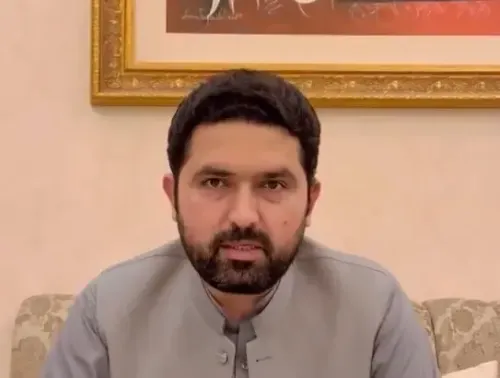
Governor's Rule was imposed in Khyber Pakhtunkhwa on 11 October , with PTI Chief Minister Sohail Afridi removed and arrested.
The federal government cited militant violence and alleged failure to co-operate with counter-terrorism operations, invoking Articles 232 and 234 of Pakistan's Constitution.
PTI called the move politically motivated and an attempt to overturn its 2024 general election mandate in the province.
Historical precedent: a similar dismissal of KP's provincial government occurred in 1975 under Prime Minister Zulfikar Ali Bhutto .
Analysts warn that centralised control may intensify instability and further marginalise PTI supporters in an already volatile region.
The roots of KP's militancy crisis trace back to the 1979 Soviet-Afghan war and the 2007 emergence of TTP .
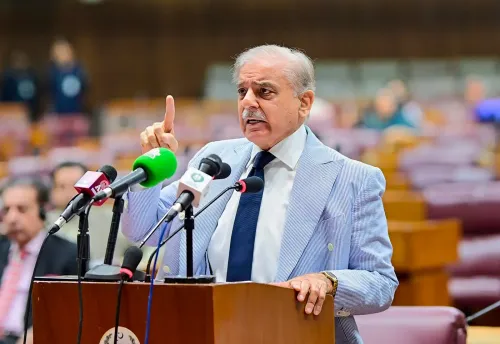
The imposition of emergency and Governor's Rule in Pakistan's Khyber Pakhtunkhwa (KP) province on 11 October, along with the removal and subsequent arrest of Pakistan Tehreek-e-Insaf (PTI)-led Chief Minister Sohail Afridi, risks entrenching political alienation in a region already burdened by decades of militant violence, according to a media analysis.
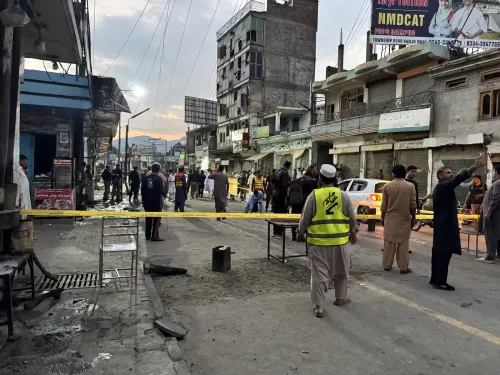
The federal government in Islamabad cited escalating militant violence and the provincial administration's alleged failure to co-operate adequately with counter-terrorism operations as justification for invoking Articles 232 and 234 of Pakistan's Constitution. However, journalist Raja Muneeb, writing in an article titled 'Islamabad's Governor's Rule Gambit: How Pakistan's Political Interventions Deepen Alienation in Khyber Pakhtunkhwa' for The Pamphlet, argued that while the security threat is real, the forceful removal of an elected government cannot be the solution.
PTI's Response and the Political Stakes
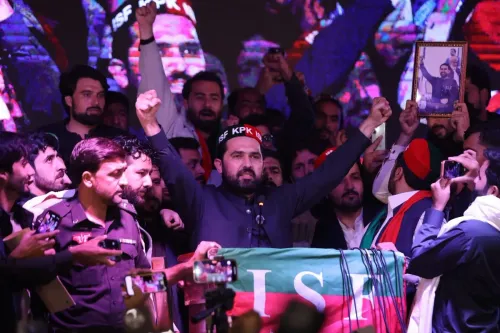
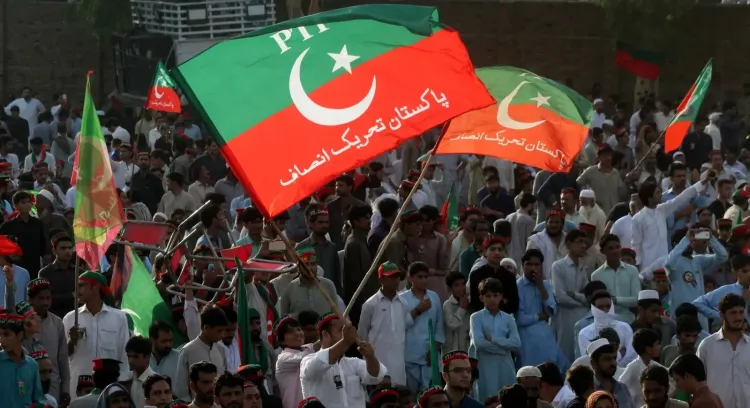
PTI has flatly rejected the federal government's allegations, calling the move politically motivated and an attempt to overturn its electoral mandate. The party argues that Chief Minister Afridi's arrest and the dismissal of the provincial government were designed to weaken a political rival rather than address security concerns on the ground.
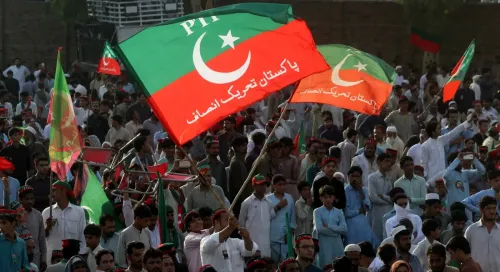
Notably, PTI has governed Khyber Pakhtunkhwa since 2013 and retained a substantial political base in the 2024 general elections. The dissolved government served as a critical institutional platform for the supporters of former Prime Minister Imran Khan, who remains politically influential despite his own legal and institutional battles. Muneeb argued that removing an elected government with a substantial constituency raises serious questions about the political motivations behind the federal intervention.
A Pattern Rooted in History
The article draws a direct line to historical precedent: in 1975, Prime Minister Zulfikar Ali Bhutto removed the provincial government of Chief Minister Sardar Inayatullah Khan Gandapur in the then North-West Frontier Province (NWFP), the present-day Khyber Pakhtunkhwa. That dismissal was part of a wider confrontation between Bhutto's Pakistan People's Party (PPP) and the National Awami Party (NAP). 'NAP was banned in 1975, and the confrontation between Islamabad and its nationalist opponents escalated into a broader political crackdown,' Muneeb wrote.
This is not an isolated episode — it is the latest chapter in a long pattern of centre-province friction in KP, where federally imposed governance has historically intensified, rather than resolved, local grievances.
The Roots of KP's Militancy Crisis
Muneeb identifies several deep historical factors that shaped the province's ongoing security crisis. The 1979 Soviet invasion of Afghanistan turned Pakistan into a staging ground for the Afghan mujahideen campaign, creating militant networks that outlasted the conflict and eventually turned inward. The 2007 emergence of Tehreek-e-Taliban Pakistan (TTP) marked a sharp escalation of organised militant violence inside Pakistan itself. Districts including Swat, South Waziristan, and North Waziristan experienced successive cycles of militant control, military operations, and mass displacement — each round leaving behind social fractures that fuelled further radicalisation.
According to Muneeb, the present crisis in Khyber Pakhtunkhwa 'extends far beyond Governor's Rule', rooted as it is in these structural and historical conditions that a change of provincial administration cannot by itself address.
Consequences and the Road Ahead
The analysis warns that centralised control may intensify the very instability it was invoked to contain. By overriding an electoral mandate, the federal government risks further marginalising PTI supporters — a constituency concentrated in one of Pakistan's most volatile regions. Critics argue that to genuinely counter terrorism, Islamabad may need to seek a negotiated political solution rather than dissolve elected governments.
The central question now is whether Governor's Rule will create conditions for a credible security response, or whether it will deepen the political alienation that, historically, has been one of the KP's most enduring vulnerabilities.
Point of View
Security pretext versus electoral mandate. The irony is structural: KP's militancy problem was partly incubated by the same security establishment that now cites it as justification for dissolving an elected government. Removing PTI from office does not remove the TTP from the field; it merely adds a political grievance to a security crisis. If past interventions — from Bhutto's 1975 crackdown to repeated military operations in Waziristan — are any guide, centralised control in KP tends to generate more instability than it absorbs.
NationPress
25 Oct 2026
Frequently Asked Questions
What is Governor's Rule in Khyber Pakhtunkhwa and why was it imposed?
Governor's Rule is a constitutional provision under which the federal government takes direct administrative control of a province, suspending its elected government. It was imposed in Khyber Pakhtunkhwa on 11 October 2025, with Islamabad citing escalating militant violence and the PTI-led provincial administration's alleged failure to co-operate with counter-terrorism operations.
Who was the Chief Minister of Khyber Pakhtunkhwa before Governor's Rule?
The Chief Minister was Sohail Afridi of PTI, who was removed from office and subsequently arrested following the imposition of Governor's Rule on 11 October 2025.
How has PTI responded to the imposition of Governor's Rule?
PTI has rejected the federal government's allegations outright, calling the move politically motivated and an attempt to overturn its electoral mandate from the 2024 general elections. The party argues the dismissal was designed to weaken a political rival rather than address genuine security concerns.
Is this the first time the federal government has dismissed a KP provincial government?
No. A comparable dismissal occurred in 1975, when Prime Minister Zulfikar Ali Bhutto removed the provincial government in what was then called the North-West Frontier Province (NWFP), as part of a broader crackdown on the National Awami Party. Analysts note the present intervention follows a long-standing pattern of centre-province confrontation in the region.
Why do analysts say Governor's Rule could deepen instability rather than resolve it?
Analysts argue that overriding an electoral mandate marginalises PTI's substantial voter base in KP, adding political alienation to an already severe security crisis. They contend that KP's militancy has deep structural roots — including the Soviet-Afghan war aftermath and the 2007 TTP emergence — that administrative centralisation cannot address, and that a negotiated political approach may be more effective.