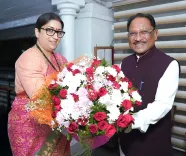
Bhupender Yadav demands Kharge apologise for remark on PM Modi's late father
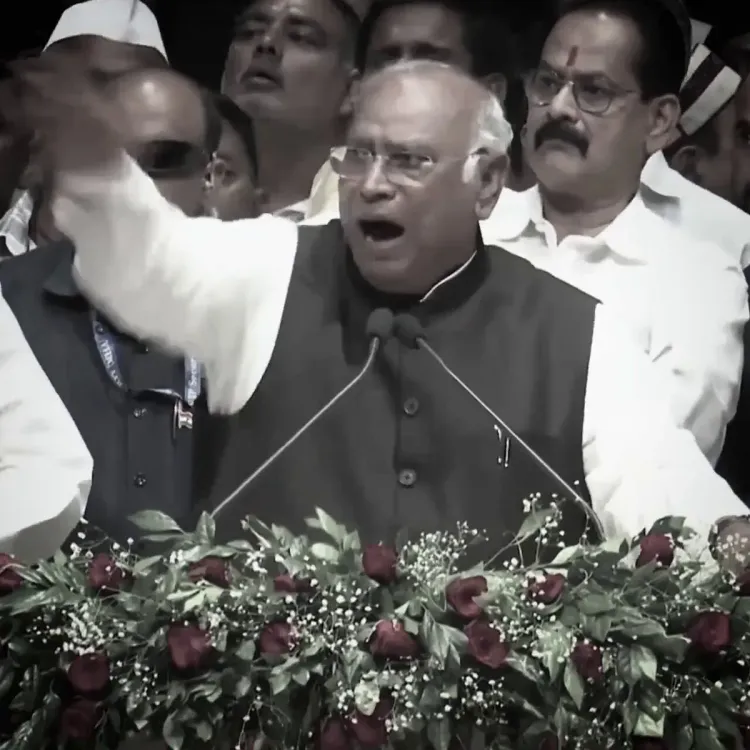
Synopsis
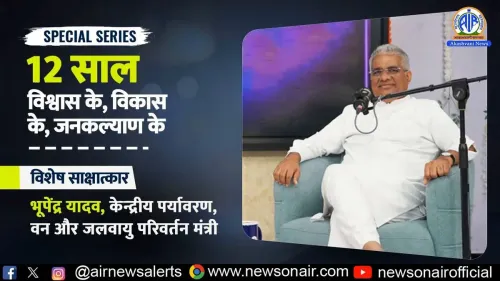
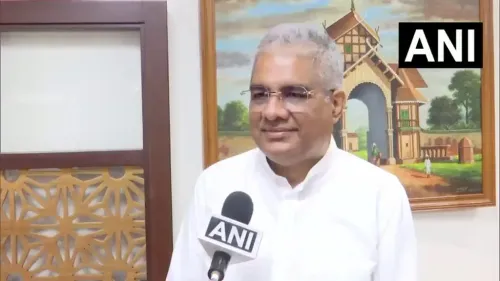
Union Environment Minister Bhupender Yadav on October 25 publicly demanded Congress president Mallikarjun Kharge apologise to the nation for a remark about Prime Minister Narendra Modi's late father, calling it a violation of political dignity and civic norms.
Key Takeaways
Bhupender Yadav , Union Environment Minister and senior BJP leader, demanded a public apology from Congress president Mallikarjun Kharge on October 25, 2026 .
The demand centres on a remark Kharge made referencing PM Narendra Modi's late father , which Yadav called 'unfortunate' and 'against the dignity of public life.' Yadav framed the rebuke in terms of sanskaar (values) and maryada (propriety), elevating the dispute beyond partisan point-scoring to a question of civic norms.
The BJP minister stated that while opposition to ideas is legitimate in democracy, invoking a leader's deceased relatives as political commentary 'is unjustifiable by any measure.' No formal response from Congress leadership had been issued at the time of the post, leaving the next move with Kharge.
In a sharp rebuke that cuts to the heart of political civility, Union Environment Minister Bhupender Yadav on Sunday, October 25, 2026, demanded a public apology from Congress president Mallikarjun Kharge for a remark directed at Prime Minister Narendra Modi's late father — calling the comment a violation of the dignity of public life.
In the post, Yadav wrote — 'राजनीतिक विरोध की आड़ में संस्कारों और मर्यादाओं को भूल जाना कांग्रेस की हताश मानसिकता को दर्शाता है' — ('Forgetting values and propriety under the cover of political opposition reflects Congress's desperate mindset'). He stated that Kharge's reference to the Prime Minister's deceased father is 'not only unfortunate but also against the dignity of public life.'
The line Yadav says Kharge crossed
Yadav's post is unambiguous in its charge: invoking a leader's deceased relatives as fodder for political commentary crosses a line no democratic norm permits. 'In democracy, opposition to ideas is welcome,' he wrote, 'but making someone's late family member the subject of political commentary is unjustifiable by any measure.' The demand is direct — Kharge must apologise to the nation, publicly.
The BJP minister's framing is deliberate. By anchoring his rebuke in sanskaar (values) and maryada (propriety) — concepts carrying deep cultural weight in Indian public discourse — Yadav is not merely lodging a party complaint. He is staking out a moral register, presenting the Congress president's remark as a breakdown of shared civic norms, not just partisan excess.
A recurring fault line in BJP-Congress exchanges
This is not an isolated flare-up. Indian political discourse has periodically ignited over the propriety of referencing leaders' family members — especially deceased relatives — in public attacks. BJP figures have consistently argued that such references violate an unspoken floor of decency that partisan combat must not breach. Congress, for its part, has historically contested the framing, arguing that public figures remain fair subjects of scrutiny across contexts.
What sharpens this moment is the seniority of both figures involved. Yadav is a senior cabinet minister; Kharge, as Congress president, is the formal head of the principal opposition party. A demand for a national public apology from one to the other is not routine political noise — it is a headline-level escalation, and the BJP's amplification of it signals a deliberate political strategy heading into what promises to be a charged parliamentary season.
Congress yet to respond; the pressure is on Kharge
As of the time of posting, there has been no formal response from Congress leadership. Whether Kharge acknowledges the demand, contests it, or doubles down will define the next beat of this exchange. Parliament and party forums remain the most likely arenas for any follow-up — and both sides will be watching the other's next move carefully.
Civility in politics is rarely its own reward. But when it becomes the battlefield, every word lands harder than any policy debate.
Point of View
Not just factional noise. By invoking cultural concepts of maryada and demanding a national public apology, Yadav is attempting to shift the political cost onto Kharge: either apologise and appear to concede a misstep, or refuse and own the optics of having targeted a deceased relative. This tactic fits a broader BJP pattern of framing Congress not merely as politically wrong but as culturally adrift — a narrative that resonates with segments of the electorate well beyond formal party lines. How Congress responds will signal whether it sees any strategic benefit in de-escalation, or whether it judges that contesting the framing head-on serves its own base better.
NationPress
25 Oct 2026
Frequently Asked Questions
What did Mallikarjun Kharge say about PM Modi's father?
The specific content of Kharge's remark has not been independently detailed in the public record available, but Union Minister Bhupender Yadav stated that Kharge made a comment referencing Prime Minister Narendra Modi's late father as part of political criticism — a comment Yadav called 'unfortunate' and contrary to the dignity of public life.
Why is Bhupender Yadav demanding an apology from Kharge?
Yadav argued that making a deceased family member the subject of political commentary violates the norms of public life and democratic propriety, regardless of political rivalry, and that Kharge owes a public apology to the country.
Who is Bhupender Yadav?
Bhupender Yadav is India's Union Minister of Environment, Forest and Climate Change and a senior leader of the Bharatiya Janata Party (BJP).
Who is Mallikarjun Kharge?
Mallikarjun Kharge is the president of the Indian National Congress, the principal opposition party, and a veteran politician who has served in multiple senior government and party roles.
Has Congress responded to Bhupender Yadav's demand?
As of the time of Yadav's post on October 25, 2026, no formal response from Congress leadership had been made public. Responses from Congress leaders and any follow-up in Parliament are being watched.