CM Samrat Choudhary Lays Out Bihar's Balanced Growth Vision
Synopsis
Bihar CM Samrat Choudhary on October 25, 2026, outlined a 'balanced development' model aligned with PM Modi's inclusive-growth philosophy, promising equal opportunity for villages, better remote connectivity, and dignified living for Bihar's poorest families.
Key Takeaways
Bihar CM Samrat Choudhary on October 25, 2026 articulated a pro-people, proactive governance model for Bihar.
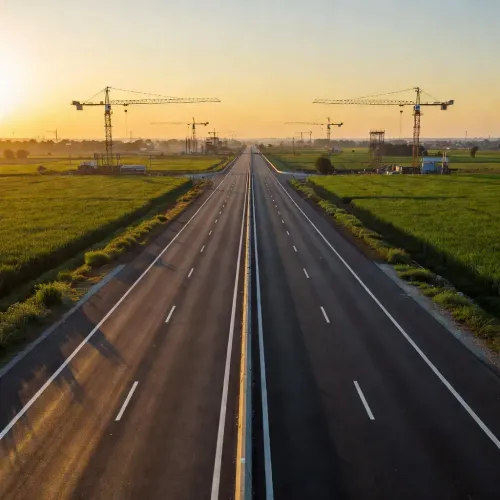
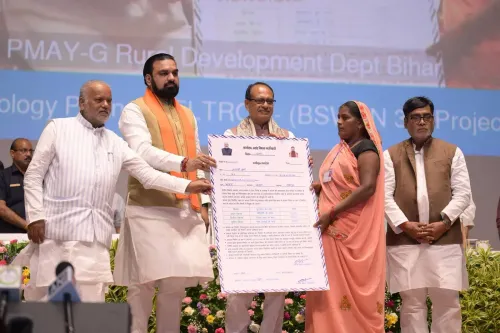
The vision prioritises equal opportunity for villages and small towns , better connectivity for remote areas, and dignified living for poor families.
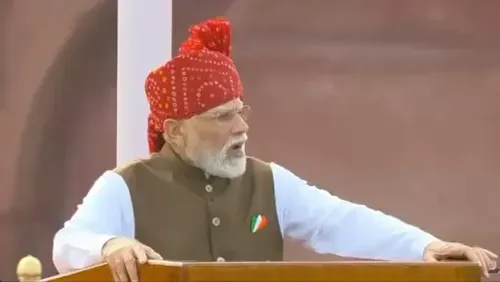
Choudhary explicitly tagged Prime Minister Narendra Modi , signalling alignment with the Centre's 'Sabka Saath, Sabka Vikas' framework active since 2014 .
The post reflects the BJP's consistent national messaging on inclusive development, mirrored across states under party rule.
No specific schemes or budget figures were cited; the post sets the political and rhetorical frame for Bihar's governance priorities.
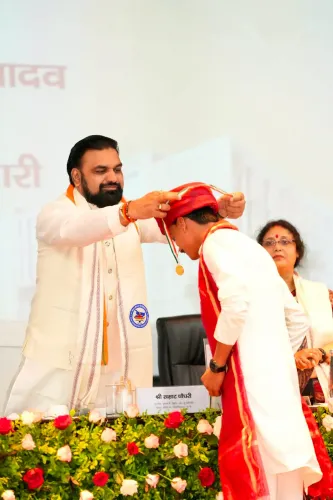
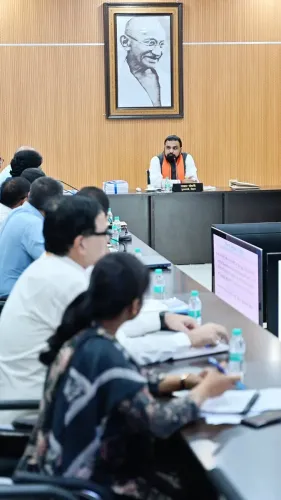
No citizen left behind — that is the governing compact Bihar Chief Minister Samrat Choudhary put on record on Sunday, October 25, 2026, outlining a development model he describes as pro-people, proactive, and rooted in good governance.
In a post addressed to Prime Minister Narendra Modi, Choudhary articulated a three-pronged vision: equal opportunity for villages and small towns, better connectivity for remote regions, and dignified living conditions for poor families. 'Vikas ki yatra mein koi bhi nagarik peeche na chhoote' — 'No citizen should be left behind in the journey of development' — he wrote, framing that pledge as Bihar's core political goal.
Echoing Modi's 'Sabka Saath' Compact
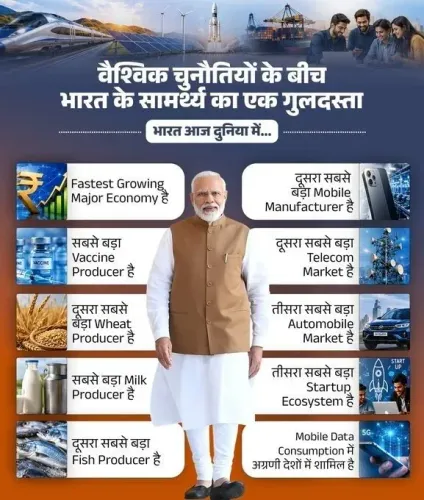
The framing is deliberate and unmistakable. Prime Minister Modi's 'Sabka Saath, Sabka Vikas' doctrine — articulated since 2014 — has been the BJP's national template for inclusive growth, and Choudhary's language maps directly onto it. By tagging the Prime Minister in the post, Bihar's chief minister signals alignment between the state's agenda and the Centre's development philosophy.
The BJP has consistently deployed this messaging across states it governs, tying rural connectivity, small-town opportunity, and anti-poverty welfare into a single narrative thread. Choudhary's post fits that pattern precisely — a state-level restatement of a national commitment.
What 'Balanced Development' Means for Bihar
Bihar remains one of India's most rural states, with a large share of its population dependent on agriculture and remittances. The emphasis on villages and small towns is not rhetorical decoration — it speaks to a structural reality the state has long grappled with. Connectivity gaps between districts, and between districts and the national mainstream, have historically constrained economic mobility for millions of families.
Choudhary's invocation of 'balanced development' — santulit vikas — signals a governance pitch that goes beyond flagship urban infrastructure, reaching instead for the harder, slower work of last-mile delivery. The post does not cite specific schemes or budget figures, but it sets the rhetorical and political frame for how the current administration intends to be judged.
The Political Stakes of an Inclusive Growth Pledge
Governing Bihar has never been simple arithmetic. The state's social diversity and its complex caste geography mean that a promise of 'no one left behind' is as much a political signal as a policy one — reassuring communities that have historically felt excluded from development's benefits. Choudhary's post, short as it is, stakes out a position the administration will be held against.
Watch for Bihar's upcoming state budget deliberations and any rural connectivity or welfare scheme announcements that give this vision a programme and a price tag. The rhetoric has been set. The implementation is where the proof lives.
Point of View
He embeds Bihar's agenda inside a national success narrative rather than standing apart from it. The focus on rural and remote areas is also politically astute in a state where agrarian constituencies remain decisive. The pledge of 'no citizen left behind' sets a measurable standard, one that opposition parties will inevitably invoke when evaluating welfare delivery and connectivity outcomes. It is, ultimately, a governance pitch that doubles as a political covenant.
NationPress
26 Oct 2026
Frequently Asked Questions
What is Bihar CM Samrat Choudhary's development model?
Choudhary describes it as a pro-people, proactive, good-governance model focused on balanced development — equal opportunity for villages and small towns, connectivity for remote areas, and dignified living conditions for poor families.
How does Choudhary's vision connect to PM Modi's governance philosophy?
Choudhary's post directly echoes Prime Minister Modi's 'Sabka Saath, Sabka Vikas' framework, which has been the BJP's national template for inclusive development since 2014. He tagged Modi in the post, signalling state-centre alignment.
What does 'santulit vikas' or balanced development mean for Bihar?
Balanced development in Bihar's context means extending infrastructure, opportunity, and welfare services equally to villages, small towns, and remote districts — not concentrating growth only in urban centres.
Who are the key beneficiaries of Bihar's governance vision as stated by CM Choudhary?
The chief minister specifically identified poor families, rural populations, residents of small towns, and communities in remote and underconnected areas as the intended beneficiaries.
What should we watch for next from Bihar's government following this statement?
Key things to watch include Bihar's state budget deliberations and any specific rural connectivity or welfare scheme announcements that give Choudhary's vision concrete programme details and funding.