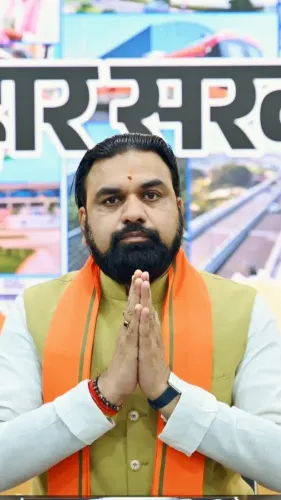
CM Samrat Choudhary Hails Bastar's Transformation Under Modi-Shah

Synopsis
Bihar CM Samrat Choudhary highlighted Bastar's shift from Naxal violence to youth skill-building and employment on August 13, 2026, crediting PM Modi's guidance and Home Minister Amit Shah's anti-Naxal and rehabilitation strategy for the region's transformation.
Key Takeaways
Bihar CM Samrat Choudhary posted on August 13, 2026 praising Bastar's transformation from a Naxal-affected zone to a region of emerging skill and employment.
He credited PM Narendra Modi's guidance and Home Minister Amit Shah's leadership for driving decisive anti-Naxal action alongside rehabilitation policy.
Bastar in Chhattisgarh was for decades one of India's most violence-affected Left Wing Extremism regions, with tribal communities bearing the heaviest costs.
The BJP's integrated strategy since 2014 pairs security operations with development, infrastructure, and surrender-rehabilitation programmes in LWE-affected districts.
Official Left Wing Extremism violence data for 2025-26 — yet to be released — will be the key empirical test of the claimed transformation.
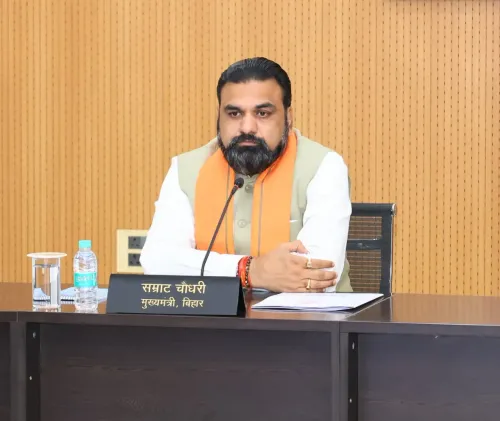
A region once synonymous with Maoist ambushes and enforced silence is now, according to Bihar Chief Minister Samrat Choudhary, producing skilled youth and self-reliant communities. In a post on X on August 13, 2026, the senior BJP leader pointed to Bastar as proof that peace, trust, and development — working together — can rewrite a place's story.
Choudhary wrote: 'Bastar ki badalti tasveer bata rahi hai ki shanti, vishwas aur vikas milkar kaise nayi raah banate hain' — 'The changing picture of Bastar shows how peace, trust, and development together forge a new path.' He credited the shift to decisive action against Naxalism paired with effective rehabilitation, under the guidance of Prime Minister Narendra Modi and the leadership of Union Home Minister Amit Shah.
Bastar's Long Shadow — and What's Claimed to Have Changed
Bastar, a sprawling forested region in Chhattisgarh, spent decades at the epicentre of India's Left Wing Extremism crisis. Maoist cadres controlled vast stretches of territory, security forces faced near-constant ambushes, and development programmes struggled to reach villages cut off by fear and violence. The human cost — in lives, in lost schooling, in stunted livelihoods — fell heaviest on tribal communities. Choudhary's post frames the present moment as a decisive break from that past. Young people in the region are, he says, learning skills, connecting to employment, and moving toward self-reliance — a portrait of normalcy that would have been unthinkable at the height of the insurgency.The Modi-Shah Blueprint: Security Plus Rehabilitation
The political architecture behind this claimed transformation is not new. Since 2014, the BJP-led central government has pursued an integrated strategy against Left Wing Extremism — intensified security operations running alongside targeted development, infrastructure investment, and surrender-and-rehabilitation policies. Amit Shah, as Home Minister, has been the operational face of this approach, overseeing coordinated anti-Naxal drives across the so-called 'Red Corridor' states. The logic is deliberate: military pressure alone cannot hold ground that development does not fill. Skill centres, road connectivity, and rehabilitation packages for surrendered cadres are designed to drain the insurgency of its social base — particularly young tribal men and women who might otherwise be recruited. Samrat Choudhary's post fits squarely within this BJP narrative, amplifying the Centre's framing of Bastar as a governance success story at a moment when official Left Wing Extremism violence data for 2025-26 is awaited.Why a Bihar CM Is Talking About Chhattisgarh
The cross-state commentary is worth noting. As a senior BJP leader and Bihar's Chief Minister, Choudhary is doing what the party's communication architecture encourages: state leaders amplifying central government achievements, reinforcing a unified national narrative on security and development. Bastar, in this telling, is not just a Chhattisgarh story — it is evidence for a pan-India BJP governance argument. The real test will come in the numbers. When official data on LWE-related violence and displacement for 2025-26 is released, it will either underwrite or complicate the transformation Choudhary describes. Until then, Bastar remains both a genuine policy experiment and a contested political symbol — and the BJP is making sure neither goes unnoticed.Point of View
He reinforces the party's centralised credit architecture, where state leaders amplify national leadership. The post lands at a politically useful moment: before official 2025-26 LWE data is public, the narrative space is open. If violence indices have indeed dropped and rehabilitation numbers have risen, this framing will gain hard evidence; if the data is mixed, the rhetorical investment will face scrutiny.
NationPress
28 Sept 2026
Frequently Asked Questions
What did Bihar CM Samrat Choudhary say about Bastar?
On August 13, 2026 , Choudhary posted that Bastar's changing picture shows how peace, trust, and development together forge a new path, crediting PM Modi and Home Minister Amit Shah for anti-Naxal action and rehabilitation policies driving the transformation.
Why is Bastar significant in India's Naxal conflict?
Bastar in Chhattisgarh has been one of the most heavily affected regions of India's Left Wing Extremism insurgency for decades, with Maoist cadres controlling large forest areas and tribal communities facing violence and displacement.
What is the BJP government's strategy against Naxalism?
Since 2014 , the BJP-led central government has pursued an integrated approach combining intensified security operations with development programmes, infrastructure investment, and surrender-and-rehabilitation policies in LWE-affected districts.
What role has Amit Shah played in anti-Naxal operations?
Union Home Minister Amit Shah has been the operational face of India's anti-Naxal strategy, coordinating security drives across Red Corridor states while overseeing rehabilitation and development outreach for affected tribal populations.
How will Bastar's transformation be verified?
The key empirical test will be the official Left Wing Extremism violence data for 2025-26 , which when released will indicate whether incidents, casualties, and displacement have declined in line with the government's claims of progress in Bastar.