CM Samrat Choudhary Quotes Modi on India's Naxal Fight
Synopsis
Bihar Chief Minister Samrat Choudhary quoted PM Modi on November 8, 2026, highlighting how over 230 districts across nearly 20 states were once gripped by Left-Wing Extremism, citing states like Bihar, Chhattisgarh, and Odisha as the worst affected.
Key Takeaways
Bihar CM Samrat Choudhary posted on November 8, 2026 , quoting PM Narendra Modi on India's anti-Naxal campaign.
The post states that over 230 districts across nearly 20 states were once affected by Left-Wing Extremism.
States named include Bihar, Maharashtra, Odisha, Madhya Pradesh, and Chhattisgarh .
Chhattisgarh's Bastar region has historically been considered the epicentre of Maoist insurgency in India.
India's counter-Naxal strategy has combined paramilitary operations with infrastructure and welfare schemes in tribal areas.
The government's framing positions the decline in Naxal violence as a key achievement of coordinated central and state security policy.
When 230-plus districts across nearly 20 states once lived under the shadow of Maoist violence, the scale of the challenge was unlike almost anything else on India's internal-security map. Bihar Chief Minister Samrat Choudhary posted on X on Sunday, November 8, 2026, citing Prime Minister Narendra Modi's words on what it took — and continues to take — to push back that tide.
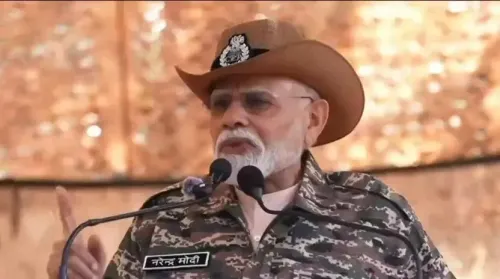
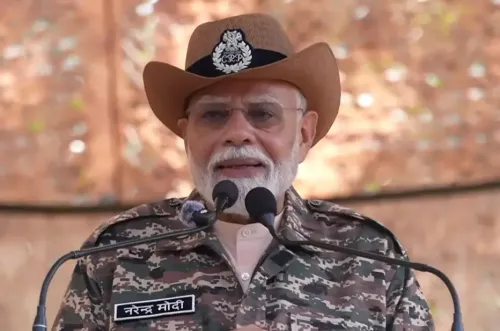
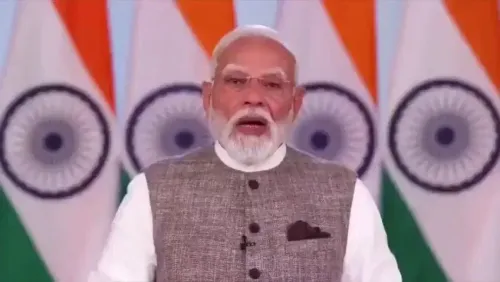
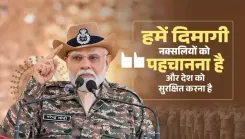
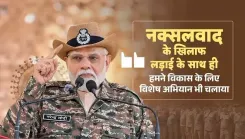
Quoting Modi directly, Choudhary wrote: 'माओवादी आतंक और नक्सलवाद के विरुद्ध लड़ाई आसान नहीं रही है' — 'The fight against Maoist terror and Naxalism has not been easy.' The post names Bihar, Maharashtra, Odisha, Madhya Pradesh, and Chhattisgarh as states that bore the heaviest weight of Left-Wing Extremism, describing a large swath of the country once gripped by the insurgency.From Naxalbari to a 230-District Crisis
The roots of the problem stretch back to the 1967 Naxalbari uprising in West Bengal, but the insurgency metastasised in the 2000s, tunnelling through the forests and tribal belts of central and eastern India. At its worst, the 'Red Corridor' — a rough band running from Nepal's border down through Chhattisgarh and into Andhra Pradesh — functioned as a parallel state in dozens of districts, with Maoist cadres levying taxes, holding 'people's courts', and attacking security forces and infrastructure.
Successive governments classified over 100 to 200 districts as Left-Wing Extremism-affected and placed them under combined security-and-development protocols. The strategy had two tracks: paramilitary operations to degrade armed cadres, and welfare and infrastructure schemes — roads, schools, mobile connectivity — aimed at addressing the economic grievances that gave the movement its recruitment base in marginalised tribal communities.
Chhattisgarh at the Epicentre
Chhattisgarh became the operational heart of the insurgency and of the state's response. The state's dense forests, weak road connectivity, and large Adivasi (tribal) population made it both fertile ground for Maoist organising and extremely difficult terrain for security forces. Major encounters, retaliatory attacks on police stations, and the destruction of road-building equipment defined years of headlines from Bastar and Dantewada.
Bihar itself — where CM Choudhary now governs — saw significant Naxal activity in its southern districts bordering Jharkhand, requiring sustained policing and development investment to stabilise.
Modi's Framing and What the Post Signals
By amplifying Modi's words, Choudhary is doing something politically deliberate: placing the reduction of Naxal violence squarely within the BJP government's security record at the centre. The framing — 'the fight has not been easy' — acknowledges the cost paid by security forces and affected communities while pointing toward progress. It is a posture of hard-won, earned confidence rather than a victory declaration.
The post arrives as the Ministry of Home Affairs has in recent years reported a sharp fall in the number of LWE-affected districts and in the annual count of violence incidents — a data point the government has repeatedly cited as evidence its dual security-development model is working. Whether the remaining districts will respond to the same playbook remains the central question for policymakers and the tribal communities who live with the consequences either way.
India dismantled a 230-district insurgency one road, one outpost, and one operation at a time. The job, by all official accounts, is not finished — but the trajectory has visibly shifted.
Point of View
He ties Bihar's governance narrative to the BJP's national security brand at a time when the party seeks to consolidate its record on LWE reduction. The acknowledgement that the fight 'has not been easy' is rhetorically significant — it pre-empts criticism of past failures while crediting the present trajectory to central leadership. This pattern of amplifying Prime Ministerial statements on security themes has become a standard tool for state-level BJP leaders to reinforce party cohesion and frame the electoral conversation. The broader implication is that the government is shifting from crisis management to a narrative of mission-in-progress — a posture that demands continued delivery on the ground in districts where Maoist presence, though diminished, persists.
NationPress
8 Nov 2026
Frequently Asked Questions
How many districts in India were affected by Naxalism at the peak?
According to the statement quoted by Bihar CM Samrat Choudhary, over 230 districts across nearly 20 states were once affected by Left-Wing Extremism, spanning central and eastern India.
Which states were most affected by Naxalism in India?
Bihar, Maharashtra, Odisha, Madhya Pradesh, and Chhattisgarh are among the states explicitly named as heavily affected by Left-Wing Extremism, with Chhattisgarh's Bastar region historically considered the insurgency's epicentre.
What is India's strategy to fight Naxalism?
India's approach has combined paramilitary and police operations to degrade armed Maoist cadres with development and welfare schemes — roads, schools, and connectivity — targeting the economic grievances that fuel recruitment in tribal areas.
What did PM Modi say about Naxalism?
Bihar CM Samrat Choudhary quoted PM Modi as saying that 'the fight against Maoist terror and Naxalism has not been easy,' acknowledging the scale of the challenge and the states that bore the heaviest burden.
What is the current status of Naxalism in India?
Official government reports have indicated a significant reduction in the number of LWE-affected districts and annual violence incidents in recent years, though security operations and development work continue in remaining affected areas.