CM Sai Shares Modi's Bastar Address on Naxal Fight and Tribal Development
Synopsis
Speaking from the Cobra Operations Base in Bastar, PM Modi cited 15,000 km of roads, 9,500 mobile towers, 175 Eklavya schools, and 50 ITIs built in Naxal-affected districts. CM Vishnu Deo Sai shared the address, spotlighting India's dual-track counter-insurgency and development strategy.
Key Takeaways
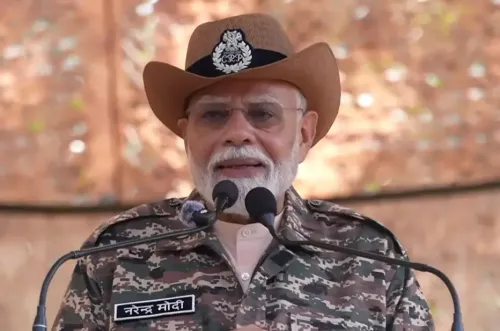
PM Narendra Modi addressed from the Cobra Operations Base, Bastar on 8 November 2026 .
More than 15,000 km of roads have been built in Left Wing Extremism-affected districts.
Over 9,500 mobile towers have been installed in insurgency-affected areas.
Nearly 175 Eklavya Model Residential Schools have been opened for tribal children in LWE regions.
Around 50 ITIs have been set up to connect youth in affected districts with employment.
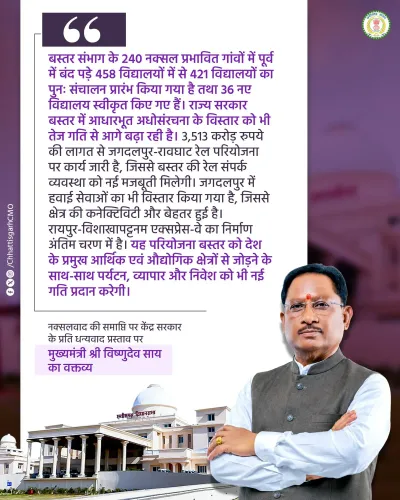
Chhattisgarh CM Vishnu Deo Sai amplified the address, underlining the state's stake in both the security and development track.
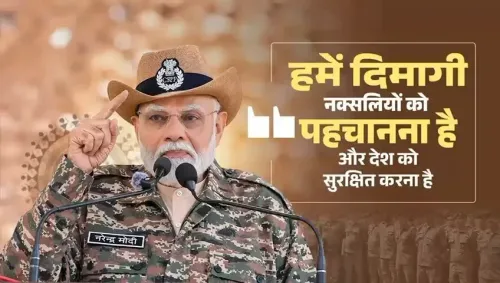
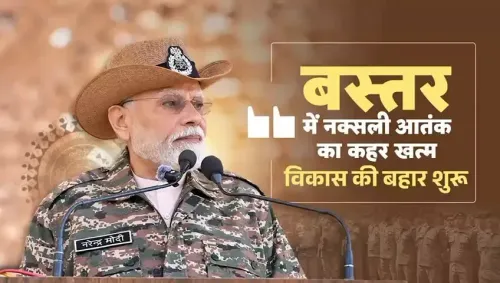
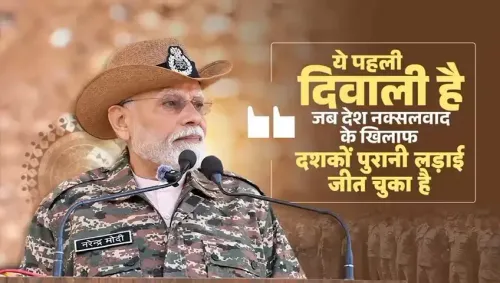
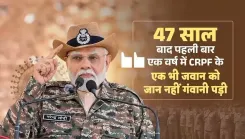
Roads cut through once-impenetrable forests, mobile towers rising where silence once protected insurgents, and schools open for children who had none — Prime Minister Narendra Modi, speaking from the Cobra Operations Base in Bastar on 8 November 2026, laid out the dual-track arithmetic of India's war against Left Wing Extremism. Chhattisgarh Chief Minister Vishnu Deo Sai amplified the address on X, quoting Modi directly.
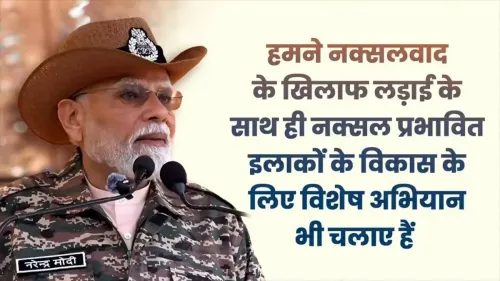
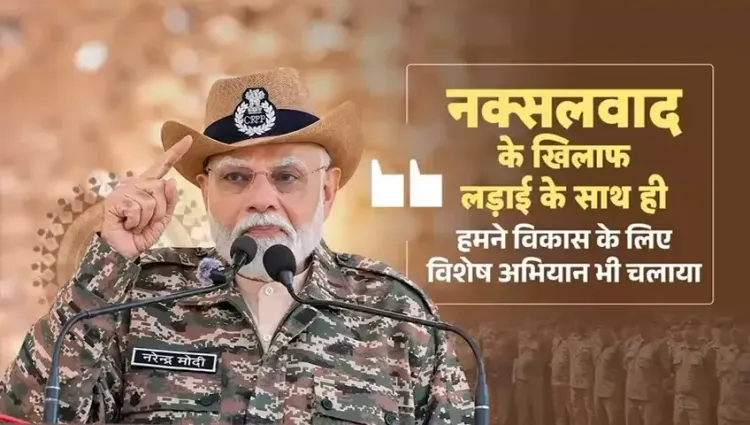
Modi's words, as shared by the Chief Minister, were pointed: 'जब हमने नक्सलवाद के खिलाफ लड़ाई शुरू की, तो इसके साथ ही नक्सल प्रभावित इलाकों के विकास के लिए विशेष अभियान भी चलाए' — 'When we began the fight against Naxalism, we simultaneously ran special campaigns for the development of Naxal-affected areas.' The numbers Modi cited make the scale concrete: more than 15,000 kilometres of roads built in Left Wing Extremism-affected districts, over 9,500 mobile towers installed, nearly 175 Eklavya residential schools opened for tribal children, and around 50 ITIs (Industrial Training Institutes) set up to link young people with employment.
Bastar as the Front Line of a Two-Front Strategy
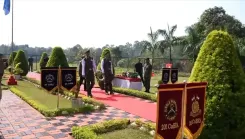
Bastar, the sprawling southern district of Chhattisgarh, has long been the most contested ground of India's Naxal insurgency. The Cobra Operations Base — a forward post for central paramilitary forces — is itself a symbol of the security half of that strategy: establishing a permanent, operational footprint deep inside territory that insurgents once controlled without challenge. Choosing this location for a public address sends a signal as much as any policy announcement.
The logic behind the dual track is straightforward: security operations create corridors; infrastructure makes those corridors permanent. Roads break the isolation that sustained insurgent supply lines and community control. Mobile connectivity allows both security coordination and civilian communication. Schools and skill centres give the next generation a reason — and a path — to stay outside the insurgency's orbit.
Eklavya Schools and the Long Bet on Tribal Education
The Eklavya Model Residential Schools scheme has roots stretching back to 1997–98, when the central government first designed it to deliver quality residential education to Scheduled Tribe children in remote areas. Decades later, in districts where reaching a school once meant risking a landmine-laced track, the scheme has taken on a counter-insurgency dimension as well as an educational one. Nearly 175 such schools in LWE-affected regions, as cited by Modi, represent one of the more durable threads of this policy lineage.
The 50 ITIs announced alongside them target a different vulnerability: youth unemployment, which insurgent networks have historically exploited for recruitment. Connecting a young person in Dantewada or Sukma to a certified skill and a formal job market is, in the government's framing, as much a security measure as a welfare one.
A Pattern That Runs Beyond Chhattisgarh
Chhattisgarh is the primary theatre, but the approach mirrors what has been attempted — with varying results — in Jharkhand, parts of Odisha, and pockets of Maharashtra. Each state presents its own terrain, its own tribal demographics, and its own history with the insurgency. What the Modi address from Bastar crystallises is the central government's argument that the security gains of recent years are durable precisely because they have been paired with roads, towers, schools, and training centres — not left to stand on force alone.
Chief Minister Sai's decision to amplify the address reflects the state government's investment in owning both sides of that story — the operations and the development dividend that follows. The kicker, though, belongs to the numbers: 15,000-plus kilometres of road through some of the country's most difficult terrain is not a statistic that sits still. It moves goods, people, ideas — and eventually, it moves history.
Point of View
Binding the two tracks into a single narrative the BJP can own as it approaches the next electoral cycle in Chhattisgarh and neighbouring LWE states. The infrastructure figures — roads, towers, schools, ITIs — are designed to shift the conversation from body counts to balance sheets, arguing that lasting pacification is built on connectivity, not coercion alone. Chief Minister Sai's amplification signals Raipur's desire to be seen as the executing arm of this dual mandate, not merely a beneficiary of central security deployments. The 'what to watch' question is whether these numbers translate into measurable improvements in human development indicators in the most conflict-affected blocks — the metric that will ultimately determine whether the dual-track strategy holds beyond the insurgency's military decline.
NationPress
8 Nov 2026
Frequently Asked Questions
What did PM Modi announce at the Cobra Operations Base in Bastar?
PM Modi cited that more than 15,000 km of roads and over 9,500 mobile towers have been built in Left Wing Extremism-affected districts, alongside nearly 175 Eklavya residential schools for tribal children and around 50 ITIs for youth employment.
What is the Cobra Operations Base in Bastar?
The Cobra Operations Base in Bastar is a forward base used by central paramilitary forces for anti-Naxal operations in southern Chhattisgarh's Bastar district.
What are Eklavya Model Residential Schools?
Eklavya Model Residential Schools are centrally funded residential schools for Scheduled Tribe children in remote areas, launched in 1997–98 to improve access to quality education, including in insurgency-affected regions.
What is India's dual-track strategy against Naxalism?
India's dual-track strategy pairs intensified security operations against Left Wing Extremism with accelerated development of roads, mobile infrastructure, schools, and skill training centres in affected districts, aiming to both suppress insurgency and address the conditions that sustain it.
Why did CM Vishnu Deo Sai share Modi's Bastar address?
Chief Minister Vishnu Deo Sai shared PM Modi's address to highlight Chhattisgarh's role in implementing the central government's combined security and development approach in Naxal-affected districts, particularly in the Bastar region.