PM Modi Declares India Naxal-Free at Bastar COBRA Base
Synopsis
Prime Minister Narendra Modi, speaking from a COBRA Operations Base in Bastar on Diwali 2026, declared that India has won its decades-long war against Naxalism, with every district in the country now free of Left Wing Extremism — a moment the Chhattisgarh CMO called 40-50 years in the making.
Key Takeaways
PM Narendra Modi declared India completely free of Naxalism and Maoist terror on Diwali, November 8, 2026 .
The announcement was made from a COBRA Operations Base in Bastar , Chhattisgarh — historically the core of the Maoist insurgency.
Modi called it the first Diwali in 40-50 years when every district of India is free from Naxalism.
The Chhattisgarh CMO shared the remarks, tagging Chief Minister Vishnu Deo Sai in the post, underscoring state-level coordination.
India's National Policy and Action Plan on Left Wing Extremism , launched in 2015, combined security operations with development schemes in affected regions.
Focus now shifts to post-clearance rehabilitation, tribal welfare, and infrastructure rollout in former Naxal zones across Bastar.
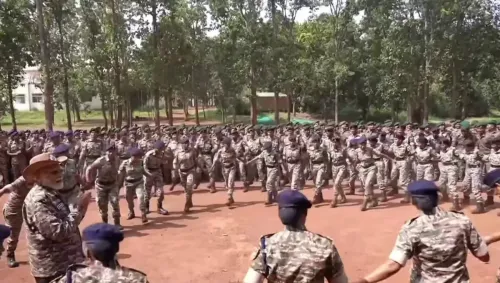
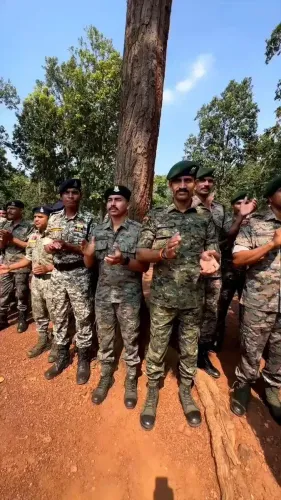
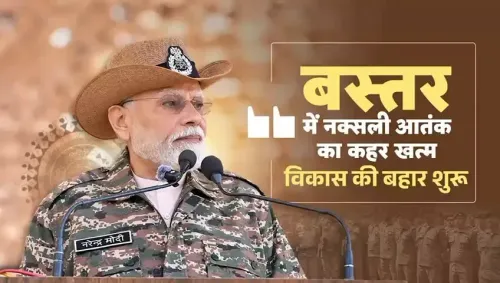
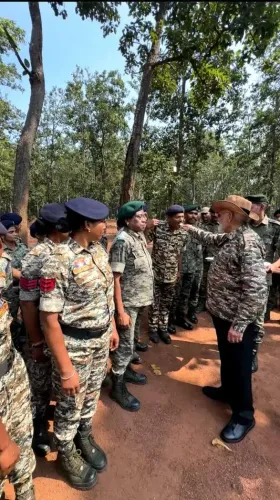
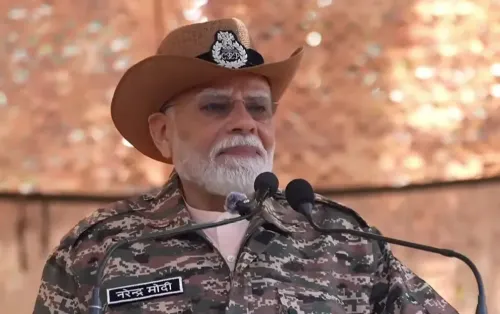
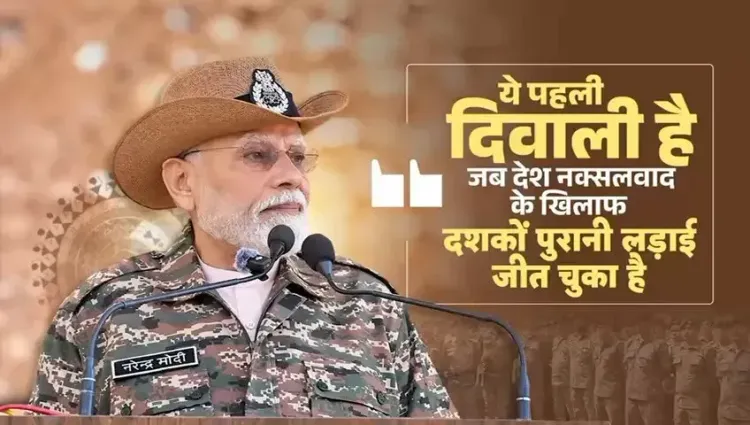
Forty to fifty years of jungle warfare, ambushes, and burning villages — and then, on Diwali 2026, a Prime Minister standing at a COBRA Operations Base in Bastar to declare it over. Prime Minister Narendra Modi, addressing security personnel and citizens from the insurgency's former heartland, proclaimed that India had finally won its decades-long battle against Naxalism and Maoist terror, with every district in the country now free of Left Wing Extremism.
The Chief Minister's Office of Chhattisgarh shared Modi's remarks on Sunday, November 8, 2026, quoting him directly: 'साथियों, साल 2026 की यह दिवाली वाकई विशेष है' ['Friends, this Diwali of 2026 is truly special']. 'This is the first Diwali,' he said, 'when the country has won a decades-old battle against Naxalism and Maoist terror. This is the first Diwali when every district of the country is free from Naxalism.'
Why Bastar Was the Last Frontier
Bastar, in southern Chhattisgarh, was never just one district among many in the so-called Red Corridor — it was its spine. For more than four decades, the dense forests of Bastar provided Maoist cadres with sanctuary, supply lines, and a theatre for some of the bloodiest attacks on security forces in independent India's history. If the insurgency had an address, this was it.
Chhattisgarh historically held the highest concentration of Naxal-affected districts in the country. The Union government's National Policy and Action Plan on Left Wing Extremism, launched in 2015, wove together police modernisation, elite force deployments — including the COBRA (Combat Battalion for Resolute Action) units of the CRPF — and infrastructure push into affected regions. The Ministry of Home Affairs progressively trimmed the list of LWE-affected districts through the late 2010s and early 2020s, but Bastar's forest belt remained the most stubborn holdout.
Modi at the COBRA Base: Symbolism of the Setting
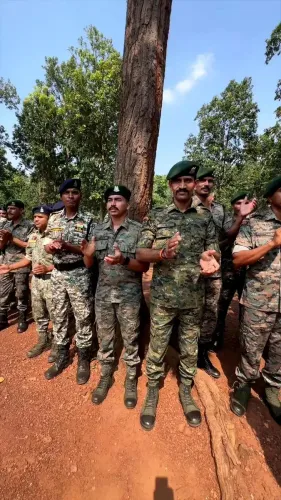
The choice of a COBRA Operations Base as the venue was anything but accidental. COBRA battalions were raised specifically for counter-insurgency in forested terrain, trained in guerrilla tactics and jungle warfare to match Maoist combatants on their own ground. For the Prime Minister to stand at their forward operating post and declare victory is a deliberate tribute to the personnel who bore the heaviest cost of the campaign.
Chhattisgarh Chief Minister Vishnu Deo Sai has been the state face of the final phase of operations, coordinating with central forces under the broader security framework. His government's posture — integrating intelligence-led operations with outreach to surrendering cadres — mirrored the dual-track approach the Centre has advocated since 2015.
What a Naxal-Free Map Means for Tribal Bastar
The strategic declaration now points squarely toward the morning after. For tribal communities across Bastar — who lived caught between insurgent intimidation and security-force operations for two generations — the real measure of this victory will be in roads, schools, health posts, and economic access that follow clearance operations.
The policy blueprint has long promised that security gains unlock development. Rehabilitation schemes for surrendered cadres, compensation frameworks for conflict-affected families, and expedited infrastructure rollout in newly cleared zones are the next chapter. The question now before both the Centre and the Sai government in Raipur is whether the momentum of the military campaign can be matched by the machinery of governance.
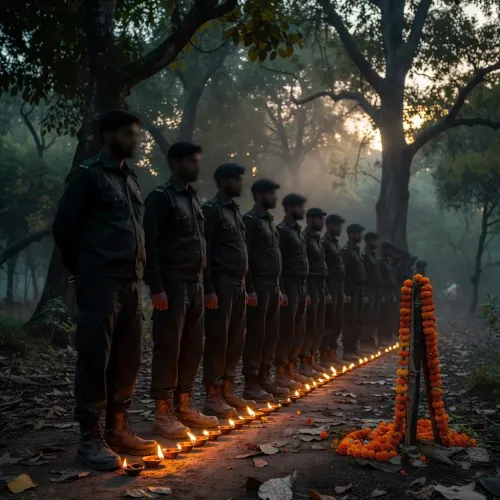
India lit its Diwali lamps this year with a claim that would have seemed audacious just a decade ago. The forests of Bastar, once a no-go zone, now have to become a place people can go home to.
Point of View
And it anchors the BJP's internal-security credentials ahead of any upcoming electoral cycle. The Chhattisgarh CMO's amplification ties Chief Minister Vishnu Deo Sai's administration to the victory narrative, potentially insulating the state government from post-conflict governance pressures. Yet the declaration also creates a high-stakes accountability benchmark — if residual violence resurfaces or development fails to reach tribal communities, the gap between the proclamation and ground reality will become a potent opposition talking point. The harder test of this moment is not the security campaign that ended it, but the development campaign that must now begin.
NationPress
8 Nov 2026
Frequently Asked Questions
Has India really become completely Naxal free in 2026?
Prime Minister Narendra Modi declared on Diwali 2026, speaking from a COBRA base in Bastar, that every district of India is now free from Naxalism. The government's official position is that the decades-long counter-insurgency campaign has achieved full clearance, though independent verification of conditions in every formerly affected district is ongoing.
What is the COBRA force and why did Modi speak from their base in Bastar?
COBRA — Combat Battalion for Resolute Action — is a specialised jungle-warfare unit of the CRPF deployed against Naxal forces in forested terrain. Modi chose a COBRA Operations Base in Bastar as the venue to directly honour the security personnel who bore the highest cost of the anti-Naxal campaign.
What was the Red Corridor and why was Bastar its centre?
The Red Corridor was a belt of districts across central and eastern India heavily affected by Maoist insurgency. Bastar in Chhattisgarh was considered its core because of dense forests, historically limited state presence, and strong Maoist organisational networks that persisted for over four decades.
What is India's National Policy on Left Wing Extremism?
India's National Policy and Action Plan to address Left Wing Extremism was launched in 2015, combining police modernisation, special forces deployments, and development scheme delivery in affected districts. It guided the multi-year campaign that the government says has now achieved full clearance.
What happens to Bastar and tribal communities now that Naxalism is declared over?
The policy focus is expected to shift to rehabilitation of surrendered cadres, compensation for conflict-affected families, and accelerated delivery of roads, schools, and economic infrastructure in formerly Naxal-affected zones. The Chhattisgarh government under CM Vishnu Deo Sai is the primary implementing authority.