PM Modi celebrates Diwali with CoBRA troops in Bastar, declares victory over Naxalism
Synopsis
On Diwali 2026, Modi skipped the ceremonial and headed deep into the Bastar forests — to a CoBRA base that was once a flashpoint of Maoist violence. His declaration that every district of India is now free from Naxalism is the most sweeping claim yet in a 40-50 year conflict, and the visit signals a deliberate political framing: this government closed the chapter.
Key Takeaways
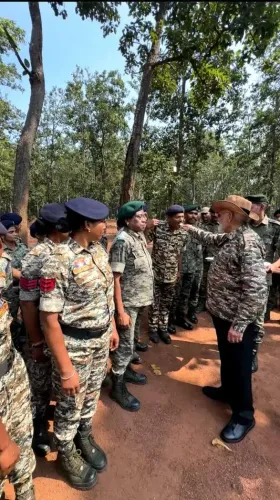
PM Narendra Modi celebrated Diwali on 8 November 2026 at the CoBRA Operations Base, Karanpur , in Bastar, Chhattisgarh .
Modi declared this the first Diwali when every district of India is free from Naxalism , ending a conflict spanning 40–50 years .
He credited CoBRA and other security forces with the decisive elimination of the Maoist threat in the region.
The Karanpur base was previously a launchpad for operations in Abujhmad , once a major Maoist stronghold.
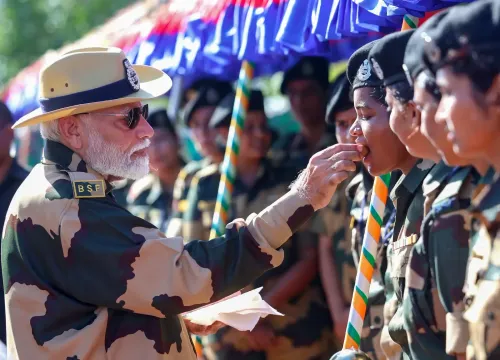
Modi described security personnel as 'family' and said crores of Indians had overcome the fear of Naxalism.
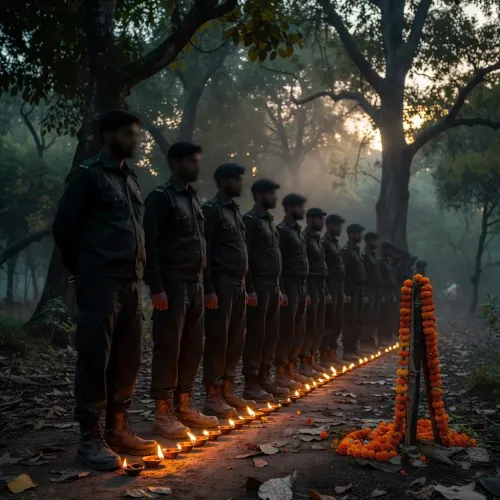
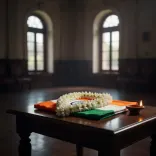
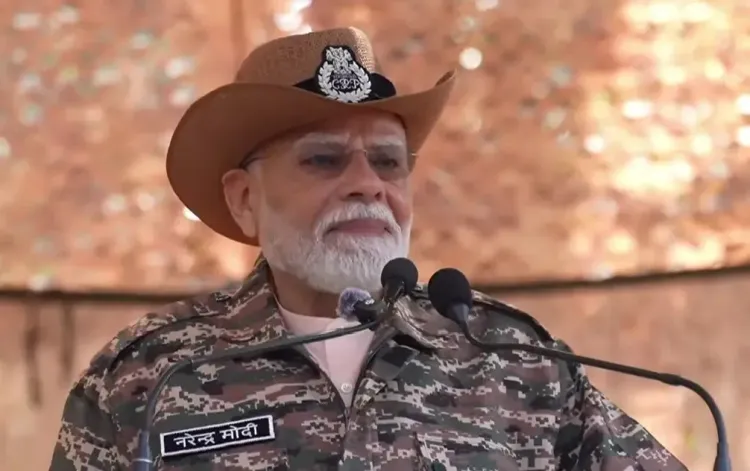
Prime Minister Narendra Modi on Sunday, 8 November 2026, visited the CoBRA Operations Base at Karanpur in Chhattisgarh's Bastar district to celebrate Diwali with security personnel, declaring that India had won its decades-long war against Naxalism — a milestone he described as historic and unprecedented. The visit marks the first time a sitting prime minister has observed the festival at this counter-insurgency base deep in the Bastar forests.
A Diwali in the Bastar Forests
The Karanpur base serves as both a training centre and launchpad for counter-Naxal operations across the Bastar region and Abujhmad — areas once considered among the most entrenched Maoist strongholds in the country. Modi, addressing the assembled personnel, said he had consciously chosen to spend the occasion with the security forces rather than in formal state celebrations, calling them an inseparable part of his family.
'Those who defend our nation at its borders and within, the protectors of our country and the courageous sons and daughters of Mother India, all of you are like family to me,' the Prime Minister said.
Modi Declares End of Naxal Threat
In his address, Modi framed this year's Diwali as qualitatively different from any in living memory, asserting that the security forces' sacrifice and determination had eliminated the Naxal threat from the Bastar region and opened the door to development. He went further, making a sweeping declaration about the national picture.
'After 40–50 years, a Diwali like this has come. This is the first Diwali when the nation has won its decades-long war against Naxalism and Maoist terror. This is the first Diwali when every district of the country is free from Naxalism. This is the first Diwali when crores of countrymen have overcome the fear of Naxalism,' he said.
The claim that every district is now free from Naxal influence marks a significant escalation in the government's public messaging on the insurgency, which has persisted across multiple states — including Chhattisgarh, Jharkhand, and Odisha — for over four decades.
Credit to Security Forces
Modi was emphatic that the achievement belonged to the men and women in uniform rather than to any political or administrative effort alone. 'This is an incredible accomplishment, and a substantial amount of recognition should be attributed to you. It is a tribute to countless courageous individuals such as yourself, our soldiers and security forces,' he said, adding that the visit was specifically intended to honour their contribution during the festival.
The CoBRA (Commando Battalion for Resolute Action) unit, a specialised component of the Central Reserve Police Force (CRPF), has been at the forefront of anti-Naxal operations in the region for years, sustaining significant casualties in its campaign against Maoist cadres.
Context: The Anti-Naxal Campaign
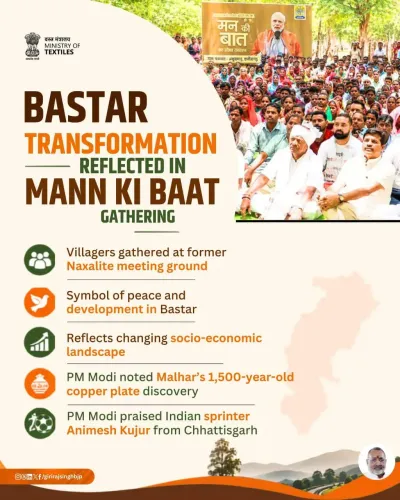
The Naxal insurgency, rooted in the late 1960s and reaching its peak geographic spread in the 2000s, has steadily contracted over the past decade following sustained security operations, developmental outreach, and surrender schemes. The Union Home Ministry has in recent years reported a sharp decline in Naxal-related violence and the number of affected districts. This comes amid a broader government push to accelerate infrastructure and connectivity projects in left-wing extremism (LWE)-affected areas, including road-building, mobile connectivity, and banking penetration in previously inaccessible zones like Abujhmad.
Notably, Modi's declaration that the war has been 'won' is likely to be scrutinised by security analysts, who have historically cautioned against declaring premature victory in a conflict characterised by periodic resurgence.
What Comes Next
With the counter-insurgency entering what the government describes as its final phase, attention is expected to shift to post-conflict rehabilitation — reintegrating surrendered cadres, delivering development dividends to Bastar's tribal communities, and sustaining the security apparatus. The coming months will test whether the gains on the ground translate into lasting peace or require continued vigilance.
Point of View
Connectivity, banking — will reach Bastar's tribal communities fast enough to close the grievance gap that fed the insurgency in the first place. Without that, the military win could remain incomplete.
NationPress
8 Nov 2026
Frequently Asked Questions
Why did PM Modi visit Bastar on Diwali 2026?
PM Modi visited the CoBRA Operations Base at Karanpur in Bastar on 8 November 2026 to celebrate Diwali with security personnel and honour their role in defeating Naxal insurgency. He said he chose to spend the festival with the forces rather than in formal state celebrations, calling them 'family'.
What did PM Modi declare about Naxalism in India?
Modi declared that this was the first Diwali when India had won its decades-long war against Naxalism and Maoist terror, and that every district of the country is now free from Naxal influence. He described the milestone as a historic achievement after 40–50 years of conflict.
What is the CoBRA unit that Modi visited?
CoBRA — Commando Battalion for Resolute Action — is a specialised counter-insurgency unit of the Central Reserve Police Force (CRPF), deployed primarily in left-wing extremism-affected areas. The Karanpur base serves as a training centre and operational launchpad for anti-Naxal missions across Bastar and Abujhmad.
What is the significance of the Bastar and Abujhmad region?
Bastar and Abujhmad in Chhattisgarh were among the most entrenched Maoist strongholds in India, historically regarded as inaccessible terrain where Naxal cadres operated with near-impunity. The region's transformation into a government-controlled area is central to the broader narrative of the anti-Naxal campaign's success.
What comes next after India's declared victory over Naxalism?
With the insurgency described as defeated, the focus is expected to shift to post-conflict rehabilitation — reintegrating surrendered Naxal cadres, accelerating development projects in tribal areas, and sustaining security operations to prevent resurgence. Critics and analysts caution that lasting peace requires addressing the underlying socio-economic grievances that fuelled the movement.