CM Sai Shares Modi's Bastar Warning on 'Ideological Naxals'
Synopsis
At the COBRA Operations Base in Bastar, PM Modi declared that armed Naxalites have been eliminated but 'ideological Naxalites' now occupy organisations and continue to incite people against the Constitution. CM Vishnu Deo Sai amplified the warning, framing the next phase of Chhattisgarh's anti-LWE effort as an ideological battle.
Key Takeaways
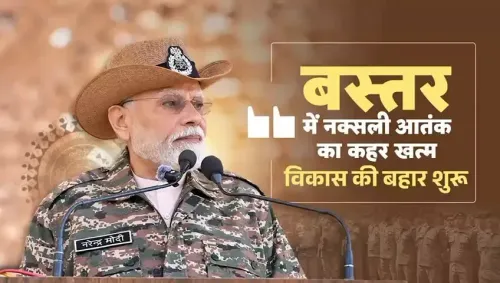
PM Narendra Modi visited the COBRA Operations Base in Bastar on November 8, 2026 , declaring the armed Naxalite threat in forests largely eliminated.
Modi warned that 'ideological Naxalites' have captured 'many organisations' and continue to incite people against India's Constitution and democracy.
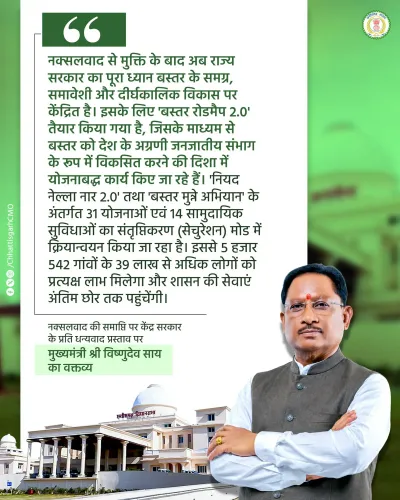
CM Vishnu Deo Sai shared Modi's remarks on X, underscoring Chhattisgarh's focus on the next phase of its anti-Left Wing Extremism effort.
COBRA — Commando Battalion for Resolute Action — is the CRPF's elite jungle-warfare unit with bases in Bastar, central to decades of counter-insurgency operations.
India's National Policy and Action Plan against LWE (2015) combined security operations with development; MHA data shows a steady fall in affected districts and incidents from 2019–2023.
The 'ideological Naxal' framing remains contested — it is a cornerstone of BJP governance rhetoric but has drawn criticism over its breadth of application.
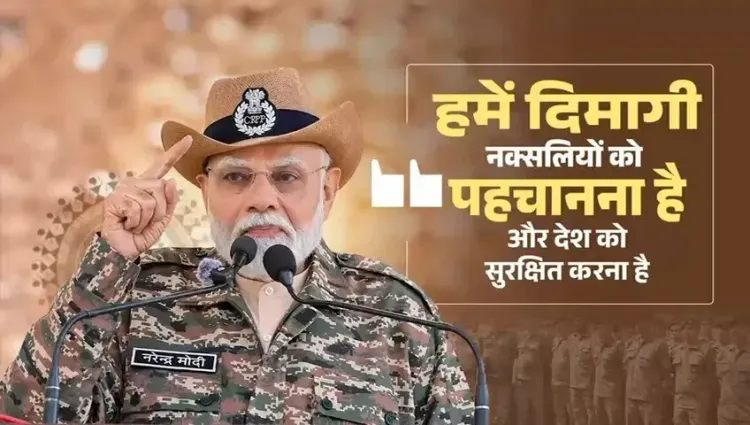
Armed Naxalites may have been driven from the forests of Bastar, but a sharper ideological battle is now underway — one Prime Minister Narendra Modi says is being waged not in the jungle, but inside institutions. Chhattisgarh Chief Minister Vishnu Deo Sai posted a pointed quote from the Prime Minister on Sunday, November 8, 2026, shared from the COBRA Operations Base in Bastar, drawing a hard line between armed insurgents already neutralised and what Modi called 'dimagi Naxalis' — ideological sympathisers still at work.
The Prime Minister's words, as shared by CM Sai, were unambiguous: 'Janglon se hathiyari Naxali toh mit gaye, lekin dimagi Naxaliyon ne kai sangathano par kabja kar rakha hai' — 'Armed Naxalites from the forests have been wiped out, but ideological Naxalites have captured many organisations. Even today they are provoking people against the country's Constitution and democracy. We must identify them, defeat them, and keep the country safe.'
Modi at COBRA Base: Why Bastar Sends a Signal
The choice of venue matters enormously. The COBRA — Commando Battalion for Resolute Action — is the CRPF's elite jungle-warfare unit, purpose-built for counter-insurgency operations in Bastar's dense terrain. A Prime Ministerial visit to its operations base is a deliberate show of solidarity with security forces who have borne the operational cost of the decades-long campaign against Left Wing Extremism.
Bastar was once the undisputed heartland of Maoist insurgency in India. The Ministry of Home Affairs has tracked a steady reduction in Naxal-affected districts and violent incidents across its annual reports from 2019 through 2023, crediting coordinated security operations and development investment under the central government's National Policy and Action Plan against Left Wing Extremism, launched in 2015. That policy explicitly combined kinetic operations with rights-based development — roads, schools, banking connectivity — in a bid to cut off the insurgency's social base.
The 'Ideological Naxal' Frame and What It Means
Modi's framing of a two-front challenge — armed insurgency largely suppressed, ideological influence still active — is not new, but the Bastar platform amplifies its weight. BJP governments at the centre and in states like Chhattisgarh have consistently distinguished between forest-based armed cadres and what they term 'urban Naxals': activists, academics, and civil-society figures alleged to provide intellectual cover for the Maoist movement.
This distinction is politically loaded and legally contested. Critics argue the label has at times been used too broadly; proponents insist that front organisations sustain the ideological infrastructure that keeps insurgency alive even as armed strength declines. What is uncontested is that CM Sai's Chhattisgarh government — in office since December 2023 — has made anti-Naxal operations and their follow-through a centrepiece of its governance narrative.
Chhattisgarh's Stake in the Bastar Moment
For Vishnu Deo Sai, amplifying Modi's words from the COBRA base serves a pointed political and administrative purpose: it signals that the state's security gains are real, the central commitment is firm, and the next phase of the fight is now conceptual as much as kinetic. Bastar's tribal communities — long caught between Maoist intimidation and security-force pressure — stand to gain most from durable peace, and that dimension underpins every political statement made from this region.
The question that follows Modi's warning is a practical one: how do you operationalise the identification and defeat of ideological influence without overreaching into legitimate dissent? That is the constitutional tightrope India's institutions will have to walk as Bastar's battlefield grows quieter and the debate moves to courtrooms, campuses, and civil-society boardrooms.
Point of View
The government is shifting the battlefield to ideology and institutions, a move that consolidates political credit for security gains while sustaining the operational and legal urgency around alleged Maoist front organisations. For CM Sai's relatively young government in Chhattisgarh, amplifying this message from Bastar itself is a way of cementing the state's identity as the proving ground of the BJP's anti-Naxal record. The 'ideological Naxal' construct, however, sits at a fraught intersection of security law and free expression — its application will be watched closely by civil-liberties advocates and opposition parties heading into the next legislative cycle.
NationPress
8 Nov 2026
Frequently Asked Questions
What did PM Modi say at the COBRA base in Bastar?
PM Modi declared that armed Naxalites from the forests have been eliminated, but 'ideological Naxalites' have seized control of many organisations and are still inciting people against the Constitution and democracy. He called on people to identify, defeat, and keep the country safe from them.
What is COBRA in the context of Naxal operations?
COBRA stands for Commando Battalion for Resolute Action — an elite unit of India's CRPF trained specifically for jungle warfare and counter-insurgency operations against Naxalites, with operational bases in the Bastar region of Chhattisgarh.
What does 'ideological Naxal' or 'urban Naxal' mean?
'Ideological Naxal' or 'urban Naxal' refers to individuals or organisations that the government alleges provide intellectual, financial, or logistical support to the Maoist movement without taking up arms. The term is used by BJP leaders to describe alleged sympathisers in civil society, academia, and activist groups, though its application remains legally and politically contested.
What is the status of Naxalism in Bastar in 2026?
Bastar has historically been the epicentre of Maoist insurgency in India. Official government data from 2019 to 2023 showed a consistent decline in Naxal-affected districts and violent incidents, attributed to coordinated security operations and development investment under the 2015 National Policy and Action Plan against Left Wing Extremism.
Why did CM Vishnu Deo Sai post PM Modi's remarks?
Chief Minister Vishnu Deo Sai shared Modi's statement to signal Chhattisgarh's alignment with the central government's evolving anti-LWE strategy, framing the state's next governance challenge as defeating ideological influence even as the armed insurgency has been substantially weakened.