Gadkari Demands Kharge Apologise Over Remarks on PM Modi's Late Father
Synopsis
Senior BJP leader and Union Minister Nitin Gadkari has strongly condemned Congress president Mallikarjun Kharge for remarks about PM Modi's late father made in Patna, calling them a violation of democratic dignity and demanding a public apology.
Key Takeaways
Union Minister Nitin Gadkari condemned Congress president Mallikarjun Kharge over remarks in Patna about PM Modi's late father on 25 October 2026 .
Gadkari described the remarks as 'extremely condemnable' and called for Kharge to publicly express regret.
He cited a pattern of alleged personal attacks on PM Modi's family and modest background over the years.
Gadkari acknowledged the right to political opposition and policy criticism, but drew a firm line at dragging a Prime Minister's deceased family into debate.
He invoked the mandate of ' 140 crore Indians ' to frame the remarks as disrespectful to voters, not just to one family.
The minister warned that voters are 'watching' and will respond through democratic means.
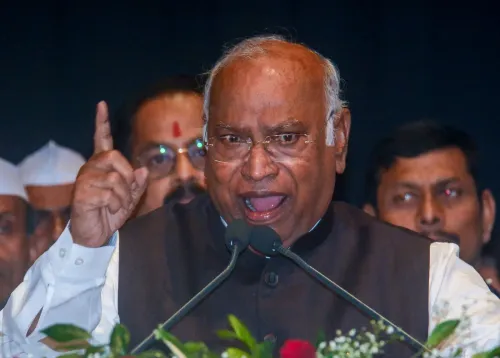
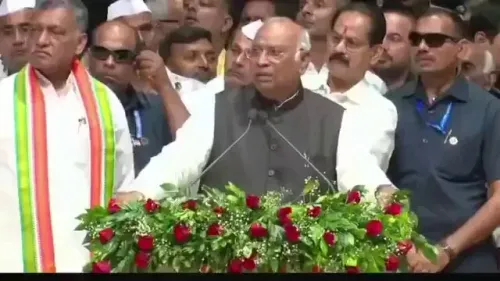
When a ruling party's road minister invokes 'the dignity of democracy itself,' the political temperature has crossed a threshold. Union Road Transport and Highways Minister Nitin Gadkari on Sunday, 25 October 2026, sharply condemned Congress president Mallikarjun Kharge over remarks allegedly made in Patna about the late father of Prime Minister Narendra Modi, calling them 'extremely condemnable' and demanding a public apology.
What Gadkari Said — and Why It Stings
In a detailed post in Hindi, Gadkari pulled no punches. 'जितनी कड़ी निंदा की जाए, कम है' ('No amount of condemnation is sufficient'), he wrote, describing the Patna remarks as an affront not just to one family but to the norms of political conduct. He recalled a pattern of what he characterised as personal attacks on PM Modi — mockery of his modest origins, alleged slurs against his mother — and noted, with pointed timing, that 'the same language has now reached the tongue of the party's highest leader.'
The minister was explicit that dissent has its place: 'In a democracy, there is every right to oppose. Ask the government questions, criticise its work.' But, he argued, dragging the late father of 'a Prime Minister elected by the mandate of 140 crore Indians' into political debate crosses an entirely different line.
The Pattern Gadkari Is Pointing To
This is not the first time BJP leaders have raised the issue of personal remarks directed at PM Modi's background. Narendra Modi, who has spoken publicly about his upbringing in Vadnagar, Gujarat — where his father reportedly ran a tea stall — has made his humble origins a central part of his political identity. Critics referencing that background, even tangentially, tend to ignite sharp reactions from the ruling party, which frames such comments as elitist condescension toward voters who share similar origins.
Mallikarjun Kharge has been Congress president since 2022, becoming the first non-Gandhi to lead the party in over two decades. His combative style on the campaign trail has frequently drawn rebukes from BJP, and this episode fits a longer arc of escalating personal rhetoric on both sides of India's political divide.
Gadkari's Direct Challenge to Congress
The minister closed with a message aimed squarely at the opposition party as a whole: 'When arguments run short, language deteriorates. Congress should reflect on this, and Shri Kharge ji should express regret over his words.' He ended with a democratic warning rather than a legal one — 'the public is watching everything and will certainly give its answer the democratic way' — a formulation that keeps the pressure moral and electoral rather than institutional.
As of filing, Congress had not issued a public response to Gadkari's statement. Whether Kharge addresses the demand for regret — or doubles down — will set the next beat of what is fast becoming one of the sharper personal-conduct controversies of the current political season.
Point of View
While placing Congress in a defensive posture over the conduct of its own president. The demand for an apology — rather than a legal notice or parliamentary privilege motion — keeps the battleground in public opinion, where BJP calculates it has the advantage. This episode also underscores a recurring structural tension in Indian opposition politics: sharp campaign rhetoric that resonates in rallies can rapidly become a liability when it is perceived as targeting personal grief rather than public policy. Whether Congress responds with contrition, silence, or counter-escalation will reveal how it reads the electoral risk of this moment.
NationPress
26 Oct 2026
Frequently Asked Questions
What did Mallikarjun Kharge say about PM Modi's father in Patna?
The specific remarks have not been independently verified, but Union Minister Nitin Gadkari stated that Kharge made comments in Patna about PM Modi's late father that Gadkari described as 'extremely condemnable' and a violation of political dignity.
Why is Nitin Gadkari demanding an apology from Kharge?
Gadkari argued that targeting the late father of an elected Prime Minister crosses the line between legitimate political criticism and personal disrespect, and that Kharge should publicly express regret for his words.
Has Congress responded to Gadkari's statement?
As of the time of this report, the Indian National Congress had not issued a public response to Gadkari's demand for an apology from party president Mallikarjun Kharge.
Who is Mallikarjun Kharge and what is his position?
Mallikarjun Kharge is the president of the Indian National Congress, a post he has held since 2022 . He was the first non-Gandhi to lead the party in over two decades.
Is it common for Indian politicians to make personal remarks about rivals' families?
While Indian political campaigns have periodically seen personal attacks on leaders' family backgrounds, such remarks are widely condemned across party lines as violations of democratic norms. BJP has consistently flagged instances involving PM Modi's family as particularly objectionable.