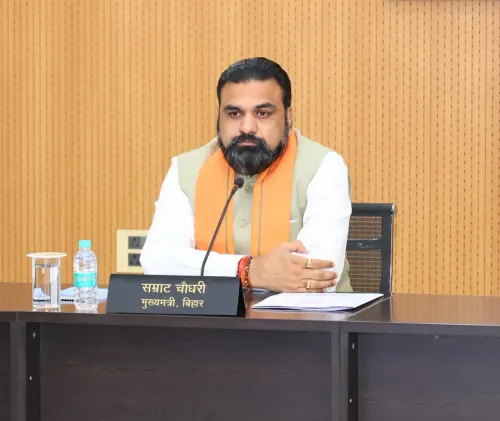
CM Samrat Choudhary Flags Cyber Threat to India's Banking System
Synopsis
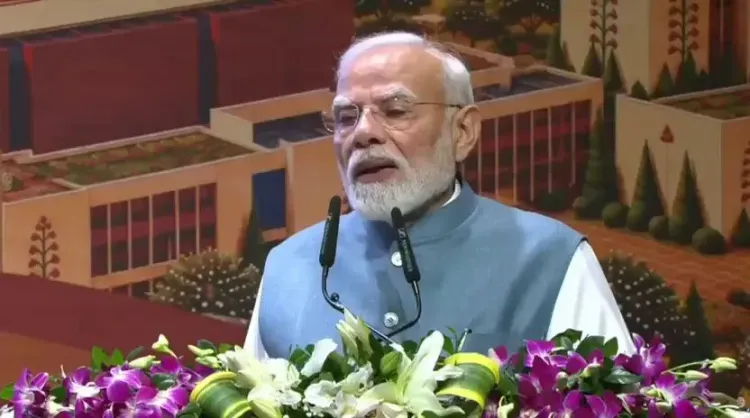
Bihar Chief Minister Samrat Choudhary urged Prime Minister Narendra Modi on 25 October 2026 to prioritise robust digital infrastructure, secure data centres, and strong computing systems to shield India's banking sector from cyber criminals and cyber terrorists.
Key Takeaways
Bihar CM Samrat Choudhary called for urgent action to protect India's banking system from cyber threats in a post addressed to PM Narendra Modi .
He specifically demanded robust digital infrastructure , secure data centres , and powerful computing systems as non-negotiable priorities.
India's National Cyber Security Policy (2013) and the Digital India programme (2015) already identify financial networks as critical infrastructure requiring protection.
The Reserve Bank of India has issued multiple rounds of digital-security guidelines for banks as cyber fraud incidents have risen with digital banking expansion.
Choudhary's direct address to the Prime Minister signals state-level pressure for faster central action on banking cyber resilience.
India's banking network faces a twin challenge — expanding fast enough to serve a billion-plus customers while hardening itself against cyber criminals who are growing just as quickly. On Sunday, 25 October 2026, Bihar Chief Minister Samrat Choudhary stepped into that debate with a pointed post on X, calling for stronger digital infrastructure, secure data centres, and resilient computing systems to protect the financial sector from what he described as 'cyber looters and cyber terrorists.'
Choudhary's post, addressed to Prime Minister Narendra Modi, argued that making banking 'more efficient and trustworthy' is only half the mission — the other half is keeping it safe. 'साइबर लुटेरों और साइबर आतंकियों से सुरक्षित रखना भी अनिवार्य है' ['protecting it from cyber looters and cyber terrorists is also essential'], he wrote, framing digital security not as an afterthought but as a national imperative.
Why India's Financial Networks Are in the Crosshairs
The concern is not theoretical. India has built one of the world's most ambitious real-time payment ecosystems over the past decade, dramatically widening access to banking services. But that scale has made financial networks a high-value target. Incidents of cyber fraud aimed at banking customers and institutions have climbed alongside the expansion, exposing gaps in data protection and system resilience that regulators and policymakers have repeatedly flagged.
The Reserve Bank of India has issued successive rounds of guidance tightening digital security standards for banks, while India's National Cyber Security Policy — first released in 2013 — identified the financial sector as a critical infrastructure requiring ring-fenced protection. The Digital India programme, launched in 2015, placed secure data centres and enhanced computing capacity at the core of its infrastructure agenda. Choudhary's call lands squarely within that policy lineage — but with fresh urgency.
A State Voice Amplifying a Central Priority
It is notable that the prompt comes from a state chief minister rather than a central minister. Senior BJP leaders at the state level increasingly use direct addresses to the Prime Minister on social media to signal alignment with — and, implicitly, pressure for acceleration of — central digital-economy priorities. By naming Modi directly, Choudhary is not just raising an issue; he is inviting a visible central response.
The three-point prescription Choudhary outlines — robust digital infrastructure, secure data centres, and powerful computing systems — maps closely onto ongoing Centre investments in national data centre capacity and cloud security frameworks. Whether the post is a prompt for new announcements or an endorsement of measures already in motion, the message to New Delhi is clear: the states are watching, and the clock is ticking.
With digital banking penetration still accelerating and cyber threats evolving faster than legacy defences can adapt, the next move belongs to the Centre — and the banking sector will be watching every bit as closely as Patna.
Point of View
Which would justify emergency infrastructure spending rather than routine budget allocations. With India's UPI-led payment ecosystem now among the world's largest, the political calculus is straightforward — a major banking cyber breach would have electoral as much as economic consequences. Expect this language to filter into the Centre's upcoming cyber-security and data-centre policy communications.
NationPress
26 Oct 2026
Frequently Asked Questions
What did Bihar CM Samrat Choudhary say about banking and cyber security?
He called making banking efficient and trustworthy inseparable from protecting it against cyber criminals and cyber terrorists, urging PM Modi to invest in strong digital infrastructure, secure data centres, and resilient computing systems.
Why is cyber security important for India's banking sector?
India's rapid expansion of real-time digital payments has made financial networks a high-value target for cyber fraud, with incidents rising alongside adoption, exposing gaps in data protection that regulators have repeatedly flagged.
What is India's National Cyber Security Policy?
India's National Cyber Security Policy was released in 2013 to safeguard critical sectors — including banking and financial systems — from cyber threats through regulatory frameworks and infrastructure standards.
What role does the Reserve Bank of India play in digital banking security?
The Reserve Bank of India is India's central bank and regulator; it issues guidelines and compliance standards for banks on digital security, data protection, and payment system resilience.
How does the Digital India programme relate to secure banking infrastructure?
The Digital India programme, launched in 2015 , placed secure data centres and enhanced computing capacity at the heart of its infrastructure agenda, directly supporting the kind of cyber-resilient banking environment Choudhary is calling for.