CM Samrat Choudhary Vows to Prioritise Bihar Border Development
Synopsis
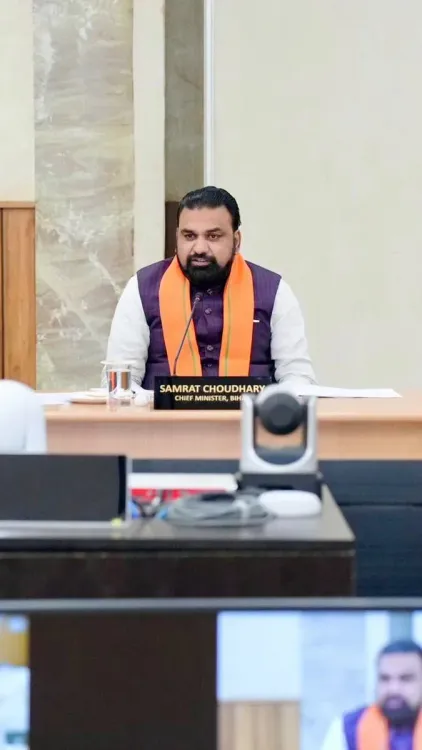
Bihar Chief Minister Samrat Choudhary on 4 July 2026 declared that securing borders and developing border districts is his administration's top priority, invoking the twin goals of security and good governance for communities along Bihar's 1,751-km Nepal frontier.
Key Takeaways
Bihar CM Samrat Choudhary publicly committed on 4 July 2026 to making border-area development and security the highest priority of his government.
Bihar shares approximately 1,751 km of open border with Nepal , making cross-border security and local development a persistent governance challenge.
The central government's Border Area Development Programme (BADP) , active since 1986-87 , provides dedicated funding for infrastructure in Bihar's eligible border districts.
The CM's statement uses the phrase 'Surakshit seema, samridh Bihar' — 'Secure border, prosperous Bihar' — as a governing slogan linking security with prosperity.
Similar border-development strategies have been adopted by Punjab , Rajasthan , and Arunachal Pradesh , reflecting a national policy consensus on integrated frontier development.
Upcoming Bihar state budget allocations for border districts will be a key indicator of whether this commitment moves from declaration to implementation.
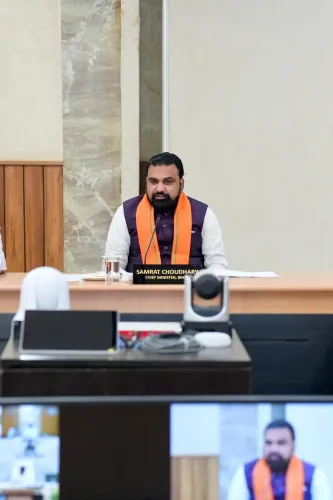
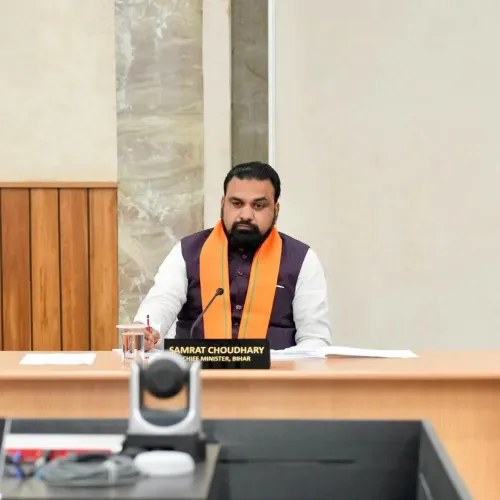
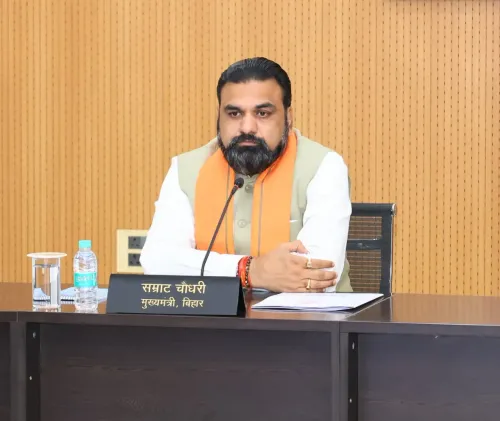
Bihar Chief Minister Samrat Choudhary on Saturday, 4 July 2026, reaffirmed his government's commitment to the all-round development and security of the state's border regions, framing it as the highest priority under his administration's governance agenda. The declaration came through a post on X, where he outlined a dual resolve — securing Bihar's frontiers while accelerating prosperity across border districts.
Posting in Hindi, CM Choudhary wrote: 'Surakshit seema, samridh Bihar' — 'Secure border, prosperous Bihar' — pledging that the comprehensive development and security of border areas would remain paramount alongside the broader goals of development and good governance (sushasan).
Context
Bihar shares an open, porous international boundary of approximately 1,751 kilometres with Nepal, in addition to domestic boundaries with Uttar Pradesh, Jharkhand, and West Bengal. The Nepal-facing stretch has historically posed challenges related to cross-border movement, trade regulation, and local infrastructure deficits. Border-district residents have long cited gaps in connectivity, health facilities, and economic opportunity compared with interior districts of the state.
CM Choudhary, a senior BJP leader, has consistently positioned governance and security as twin pillars of his administration since taking charge as Chief Minister. His latest statement signals a deliberate political and administrative focus on communities that often feel peripheral to mainstream development narratives.
Policy Backdrop
The central government's Border Area Development Programme (BADP), operational since 1986-87, provides dedicated funding for infrastructure and security-linked works in designated border districts. Bihar's border districts are eligible beneficiaries under this scheme, which has over the decades financed roads, bridges, health posts, and livelihood projects in frontier zones.
Successive Bihar governments — including multiple terms under the NDA alliance — have listed border-district infrastructure as a stated priority. The current emphasis by CM Choudhary fits within that policy lineage while signalling fresh political ownership of the agenda. Nationally, states such as Punjab, Rajasthan, and Arunachal Pradesh have pursued comparable parallel tracks combining central BADP allocations with state-level resources to close development gaps along their international borders.
Stakeholders and Impact
The communities most directly affected are residents of Bihar's border districts adjoining Nepal — a population that depends on cross-border trade and seasonal movement for livelihoods. Security forces deployed along this frontier — including the Sashastra Seema Bal (SSB), which guards the India-Nepal border — stand to benefit from improved local infrastructure and stronger civil-military coordination.
Development economists and state planners have long argued that under-development in border areas can compound security challenges by creating conditions that non-state actors exploit. CM Choudhary's framing — linking sushasan (good governance) explicitly to border security — reflects this national policy consensus, suggesting the Bihar government may pursue integrated schemes that address both dimensions simultaneously.
What's Next
Attention will now turn to concrete allocations in the forthcoming Bihar state budget and any fresh central announcements on BADP funding or bilateral India-Nepal border-management mechanisms. Whether CM Choudhary's declaration translates into specific project announcements — new roads, border haats, health infrastructure, or security outposts — will be the measure by which border communities and political observers assess the commitment. A detailed policy roadmap or district-level action plan from the state government would be the clearest signal that this governance priority is moving from pledge to programme.
Point of View
Samridh Bihar' formulation is a deliberate political signal, positioning the BJP-led state government as the guarantor of both frontier security and grassroots development — a framing that resonates with the Centre's broader neighbourhood-first and border-infrastructure push. By invoking sushasan (good governance) alongside security, he is also drawing a contrast with perceived neglect of border districts under previous administrations. The statement fits a wider national pattern where state-level BJP leaders are aligning their governance messaging with Union government priorities on border management and infrastructure. Whether this translates into budgetary action will determine if it is a durable policy plank or a rhetorical positioning ahead of electoral cycles.
NationPress
3 Oct 2026
Frequently Asked Questions
What did Bihar CM Samrat Choudhary say about border development?
CM Samrat Choudhary declared on 4 July 2026 that the all-round development and security of Bihar's border areas is his government's highest priority, summarising the vision as 'Surakshit seema, samridh Bihar' — 'Secure border, prosperous Bihar.'
Which country shares a border with Bihar?
Bihar shares an approximately 1,751-km open international border with Nepal, which is the primary frontier relevant to the CM's border security and development statements.
What is the Border Area Development Programme (BADP)?
The Border Area Development Programme is a central government scheme launched in 1986-87 that funds infrastructure, connectivity, and security-related works in designated districts along India's international borders, including eligible districts in Bihar.
Why is Bihar's Nepal border considered a security concern?
Bihar's border with Nepal is largely open and porous, creating challenges around cross-border movement, smuggling, and infiltration; developmental gaps in border districts have historically been cited as factors that can compound these security challenges.
What should we watch for following CM Choudhary's border development pledge?
Key indicators to watch include specific project announcements for border districts, allocations in the Bihar state budget, and any fresh central decisions on BADP funding or India-Nepal border-management mechanisms.