CM Samrat Choudhary Pushes AI-Driven Policing in Bihar
Synopsis
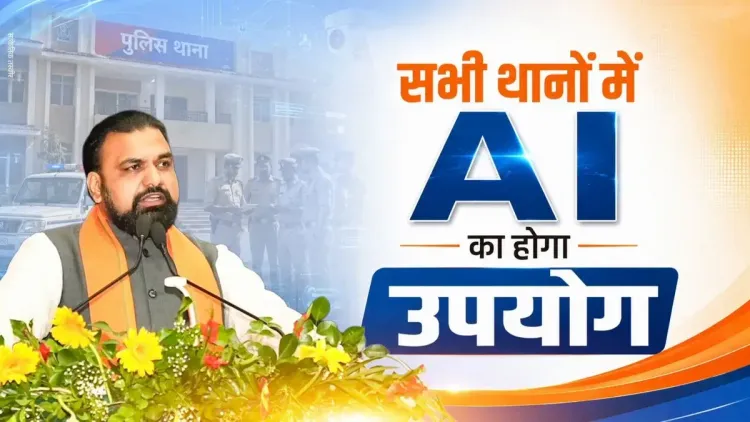
Bihar Chief Minister Samrat Choudhary on 4 July 2026 called for wide-scale deployment of AI-based technologies in the state's policing system, promising faster crime surveillance, rapid data analysis and time-bound action to make Bihar Police more capable and modern.
Key Takeaways
Bihar CM Samrat Choudhary announced on 4 July 2026 a major push to integrate AI into the state's law-enforcement framework.
The initiative aims to enable real-time crime surveillance , rapid analytical processing and prompt operational response by Bihar Police .
The move aligns with the central government's CCTNS (launched 2009 ) and NITI Aayog's National AI Strategy ( 2018 ), which flagged public safety as a priority AI domain.
Bihar joins a growing number of Indian states adopting data-analytics and AI tools under the Digital India programme and the Modernisation of Police Forces scheme.
Specific AI tools, vendors and rollout timelines have not yet been publicly disclosed.
Civil-liberties implications — including data privacy and algorithmic bias — are expected to draw scrutiny from rights groups.
Bihar Chief Minister Samrat Choudhary on Saturday, 4 July 2026 announced a strong push to deploy artificial intelligence across the state's law-enforcement machinery, saying AI-based technologies would be used extensively to strengthen, streamline and modernise the Bihar Police.
Posting on X, the Chief Minister wrote: 'AI ke madhyam se apradh ki nigrani, tvarit vishleshan evam samayabaddh karvai sunishchit kar police vyavastha ko aur adhik saksham evam aadhunik banaya jayega' — ['Through AI, crime surveillance, rapid analysis and time-bound action will be ensured, making the police system more capable and modern.']
Context
The post signals a deliberate policy direction from the top of Bihar's government: law and order is to be reinforced not only through manpower but through technology. Choudhary specifically stressed that AI would enable real-time crime monitoring, faster data analysis and prompt operational response — three areas where conventional policing has historically faced capacity constraints.
The announcement comes as Bihar, one of India's most populous states with over 13 crore residents, continues to grapple with crime-management challenges that stretch across urban centres and rural districts alike.
Policy Backdrop
The push is not without institutional scaffolding. The central government's Crime and Criminal Tracking Network and Systems (CCTNS), launched in 2009, created a nationwide digital backbone for police records and inter-state data sharing — a foundation on which AI-layer tools can be built. NITI Aayog's National Strategy for Artificial Intelligence (#AIForAll), released in 2018, explicitly identified public safety and predictive policing as priority application areas for AI in India.
The Ministry of Home Affairs has updated its Modernisation of Police Forces scheme repeatedly since 1969, with each successive iteration placing greater weight on technology integration. Bihar's stated intent aligns squarely with this central framework and with the broader Digital India programme launched in 2015.
Several Indian states have already piloted data-analytics and AI-assisted tools for crime mapping and suspect tracking under these umbrella programmes, making Bihar's move part of a wider national pattern rather than an isolated initiative.
Stakeholders and Impact
Bihar Police personnel would be the most direct beneficiaries — and the primary implementers — of any AI rollout. Officers could gain access to faster analytical dashboards, automated alert systems and data-driven patrol deployment, reducing response times and improving case closure rates.
For ordinary residents, the intended outcome is a more responsive and deterrent police presence. Civil-liberties groups are likely to watch closely, however, as AI surveillance tools — particularly facial recognition and predictive analytics — raise questions about data privacy and the risk of algorithmic bias against marginalised communities.
What's Next
The Chief Minister's statement sets a political direction; the operational details — which AI tools will be procured, from which vendors, on what timeline and with what budget — are yet to be publicly specified. Observers will track the next Bihar police modernisation budget allocation and any pilot-project announcements for predictive analytics or automated surveillance systems.
If Bihar follows through with concrete procurement and deployment, it could position the state as a significant case study in AI-assisted governance for other large, resource-constrained Indian states navigating similar law-and-order pressures.
Point of View
Signalling ambition ahead of what is likely to be a competitive political cycle. The framing mirrors a national BJP playbook of pairing security messaging with Digital India credentials, giving the state government both a governance narrative and an electoral one. However, the absence of specific budgetary commitments or pilot details means the announcement remains aspirational until operationalised. The real test will be whether Bihar's next police modernisation budget reflects the rhetoric with meaningful AI procurement allocations.
NationPress
3 Oct 2026
Frequently Asked Questions
What did Bihar CM Samrat Choudhary say about AI and policing?
On 4 July 2026 , Chief Minister Samrat Choudhary stated that AI-based technologies would be extensively used to strengthen Bihar's law-and-order machinery, enabling real-time crime surveillance, rapid analysis and time-bound police action.
Which AI tools will Bihar Police use?
Specific AI tools, vendors or rollout timelines have not been publicly disclosed as of the announcement; the Chief Minister outlined the intent and direction without naming particular systems.
What is CCTNS and how does it relate to Bihar's AI policing push?
CCTNS (Crime and Criminal Tracking Network and Systems), launched in 2009 , is a central scheme that digitised police records and enabled nationwide data sharing — it provides the existing digital infrastructure on which AI-layer tools for Bihar Police could be built.
Has NITI Aayog supported AI in policing?
Yes. NITI Aayog 's National Strategy for Artificial Intelligence , released in 2018 , specifically identified public safety and predictive policing as priority sectors for AI deployment in India.
Why is Bihar focusing on AI for law and order?
Bihar, with a population of over 13 crore , faces persistent crime-management challenges. AI-driven tools are seen as a way to improve police response times, analytical capacity and deterrence without relying solely on manpower expansion.