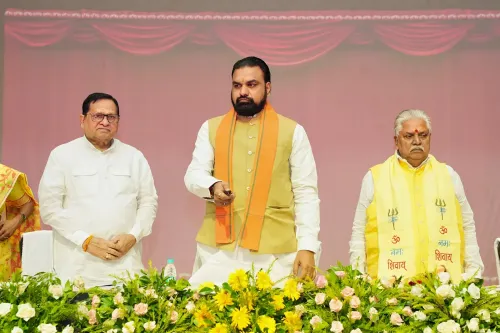
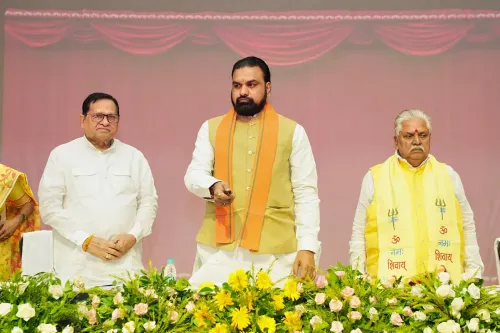
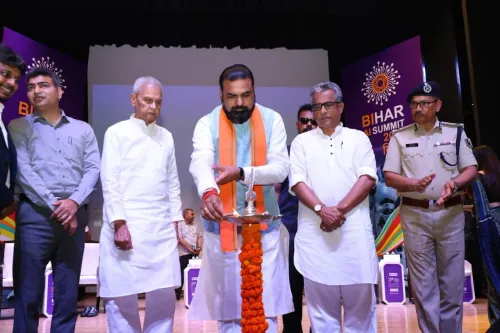
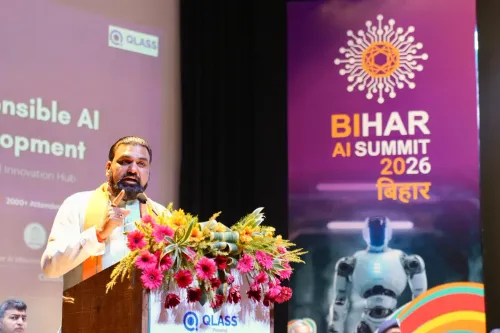
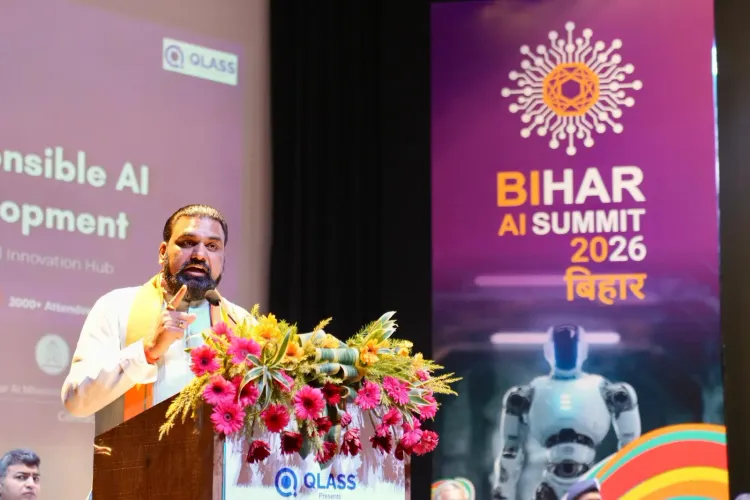
CM Samrat Choudhary inaugurates Bihar AI Summit-2026 in Patna
Synopsis
Bihar Chief Minister Samrat Choudhary inaugurated the Bihar AI Summit-2026 in Patna on 23 May 2026, pledging to make Bihar a leader in India's digital revolution by harnessing AI across education, health, agriculture, and public administration, with youth and startups at the centre of the state's strategy.
Key Takeaways
Bihar AI Summit-2026 opened on 23 May 2026 at Urja Auditorium, Patna , as a two-day workshop.
CM Samrat Choudhary inaugurated the summit and articulated a resolve to make Bihar the leading state in India's digital revolution.
The summit targets AI applications in education, health, agriculture, and public administration .
The initiative aligns with the central government's National Strategy for AI (2018) and the Digital India programme (2015) .
Youth, startups, and innovation are identified as the primary drivers of Bihar's planned digital transformation.
Follow-up policy documents, pilot projects, and potential linkages with national AI mission funding will be key indicators of the summit's real-world impact.
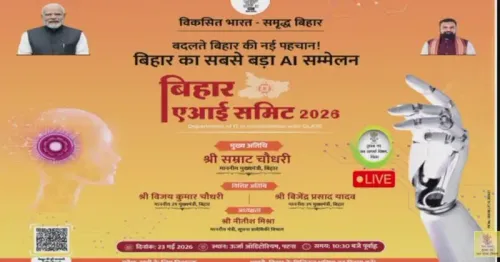
Bihar Chief Minister Samrat Choudhary on Saturday, 23 May 2026, inaugurated a two-day workshop of the Bihar AI Summit-2026 at the Urja Auditorium in Patna, signalling the state government's intent to position Bihar as a frontrunner in India's digital transformation journey.
Context
Posting on X, CM Choudhary stated: 'Yuva shakti, startups aur navachar ke bal par Bihar digital kranti ka agrani rajya bane, yahi hamara sankalp hai' — translated: 'It is our resolve that Bihar, powered by the strength of youth, startups, and innovation, becomes the leading state of the digital revolution.' The Chief Minister added that AI-based development would make education, health, agriculture, and administration more effective and people-friendly.
The summit, held under the hashtag #BiharAISummit2026, marks one of the most prominent state-level technology convenings Bihar has hosted, bringing together stakeholders from the startup ecosystem, government departments, and the innovation community.
Policy Backdrop
The Bihar AI Summit-2026 sits within a broader national policy architecture. The Government of India's National Strategy for Artificial Intelligence, released in 2018 under the banner #AIforAll, laid out a roadmap for responsible AI adoption across sectors including agriculture, health, and education — the same sectors CM Choudhary highlighted in his post.
The Digital India programme, launched in 2015, further expanded the infrastructure and e-governance frameworks that state-level AI initiatives now build upon. Bihar's push aligns with a pattern seen across multiple Indian states that have organised AI-focused events to explore public-sector applications and attract private investment into emerging technology.
For Bihar — an eastern Indian state with one of the country's largest youth populations — the emphasis on startups and innovation carries particular economic significance. Channelling that demographic dividend through digital skilling and AI-enabled governance has become a stated priority for the state administration.
Stakeholders and Impact
The summit's agenda spans four critical domains: education, healthcare, agriculture, and public administration. Students and young entrepreneurs stand to benefit from any startup support frameworks or skilling programmes that may emerge from the workshop deliberations.
Farmers across Bihar's predominantly agrarian districts could see downstream benefits if AI-driven tools for crop advisory, weather prediction, or supply-chain management are piloted. Similarly, AI applications in health administration could improve last-mile delivery of services in rural areas where infrastructure gaps remain a challenge.
Government administrators are also a key audience: AI-assisted tools for grievance redressal, scheme monitoring, and data-driven policymaking are among the use cases that state governments across India have begun exploring in recent years.
What's Next
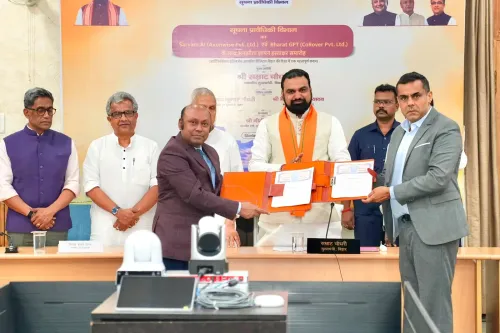
Observers will watch for concrete follow-up actions emerging from the two-day workshop, including any state policy documents, pilot project announcements, or partnerships with private technology firms and central government bodies such as the National AI Mission.
If Bihar translates the summit's momentum into funded pilots and measurable outcomes in education or agriculture, it could serve as a replicable model for other large, developing states seeking to leverage AI for inclusive growth — and strengthen the state's positioning in India's rapidly evolving digital economy.
Point of View
CM Samrat Choudhary is staking a modernising identity for a state long associated with governance deficits. The choice to spotlight agriculture and health alongside startups signals an attempt to make the AI narrative inclusive rather than urban-elite. This mirrors a broader BJP-governed state strategy of coupling technology optics with welfare delivery to consolidate both aspirational and rural voter bases. Whether the summit produces durable institutional outcomes — funded pilots, skilling mandates, or private-sector MOUs — will determine if it marks a genuine policy inflection or remains a high-visibility convening.
NationPress
7 Oct 2026
Frequently Asked Questions
What is the Bihar AI Summit-2026?
The Bihar AI Summit-2026 is a state government-organised two-day workshop inaugurated by Chief Minister Samrat Choudhary at Urja Auditorium in Patna on 23 May 2026, aimed at exploring AI applications in education, health, agriculture, and governance.
Who inaugurated the Bihar AI Summit-2026?
Bihar Chief Minister Samrat Choudhary inaugurated the Bihar AI Summit-2026 on 23 May 2026 at the Urja Auditorium in Patna.
What sectors will benefit from Bihar's AI initiative?
According to CM Choudhary, the AI-based development push will focus on making education, health, agriculture, and public administration more effective and people-friendly in Bihar.
How does the Bihar AI Summit relate to national AI policy?
The summit aligns with the Government of India's National Strategy for Artificial Intelligence released in 2018 and the Digital India programme launched in 2015, both of which encourage states to adopt AI for governance and inclusive growth.
What should we watch for after the Bihar AI Summit-2026?
Key things to watch include state-level follow-up policy documents, pilot project announcements in agriculture or health, and any partnerships with central government bodies or private technology firms arising from the workshop.