Shivraj Chouhan Salutes Tribal Families Leaving Neelgarh for Wildlife
Synopsis
Union Agriculture Minister Shivraj Singh Chouhan visited tribal families in Neelgarh who are voluntarily relocating to create an inviolate wildlife zone, praising their sacrifice and praying for their prosperity in a new settlement.
Key Takeaways
Union Agriculture Minister Shivraj Singh Chouhan visited displaced tribal families in Neelgarh on 25 October 2026 .
The families are voluntarily relocating to free up forest core-zone land for wildlife protection under NTCA guidelines.
Chouhan described the move as an 'unparalleled example of sacrifice and love for nature' and offered a formal pranam to the families.
India's policy of voluntary village relocation from tiger-reserve cores has been most actively implemented in Madhya Pradesh .
Chouhan expressed hope that the new settlement — New Neelgarh — would bring the families joy, peace, and prosperity.
Scrutiny now shifts to the quality of rehabilitation packages, housing, and livelihood support at the resettlement site.
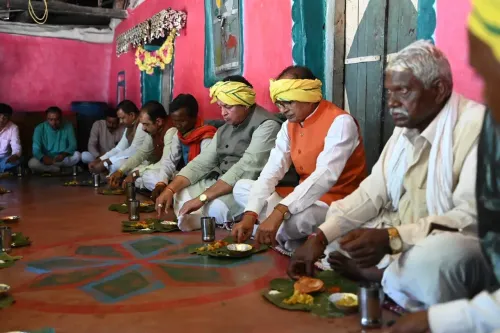
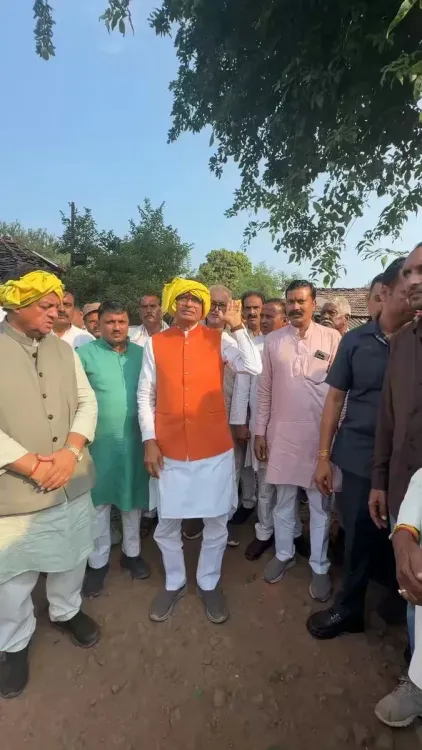
Facing a farewell that no compensation package can fully soften, tribal families in Neelgarh are preparing to leave behind their ancestral homes, hearths, and memories — so that India's forests and wildlife can breathe freely. Union Agriculture Minister Shivraj Singh Chouhan visited the community on Sunday, 25 October 2026, and came away visibly moved.
In a post on X, Chouhan described arriving at the settlement and watching children play in courtyards that would soon be empty. 'Kuch dinon baad ye ghar, chulhe-chauki, purkhon ki zameen aur inse judi anaginat smritiyan peechhe choot jaengi' — 'In a few days, these homes, their hearths, their ancestral land, and countless memories tied to them will all be left behind,' he wrote. He offered a two-handed pranam — a gesture of deep reverence — to the families for what he called an 'unparalleled example of sacrifice and love for nature.'
Why Neelgarh's families are moving at all
The relocation is part of India's long-standing policy of creating inviolate core zones inside tiger reserves and national parks under the Wildlife Protection Act and guidelines issued by the National Tiger Conservation Authority (NTCA). Human settlements inside core areas generate pressure on wildlife corridors — from cattle grazing and fuel-wood collection to the ever-present risk of human-animal conflict. Voluntary relocation offers families alternative land, housing, and a financial package in exchange for freeing up those spaces entirely for wildlife.
Madhya Pradesh, which hosts some of India's densest tiger populations across reserves such as Kanha, Pench, Bandhavgarh, and Satpura, has been among the most active states in carrying out such relocations over the past two decades. The model has drawn both praise — for measurable gains in tiger numbers — and scrutiny over whether rehabilitation packages genuinely restore the livelihoods of displaced communities.
The weight of what is left behind
Chouhan's post did not sidestep the emotional cost. He acknowledged that even as a 'new beginning' awaits the families in a resettled New Neelgarh, the soil of their forebears and the memories of childhood will never leave them. 'May God ensure that their new courtyards too remain fragrant with joy, and that peace, happiness, and prosperity remain with them always,' he wrote.
That emotional register — a senior minister bowing before displaced citizens rather than speaking down to them — carries its own political weight. Tribal welfare and forest rights sit at the intersection of conservation law, constitutional protections under the Forest Rights Act, 2006, and the lived realities of some of India's most vulnerable communities. How well the 'New Neelgarh' delivers on its promise of infrastructure and livelihood support will be the real measure of this moment.
Point of View
However voluntary on paper, involves communities giving up irreplaceable ancestral ties. With Madhya Pradesh serving as a national template for tiger-reserve relocations, the quality of rehabilitation at New Neelgarh will be watched closely by both conservation scientists and tribal rights groups. The broader question — whether India can hold conservation and community dignity together — remains live.
NationPress
25 Oct 2026
Frequently Asked Questions
Why are tribal families being relocated from Neelgarh?
The families are voluntarily moving out of a forest core zone to create an inviolate space for wildlife, in line with India's national policy under the Wildlife Protection Act and NTCA guidelines that seek to reduce human-wildlife conflict and protect biodiversity.
What does voluntary tribal relocation from tiger reserves involve?
Under NTCA guidelines, families living inside core areas of tiger reserves are offered alternative land, housing, and a financial rehabilitation package in exchange for permanently vacating the forest zone. Participation is meant to be voluntary.
What did Shivraj Singh Chouhan say about the Neelgarh tribal families?
Chouhan called their decision to leave their ancestral homes an 'unparalleled example of sacrifice and love for nature,' offered a respectful two-handed pranam to the families, and prayed that their new settlement would bring them happiness, peace, and prosperity.
What is the Forest Rights Act and how does it relate to tribal relocations?
The Forest Rights Act of 2006 recognises the land and livelihood rights of forest-dwelling tribal communities. Any relocation must comply with its provisions, including obtaining informed consent, making it a key legal benchmark in evaluating whether conservation-driven displacements are genuinely voluntary.
Which states in India have seen the most tribal relocations for wildlife conservation?
Madhya Pradesh has been among the most active states, given its high density of tiger reserves including Kanha, Pench, Bandhavgarh, and Satpura. Similar relocations have also taken place in Maharashtra, Chhattisgarh, and Uttarakhand.