Shivraj Singh Chouhan Backs Farmer-to-Farmer Training Drive
Synopsis
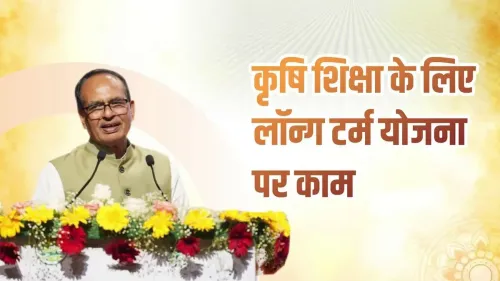
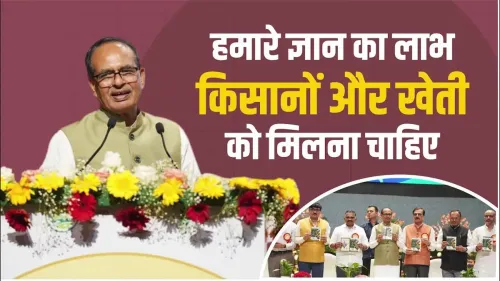
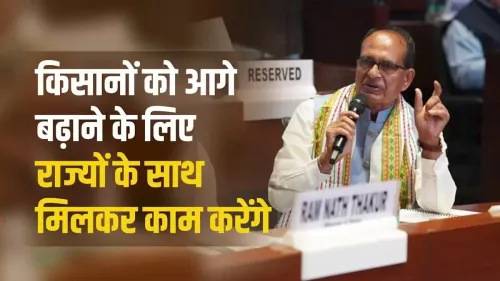
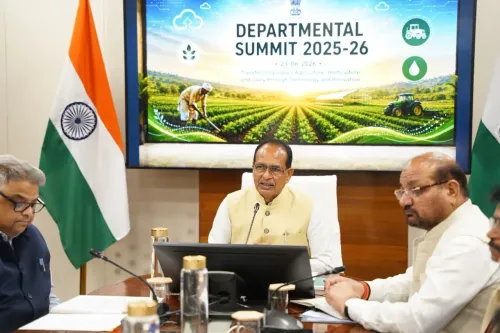
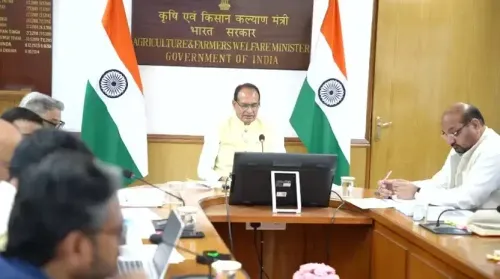
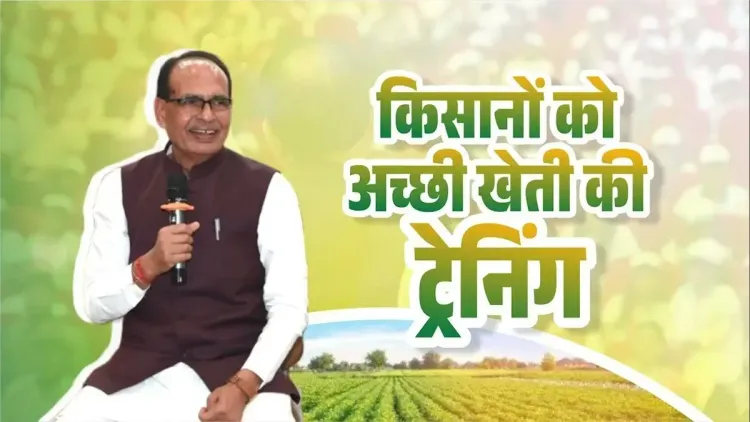
Union Agriculture Minister Shivraj Singh Chouhan announced on October 24, 2026 that the ministry is sending farmers for training to improve practices, betting on a peer-learning model where one trained farmer teaches others in the community.
Key Takeaways
Union Agriculture Minister Shivraj Singh Chouhan announced on October 24, 2026 that farmers are being sent for training to learn better agricultural practices.
The ministry is relying on a farmer-to-farmer learning model — one trained farmer becomes a knowledge multiplier for the surrounding community.
India's Krishi Vigyan Kendras (KVKs) , established by ICAR in 1974 , have historically anchored on-farm training and technology transfer for farmers.
The approach targets small and marginal farmers who lack access to formal agricultural advisory services.
No specific scheme name, location, or scale was mentioned in the post; ministry rollout details are awaited.
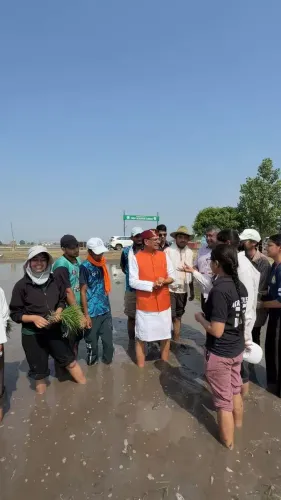
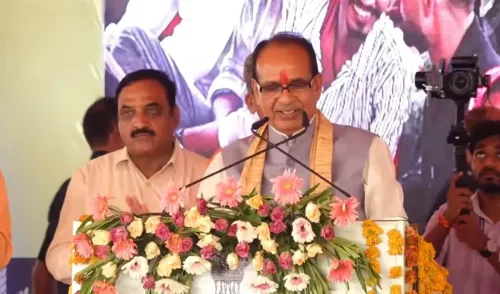
The bet is simple but powerful: train one farmer well, and an entire community follows. Union Agriculture Minister Shivraj Singh Chouhan on Saturday, October 24, 2026, announced that his ministry is actively sending farmers for training to equip them with better agricultural practices — and is counting on the ripple effect to do the rest.
Posting in Hindi on X, the minister laid out the logic directly: 'एक किसान अच्छी खेती सीखेगा और खुद खेती करेगा, तो उससे बाकी किसान भी अच्छी खेती करना सीखेंगे' — 'When one farmer learns good farming and practices it himself, the other farmers around him will also learn good farming from him.' The message is less a policy announcement and more a governing philosophy: peer learning at scale.
Why farmer-to-farmer learning has outlasted every government
India's agricultural extension system has always faced a structural problem — too many farmers, too few trained extension workers. The country's network of Krishi Vigyan Kendras (KVKs), established by the Indian Council of Agricultural Research (ICAR) as far back as 1974, was built precisely to bridge that gap through on-farm training and technology transfer. Decades of implementation taught planners one durable lesson: government-to-farmer knowledge transfer plateaus, but farmer-to-farmer knowledge transfer compounds.
Successive governments have leaned into this model because it is cost-effective and culturally trusted. A neighbour who has doubled his yield on the same soil carries more persuasive weight than any pamphlet or official workshop. Chouhan's framing echoes that accumulated institutional wisdom — and signals that the current ministry intends to double down on it rather than replace it with top-down directives.
Chouhan's agricultural mandate and the small-farmer challenge
Shivraj Singh Chouhan, who served as Chief Minister of Madhya Pradesh for four terms before taking charge of the Union Agriculture portfolio, brings to the role a ground-level understanding of how rural knowledge spreads. India's farming population is dominated by small and marginal landholders — those with less than two hectares — who often lack access to formal advisory services. Training programmes that seed 'champion farmers' back into villages are designed to reach precisely this demographic without requiring a proportional expansion of bureaucratic infrastructure.
The ministry has not specified in this communication which training programmes are being expanded, which institutions are involved, or the targeted scale. What the post makes clear is the directional commitment: invest in individual farmers as multipliers, not merely as beneficiaries.
The multiplier logic and what it demands
The peer-learning model works — when the trained farmer actually becomes a demonstrator. That requires follow-up: access to inputs, supportive local extension contact, and ideally a mechanism for other farmers to observe results on actual local land. Whether the current push is linked to KVKs, farmer producer organisations, or a dedicated scheme under the ministry is the detail worth watching in the weeks ahead.
What Chouhan has put on record is the ministry's belief that knowledge — not just subsidies — is a lever for agricultural transformation. One trained farmer, one field, one village at a time.
Point of View
Rather than subsidy expansion alone, as a core tool of agricultural welfare — a subtle but meaningful signal about ministry priorities. The farmer-as-multiplier model is administratively lean and politically popular in rural constituencies, making it a durable policy bet across party lines. As a four-term chief minister of a predominantly agrarian state, Chouhan carries credibility when he champions ground-level extension over top-down directives. The real test will be whether the ministry backs this philosophy with verifiable programme scale and measurable adoption outcomes.
NationPress
24 Oct 2026
Frequently Asked Questions
What did Shivraj Singh Chouhan say about farmer training?
Chouhan stated that his ministry is sending farmers for training so that one well-trained farmer can then teach better agricultural practices to others in the community, creating a peer-learning chain.
What is the farmer-to-farmer learning model in Indian agriculture?
The farmer-to-farmer learning model trains select farmers in improved techniques who then demonstrate and share those practices with neighbouring farmers, scaling knowledge dissemination without relying solely on formal government extension staff.
What are Krishi Vigyan Kendras and how do they help farmers?
Krishi Vigyan Kendras (KVKs) are farm science centres established by the Indian Council of Agricultural Research in 1974 to provide on-farm training, technology demonstrations, and knowledge transfer to farmers across India.
Who is Shivraj Singh Chouhan?
Shivraj Singh Chouhan is the Union Minister of Agriculture and Farmers Welfare and Rural Development, a senior BJP leader, and a former four-term Chief Minister of Madhya Pradesh.
How does farmer training help small and marginal farmers in India?
Training programmes equip small and marginal farmers — who typically lack access to formal advisory services — with improved cultivation techniques, and the peer-learning approach ensures these practices spread organically through communities at low administrative cost.