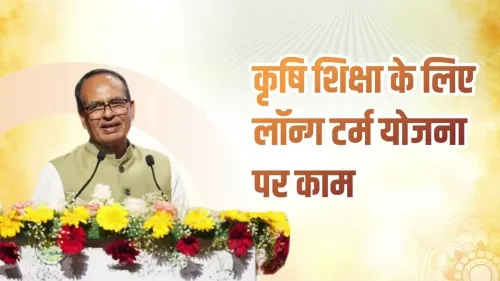
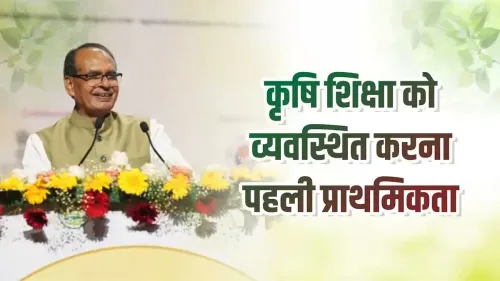
Shivraj Singh Chouhan: Farm Knowledge Must Reach Farmers
Synopsis
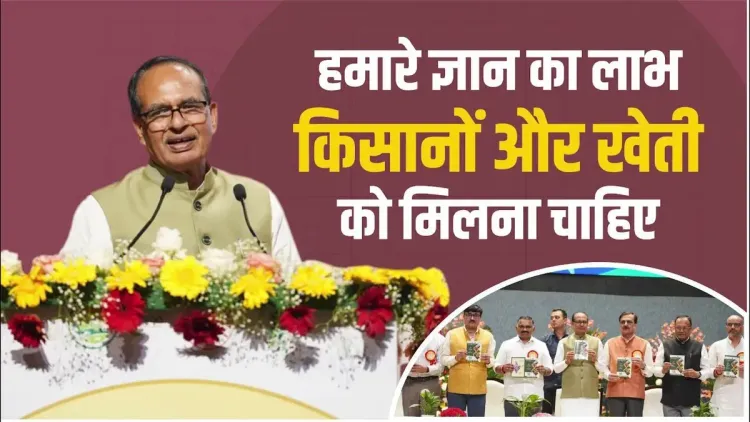
Union Agriculture Minister Shivraj Singh Chouhan called on scientists, educators, extension workers, and farmers to ensure agricultural knowledge benefits India's farming community, highlighting the persistent gap between research institutions and field-level practice.
Key Takeaways
Shivraj Singh Chouhan , Union Minister of Agriculture & Farmers Welfare and Rural Development, posted on October 14, 2026 urging all stakeholders to channel their agricultural knowledge toward farmers.
The minister addressed every level of the knowledge chain: practicing farmers, agricultural scientists, extension guides, and academic educators.
India launched the Krishi Vigyan Kendras (KVK) network in 1974 to bridge the gap between research and field-level farming — a challenge that persists today.
The Indian Council of Agricultural Research (ICAR) coordinates agricultural research, education, and extension under the Ministry of Agriculture.
Chouhan served as Chief Minister of Madhya Pradesh for four terms before taking charge of the agriculture portfolio at the Centre.
The post signals potential focus on agricultural extension services in upcoming budget or parliamentary deliberations.
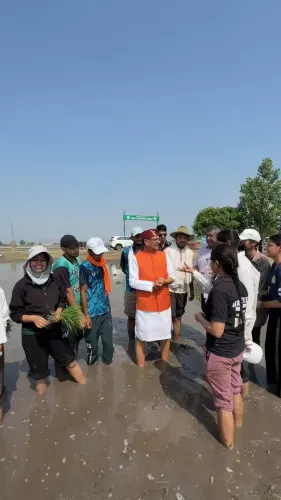
Every scientist, every teacher, every progressive farmer carries a debt — and Union Agriculture Minister Shivraj Singh Chouhan wants it repaid in full, to India's fields and to the people who work them. On Wednesday, October 14, 2026, the minister posted a pointed message on X, calling on everyone connected to agriculture — researchers, educators, scientists, and practicing farmers alike — to ensure their expertise actually reaches those who need it most.
Posting in Hindi, Chouhan wrote: 'Chaahe hum achhe kisaan banein, krishi scientist hon, unnat kheti karne waale margadarshak hon ya adhyayan-adhyapan se jude hon, hamare gyaan ka laabh nishchit taur par kisaanon aur Bharat ki kheti ko milna chahiye.' In English: 'Whether we become good farmers, agricultural scientists, guides who practice advanced farming, or those involved in study and teaching — the benefit of our knowledge must certainly reach farmers and India's agriculture.'
The Gap Between Lab and Land
The sentiment is deceptively simple, but it lands on one of Indian agriculture's oldest pressure points. The country built its first Krishi Vigyan Kendras (KVKs) network in 1974 precisely to carry technology from research institutions into the hands of farmers at the district level. More than five decades later, the gap between what agricultural science knows and what a smallholder farmer practices remains stubbornly wide.
The Indian Council of Agricultural Research (ICAR), the apex body under the Ministry of Agriculture, coordinates research, education, and extension across the country. Its mandate has always included translating laboratory breakthroughs into field-level practice — but translating mandate into outcome is a different challenge entirely.
Why Chouhan's Call Carries Weight
Chouhan brings unusual credibility to this conversation. As a four-term Chief Minister of Madhya Pradesh — one of India's largest agricultural states — he shepherded several farmer-welfare initiatives over nearly two decades. Now, as the Union Minister of Agriculture & Farmers Welfare and Rural Development, he sits at the precise intersection of research policy and rural delivery.
His message addresses every rung of the agricultural knowledge chain: the farmer in the field, the scientist in the lab, the extension worker on the ground, and the academic in the classroom. The implicit argument is structural — knowledge siloed inside institutions is wasted capital. India's farm economy needs it flowing outward.
What the Push Could Signal
Successive Union Budgets and five-year plans have prioritised agricultural knowledge dissemination as a lever for raising both productivity and rural incomes. Chouhan's public emphasis on this theme invites attention to whether stronger agricultural extension services — or deeper integration of new technologies — will feature in upcoming budget or parliamentary deliberations. The minister has not announced a specific programme in this post, but the framing is deliberate: a minister does not publicly call out an entire ecosystem to act without purpose.
India's farmers are waiting. The research exists. The institutions are in place. The only question, as Chouhan frames it, is whether the knowledge actually makes the journey.
Point of View
Not just a bureaucratic function. Coming from a minister who spent nearly two decades governing one of India's largest farm states, the message carries institutional memory and political intent. It aligns with a broader BJP governance narrative of connecting technocratic capacity to grassroots welfare. Analysts will watch whether this public emphasis translates into strengthened extension budgets or structural reforms linking ICAR outputs directly to KVK field operations.
NationPress
14 Oct 2026
Frequently Asked Questions
What did Shivraj Singh Chouhan say about farmers and agricultural knowledge?
Chouhan said that whether one is a farmer, an agricultural scientist, an extension guide, or an educator, the benefit of their knowledge must certainly reach farmers and India's agriculture.
What is the role of Krishi Vigyan Kendras in Indian agriculture?
Krishi Vigyan Kendras (KVKs) are district-level agricultural extension centres launched in 1974 to transfer technology and knowledge from research institutions directly to farmers at the grassroots level.
What does ICAR do in India?
The Indian Council of Agricultural Research (ICAR) is the apex body under the Ministry of Agriculture that coordinates agricultural research, education, and extension services across India.
What is Shivraj Singh Chouhan's current role?
Shivraj Singh Chouhan is the Union Minister of Agriculture & Farmers Welfare and Rural Development and a senior BJP leader. He previously served as Chief Minister of Madhya Pradesh for four terms.
Why is bridging agricultural research and farmers important in India?
A persistent gap exists between what agricultural science produces and what smallholder farmers practice on the ground. Closing this gap is seen as critical to raising farm productivity and rural incomes across India.