CM Majhi Invokes Emergency to Slam Congress on Institutions
Synopsis
Odisha Chief Minister Mohan Charan Majhi attacked Congress on X on 27 October 2026, invoking the 1975 Emergency and decades of Article 356 misuse to challenge the party's credibility on institutional independence, demanding consistency between past actions and present rhetoric.
Key Takeaways
CM Mohan Charan Majhi posted a sharp political challenge to Congress on 27 October 2026 , accusing the party of 'selective outrage' on institutional independence.
The post specifically references the 21-month Emergency of June 1975 to March 1977 , proclaimed by Prime Minister Indira Gandhi , as evidence of Congress's record.
Majhi also alludes to the 'repeated misuse of constitutional mechanisms,' widely understood as references to aggressive use of Article 356 to dismiss opposition state governments in the 1970s-80s.
The BJP has long used the 1975 Emergency as its central exhibit in debates over democratic credentials, and Majhi's post follows that established political line.
The Indian National Congress had not formally responded to the post at the time of publication.
The exchange reflects a broader pattern in Indian politics where both ruling and opposition parties invoke each other's institutional record to deflect or attack on questions of democratic conduct.
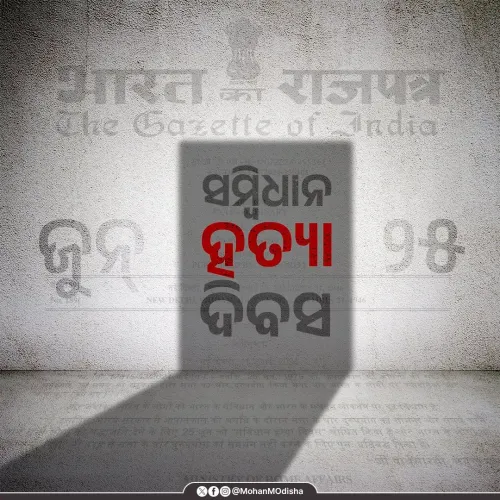
Fifty years after the darkest chapter in India's post-independence democracy, the 1975 Emergency is back at the centre of political combat — and Odisha Chief Minister Mohan Charan Majhi has put it there. On Tuesday, 27 October 2026, Majhi posted a pointed broadside on X, challenging the Indian National Congress to reconcile its present-day defence of institutional independence with its own record in power.
The Emergency Card, Played Again
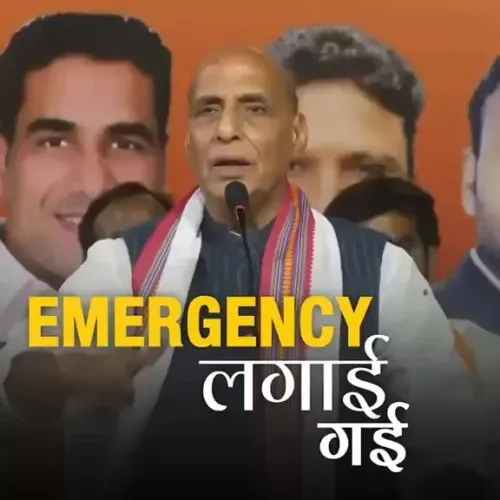
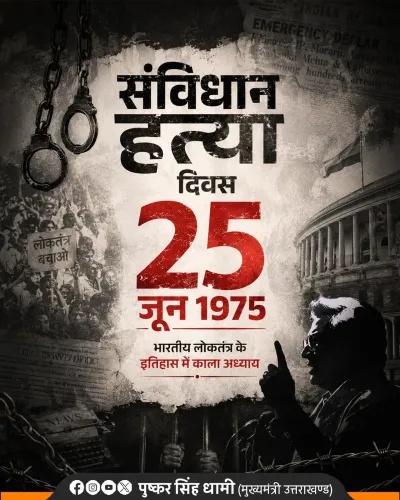
Majhi's post pulls no punches: 'The credibility of our democratic institutions demands consistency, not selective outrage.' He names the 21-month Emergency of 1975-77 — proclaimed by Prime Minister Indira Gandhi on the night of 25 June 1975 — as the founding exhibit for his argument. That period saw the suspension of fundamental rights, the imposition of sweeping press censorship, and governance by executive decree, and it remains the most-cited reference point in BJP critiques of Congress's democratic credentials.
The post also gestures at 'repeated misuse of constitutional mechanisms' — a line that policy historians would read as a reference to the aggressive use of Article 356, the President's Rule provision, by Congress governments during the 1970s and 1980s to dismiss opposition-ruled state governments. The Supreme Court eventually curtailed that power in the landmark S.R. Bommai case of 1994, precisely because of that pattern of use.
A Recurring Script, But With Real Stakes
India's political parties have long weaponised each other's historical record on institutional autonomy — the accusation of 'selective outrage' is almost a parliamentary genre of its own. What gives Majhi's intervention its edge is the framing: he is not making a policy argument, he is making a consistency argument. 'Those who invoke the Constitution today must also answer for their actions when they held power' is a direct challenge to Congress's standing to criticise the current dispensation on any institutional ground.
The broader pattern is familiar. Debates over the independence of central investigative agencies, gubernatorial conduct in opposition-ruled states, and judicial appointments regularly prompt this exchange — each side wielding the other's past against its present posture. The Emergency functions, in this ecosystem, less as a historical lesson and more as a live political charge, its voltage undiminished after five decades.
Congress Yet to Respond
As of publication, the Indian National Congress had not issued a formal response to Majhi's post. Senior BJP leaders are likely to amplify the message in the coming days, particularly as debates around institutional integrity continue to animate the national political conversation.
Democracy, as Majhi puts it, 'thrives on institutional integrity, not political convenience.' Whether Congress meets that argument with its own record or pivots to the present, the answer will tell its own story about where India's oldest party stands on the most consequential question in democratic governance: who guards the guardians when the guardians are you?
Point of View
Leaving it perpetually exposed to this line of attack. By framing the argument around 'consistency' rather than a specific contemporary grievance, Majhi makes the attack structurally durable — it applies regardless of what the immediate trigger is. The absence of a specific current incident in the post also insulates it from being easily fact-checked or rebutted, making it as much a positioning statement as a political argument.
NationPress
27 Oct 2026
Frequently Asked Questions
What did Odisha CM Mohan Majhi say about Congress and the Emergency?
Majhi posted on X on 27 October 2026 that Congress's record — including the 1975 Emergency and repeated misuse of constitutional mechanisms — contradicts its present-day rhetoric on institutional independence, arguing that democratic credibility demands consistency, not selective outrage.
What was the 1975 Emergency in India?
The 1975 Emergency was a 21-month period from June 1975 to March 1977 during which Prime Minister Indira Gandhi's Congress government suspended fundamental rights, imposed press censorship, and governed by executive decree after advising the President to proclaim a national emergency citing internal disturbance.
What is Article 356 and how does it relate to this debate?
Article 356 of the Indian Constitution allows the President to impose central rule ('President's Rule') in a state if governance has broken down. Congress governments in the 1970s and 1980s were widely criticised for invoking it frequently to dismiss opposition-ruled state governments, a pattern the Supreme Court curtailed in the 1994 S.R. Bommai ruling.
Why does the BJP keep bringing up the 1975 Emergency?
The 1975 Emergency remains the BJP's most potent historical argument against Congress's democratic credentials because it represents the most dramatic suspension of civil liberties in India's post-independence history. Congress has never fully repudiated the period, leaving the party vulnerable to the charge of hypocrisy whenever it criticises institutional overreach by others.
Has Congress responded to Mohan Majhi's post?
As of the time of publication on 27 October 2026, the Indian National Congress had not issued a formal response to Chief Minister Majhi's post.