Odisha Cabinet Restores 64 Original Place Names, Drops Colonial Spellings
Synopsis
The Odisha Cabinet has approved the restoration of original spellings for 64 place names across the state, reversing colonial-era anglicisations. The move extends the legacy of the 2011 Orissa-to-Odisha renaming and mirrors broader national efforts to reclaim indigenous place identities.
Key Takeaways
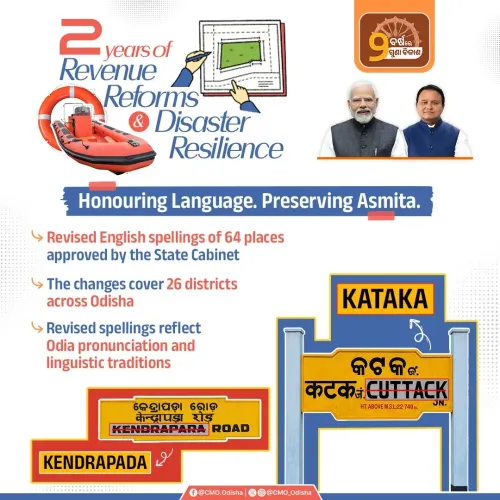
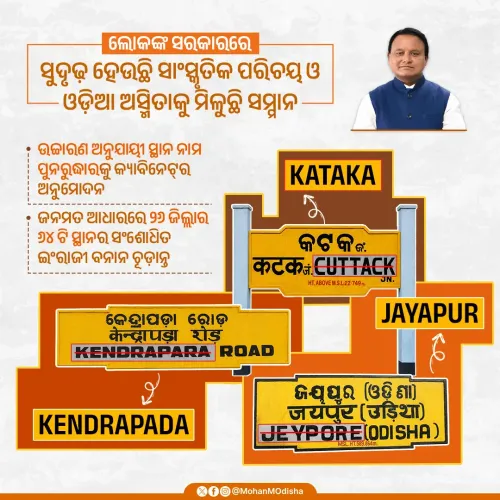
The Odisha Cabinet approved restoration of original spellings for 64 place names on June 13, 2026 .
The decision reverses colonial-era anglicised distortions in official nomenclature across the state.
The move builds on the Orissa (Alteration of Name) Act, 2010 , which renamed the state from Orissa to Odisha in 2011 .
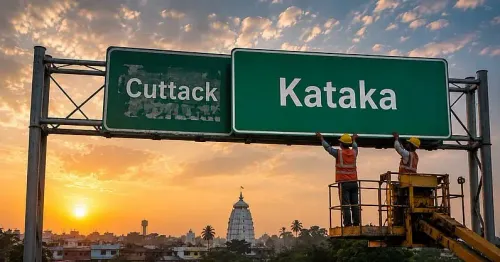
Implementation will require phased updates to government records, maps, road signage, and school textbooks.
The action follows a national pattern of place-name restorations, including Mumbai (1995) and Kolkata (2001).
Stakeholders include local residents, heritage researchers, and the tourism sector.
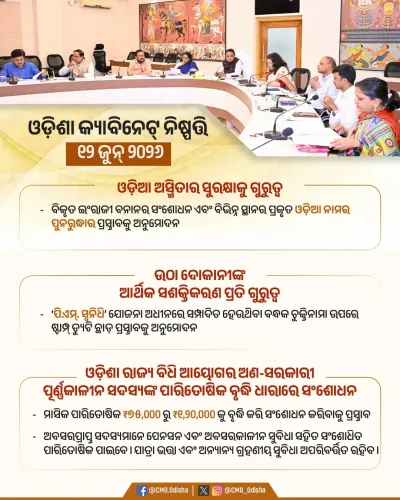
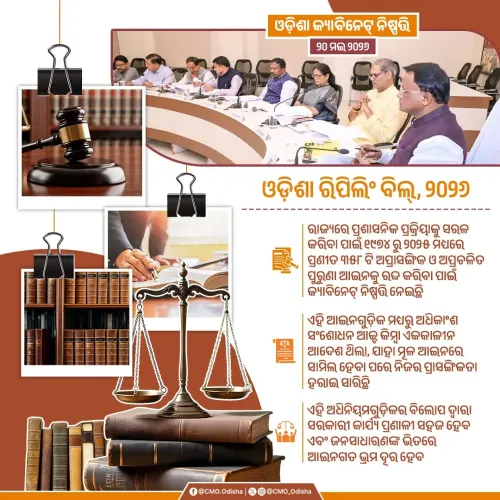
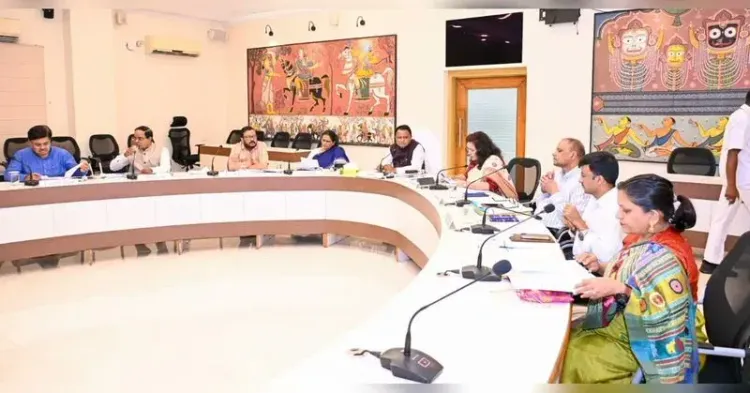
The Chief Minister's Office of Odisha announced on Saturday, June 13, 2026, that the Odisha Cabinet has approved the restoration of original spellings for 64 place names across the state, formally reversing colonial-era distortions embedded in official nomenclature.
Context
The cabinet decision marks one of the most sweeping place-name corrections in Odisha's post-independence administrative history. Colonial administrators frequently transliterated local names through an anglicised phonetic lens, producing spellings that diverged from how residents pronounced and wrote those names in Odia. The government's move seeks to close that gap by aligning official records with indigenous usage.
The announcement, framed as a shift 'from colonial imprints to cultural pride,' signals that the state views accurate nomenclature as an extension of cultural sovereignty. Each of the 64 names will now carry spellings that reflect local linguistic roots rather than British-era approximations.
Policy Backdrop
This decision builds directly on a foundational precedent: the Orissa (Alteration of Name) Act, 2010, which came into effect in 2011 and officially renamed the state from Orissa to Odisha, and the language from Oriya to Odia, to align with authentic local pronunciation. That legislation established the legal and political template for correcting colonial distortions at scale.
Odisha's action fits a broader national pattern. Bombay was rechristened Mumbai in 1995, and Calcutta became Kolkata in 2001. Across India, state governments have steadily reclaimed indigenous place identities since the 1990s as part of post-independence efforts to address colonial legacies in official nomenclature. Odisha is now extending that logic below the state level to districts, towns, and localities.
Stakeholders and Impact
Local residents stand to gain the most immediate symbolic benefit: official documents, road signs, and government correspondence will finally reflect the names they have always used. Heritage researchers and linguists have long argued that correct spellings preserve the etymological meaning embedded in place names, which anglicised versions often obscured or erased entirely.
The tourism sector in Odisha — anchored by sites such as the Konark Sun Temple, Puri, and Bhubaneswar — may see updated promotional materials and maps reflecting the restored names. Administrative bodies will need to update government records, revenue documents, maps, and school textbooks in a phased rollout, which will require coordination across multiple departments.
What's Next
Implementation will unfold in phases, covering updated government records, official maps, road signage, and school textbooks. The scale of 64 simultaneous corrections means that agencies at the district and municipal levels will need clear timelines and standardised guidelines to avoid inconsistencies during the transition period.
Any legal or administrative feedback — such as challenges to specific name changes from local bodies or courts — will shape the pace of rollout. The cabinet approval is the first step; the durability of these restorations will depend on how thoroughly they are embedded in everyday official use. If the process proceeds smoothly, it could encourage further rounds of name restoration for places not covered in this initial tranche.
Point of View
Not merely a clerical correction. It extends the state's decade-long identity project — anchored by the 2011 Orissa-to-Odisha renaming — into the sub-state level, signalling that the ruling dispensation sees linguistic authenticity as a durable electoral and cultural asset. The timing also reflects a wider competitive dynamic among Indian states to visibly decolonise public space, a discourse that has gained momentum nationally. Whether the rollout matches the ambition of the announcement will be the real test of political will.
NationPress
29 Jul 2026
Frequently Asked Questions
Which 64 place names has Odisha restored?
The Odisha Cabinet approved the restoration of original spellings for 64 place names across the state on June 13, 2026, but the specific list of all 64 names has not been fully detailed in official public releases at this stage.
Why is Odisha changing place names?
Odisha is restoring original spellings to remove colonial-era anglicisations that distorted local pronunciation and meaning, aligning official records with authentic Odia linguistic usage.
When did Odisha change its name from Orissa?
Odisha officially changed its name from Orissa, and the language from Oriya to Odia, under the Orissa (Alteration of Name) Act, 2010, which came into effect in 2011.
Is Odisha the first Indian state to restore original place names?
No. Multiple Indian states have done so since the 1990s, including Maharashtra (Bombay to Mumbai in 1995) and West Bengal (Calcutta to Kolkata in 2001), as part of broader post-independence efforts to address colonial legacies.
How will the restored place names be implemented in Odisha?
Implementation is expected in phases, covering government records, revenue documents, official maps, road signage, and school textbooks, coordinated across district and municipal agencies.