Odisha Cabinet Approves PMAY Stamp Duty Waiver, ₹500 Cr Waterfront Scheme
Synopsis
The Odisha Cabinet on June 10, 2026 approved a stamp duty and registration fee waiver for EWS beneficiaries under PMAY-Urban and a ₹500 crore Jalatata Bikash Yojana to rejuvenate urban riverfronts across the state over five years, reinforcing the government's housing and urban development agenda.
Key Takeaways
The Odisha Cabinet approved two urban welfare decisions on June 10, 2026 .
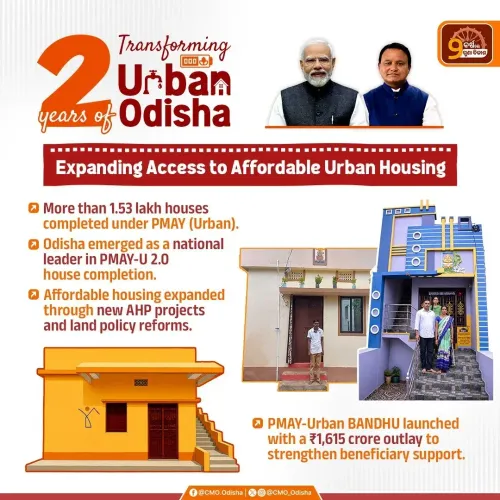
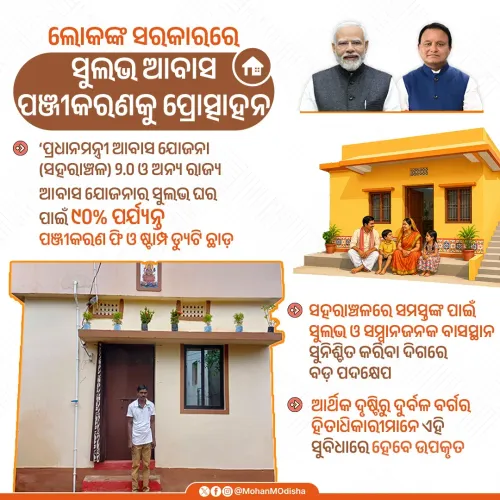
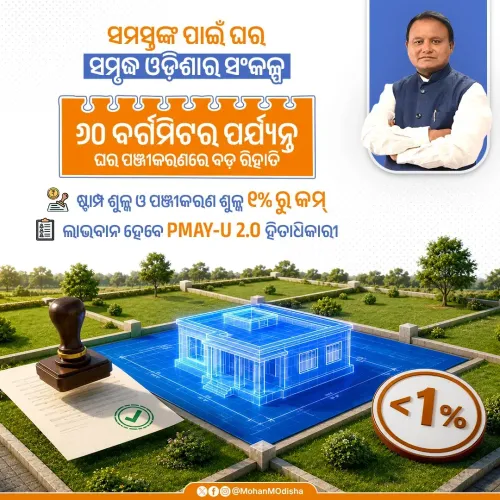
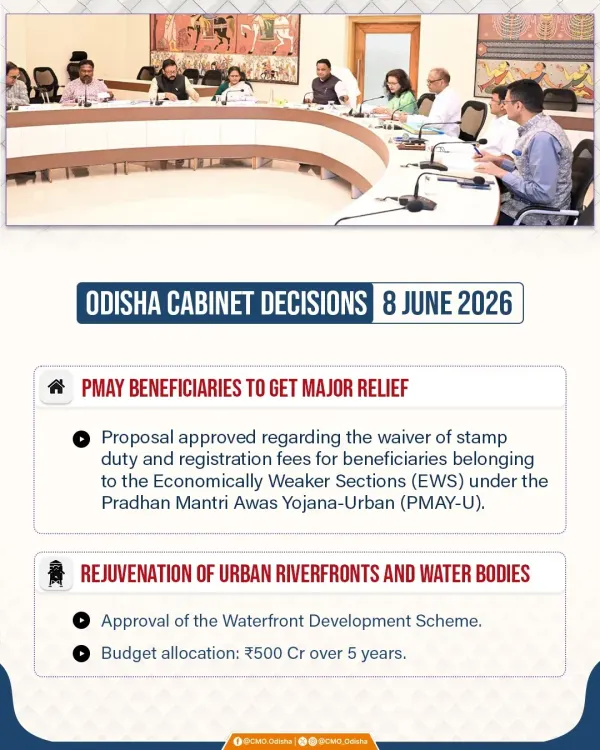
Stamp duty and registration fees will be waived for EWS beneficiaries under PMAY-Urban to lower the cost of formal home ownership.
A ₹500 crore Waterfront Development Scheme (Jalatata Bikash Yojana) was approved to rejuvenate urban riverfronts and water bodies across Odisha .
The waterfront scheme will be implemented over five years across multiple urban centres in the state.
PMAY-Urban was launched in June 2015 and targets EWS, LIG and MIG households; Odisha's waiver adds a state-level incentive on top of the central subsidy framework.
The decisions align Odisha with a broader national pattern of states layering complementary incentives onto central urban missions.
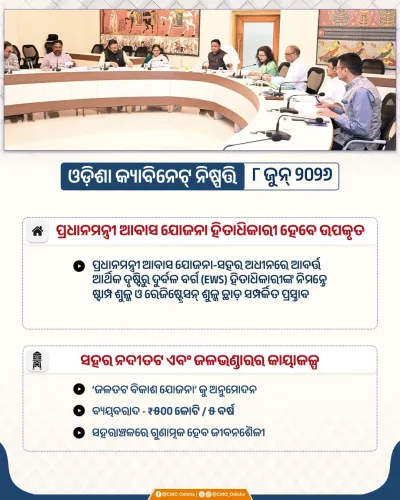
The Chief Minister's Office of Odisha announced on Wednesday, June 10, 2026 that the Odisha Cabinet approved two major urban development initiatives — a stamp duty and registration fee waiver for economically weaker section beneficiaries under Pradhan Mantri Awas Yojana-Urban, and a ₹500 crore Waterfront Development Scheme to rejuvenate urban riverfronts and water bodies across the state over the next five years.
Context
The cabinet decisions were shared via the official CMO Odisha handle on June 10, 2026, with the government stating the moves 'reaffirm the Government's commitment to housing security, sustainable urban development and improved quality of life for citizens.' The two approvals address distinct but complementary urban challenges: affordability in home ownership and the ecological and aesthetic condition of urban water bodies.
The stamp duty waiver targets Economically Weaker Section (EWS) families, the lowest-income bracket eligible under PMAY-Urban, for whom registration costs have historically been a barrier even after subsidy-linked construction support. By removing this transactional cost, Odisha aims to push more eligible households across the finish line to formal ownership.
Policy Backdrop
Pradhan Mantri Awas Yojana-Urban was launched in June 2015 by the Ministry of Housing and Urban Affairs under the Housing for All mission, targeting EWS, LIG and MIG urban households for pucca housing. States retain the authority to layer complementary incentives — such as fee waivers — on top of the central scheme's subsidy architecture to accelerate uptake.
Odisha has consistently aligned state-level measures with central urban missions, including AMRUT (Atal Mission for Rejuvenation and Urban Transformation), which emphasises water-body conservation and urban infrastructure. The ₹500 crore Jalatata Bikash Yojana, as referenced in the cabinet hashtags, fits within this broader pattern of state governments investing in waterfront rejuvenation as a dual-purpose tool — improving urban ecology while creating public recreational spaces.
Multiple states have adopted similar stamp duty concessions for EWS PMAY-U beneficiaries since 2015, reflecting a nationwide recognition that transaction costs can stall last-mile housing delivery even when construction subsidies are in place.
Stakeholders and Impact
EWS urban families across Odisha stand to benefit most directly from the stamp duty waiver, as the exemption reduces the out-of-pocket cost at the point of property registration — often the final, most tangible hurdle to documented home ownership. The number of households affected will depend on the current pipeline of PMAY-U sanctioned but unregistered units in the state.
The ₹500 crore Waterfront Development Scheme is expected to affect multiple urban centres with rivers, lakes or other water bodies running through or adjacent to them. Urban local bodies and municipal corporations will likely be the primary implementing agencies, with benefits flowing to residents through improved flood resilience, cleaner water bodies and new public spaces along rejuvenated riverfronts.
The @PMOIndia tag in the original post signals that Odisha is positioning both decisions within the national Housing for All and urban transformation narrative, potentially inviting central acknowledgment or co-funding conversations.
What's Next
Attention will now turn to the operational rollout: the state government will need to notify the stamp duty waiver through the revenue and registration department, specifying eligibility criteria, documentation requirements and the effective date. Any increase in PMAY-U registrations in Odisha in the months following the waiver will be a key metric of its success.
For the Jalatata Bikash Yojana, the five-year implementation horizon means the first visible milestones — tendering, site identification and initial civil works — are likely to emerge within the current financial year. How the ₹500 crore outlay is phased, and whether it draws matching central funds under urban missions, will shape the pace and scale of waterfront transformation across Odisha's cities.
Point of View
Public-facing dividends. The stamp duty waiver is a low-cost, high-signal move — it costs the state registration revenue but can meaningfully accelerate PMAY-U completion rates, a metric closely watched by the Centre. The ₹500 crore waterfront scheme, meanwhile, fits a growing pattern among Indian states of using riverfront and lake rejuvenation as flagship urban projects that combine ecological goals with political visibility. Tagging the Prime Minister's Office in the announcement suggests Odisha is keen to present these decisions as complementary to — and deserving of recognition within — the national Housing for All and smart cities narrative.
NationPress
26 Oct 2026
Frequently Asked Questions
What did the Odisha Cabinet decide on June 10 2026 about housing?
The Odisha Cabinet approved a waiver of stamp duty and registration fees for EWS beneficiaries under PMAY-Urban, making formal home ownership more affordable for low-income families in the state.
What is the Jalatata Bikash Yojana in Odisha?
Jalatata Bikash Yojana is a ₹500 crore Waterfront Development Scheme approved by the Odisha Cabinet to rejuvenate urban riverfronts and water bodies across the state over the next five years.
Who benefits from the PMAY Urban stamp duty waiver in Odisha?
Economically Weaker Section (EWS) beneficiaries under Pradhan Mantri Awas Yojana-Urban benefit from the waiver, which removes stamp duty and registration fee costs at the time of property registration.
What is PMAY-Urban and when was it launched?
Pradhan Mantri Awas Yojana-Urban is a central government scheme launched in June 2015 by the Ministry of Housing and Urban Affairs to provide pucca houses to eligible urban households in EWS, LIG and MIG income categories.
How much has Odisha allocated for waterfront development?
The Odisha Cabinet has approved ₹500 crore for the Waterfront Development Scheme, to be implemented over five years across urban riverfronts and water bodies in the state.