CM Majhi Marks 2 Years of BJP Rule With Housing Push
Synopsis
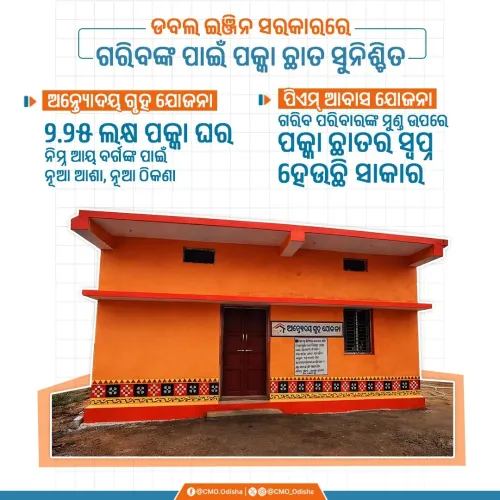
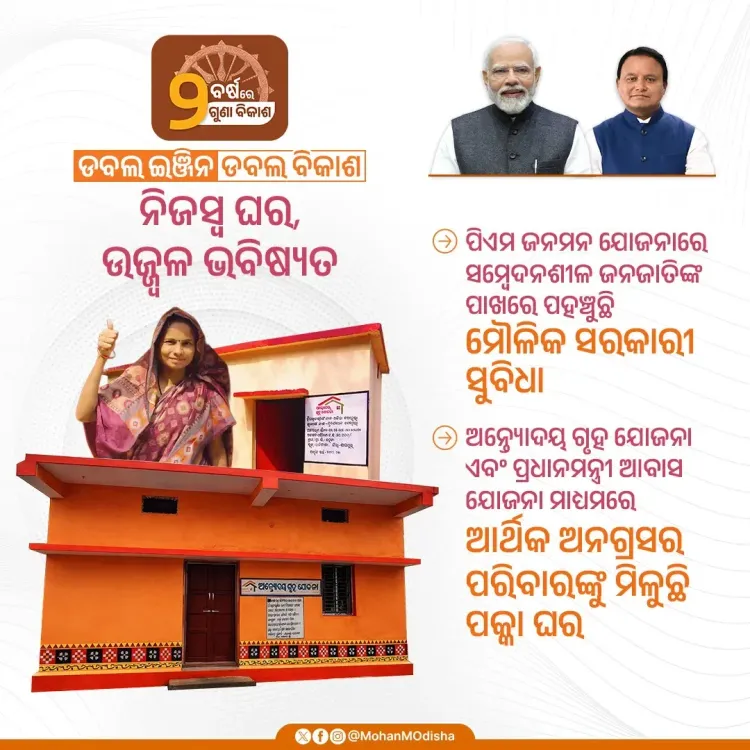
On the second anniversary of his government, Odisha CM Mohan Charan Majhi credited the PM Awas Yojana and state-run Antyodaya Griha Yojana with fulfilling pucca housing dreams of thousands of low-income families, invoking the BJP's 'double engine' governance model.
Key Takeaways
CM Mohan Charan Majhi marked two years of the BJP government in Odisha on 18 June 2026 .
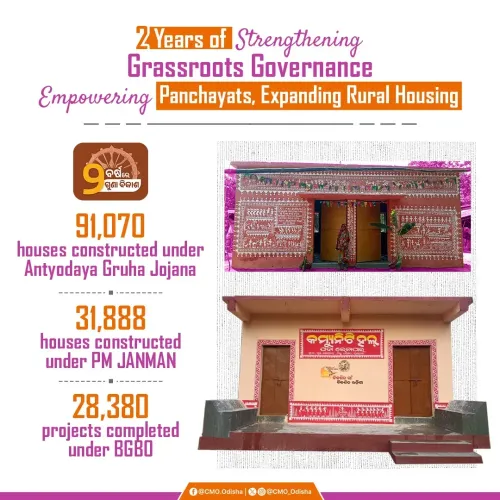
He credited PM Awas Yojana and the state's Antyodaya Griha Yojana with delivering pucca homes to thousands of long-deprived low-income families.
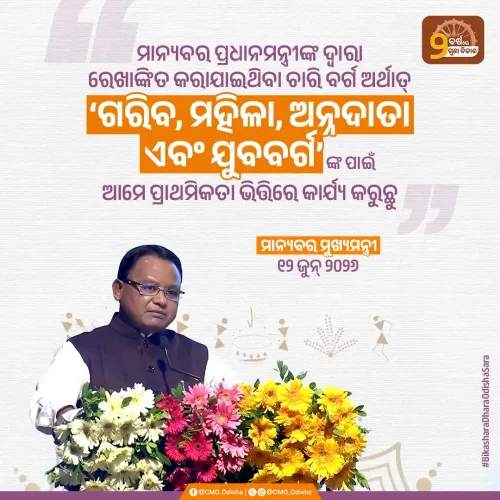
The post invokes PM Narendra Modi 's 'Sabka Saath, Sabka Vikas' as the guiding principle behind welfare prioritisation.
The BJP's ' double engine ' narrative frames central-state alignment as the mechanism for accelerated housing delivery in Odisha.
The BJP formed its first-ever government in Odisha in June 2024 , ending prolonged BJD rule in the state.
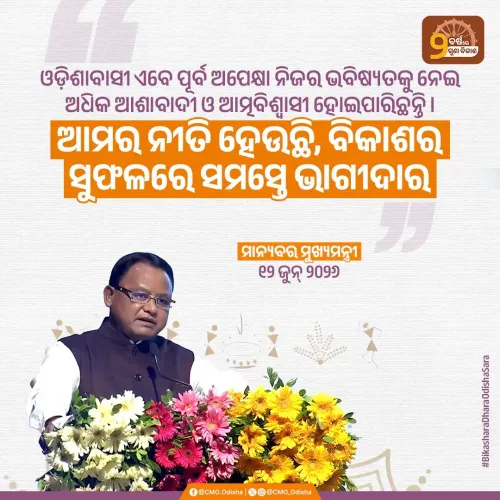
Odisha Chief Minister Mohan Charan Majhi on Thursday, 18 June 2026, highlighted the convergence of central and state housing schemes as a defining achievement of two years of BJP governance in Odisha, crediting Prime Minister Narendra Modi's 'Sabka Saath, Sabka Vikas' vision for driving welfare delivery to the state's poorest families.
Posting in Odia on X, CM Majhi wrote that the combined efforts of the central and state governments have made housing welfare the highest priority for economically weaker sections. Translated, his post reads: 'PM Awas Yojana' ebam 'Antyodaya Griha Yojana'ra saphal rupayan madhyamare... — 'Through the successful implementation of the PM Awas Yojana and the Antyodaya Griha Yojana, the dream of thousands of low-income families who were deprived for years of a pucca home of their own has today been realised.'
Context
The post marks the second anniversary of the Majhi government, which took office in June 2024 after the BJP won the Odisha assembly elections, ending nearly two and a half decades of Biju Janata Dal rule in the state. The hashtags #2YearsofLokankaSarakar ('two years of the people's government') and #BikasharaDharaOdishaSara ('development for all of Odisha') frame the anniversary as a milestone in inclusive governance.
CM Majhi's message also invokes the 'double engine, double development' formulation — the BJP's long-running argument that having the same party in power at the centre and in the state accelerates welfare delivery by eliminating inter-governmental friction.
Policy Backdrop
Pradhan Mantri Awas Yojana (PMAY) was launched nationally in 2015 to eliminate housing shortages for economically weaker sections in both rural and urban areas. The scheme provides financial assistance for constructing or upgrading pucca houses, with funds shared between the central and state governments.
The Antyodaya Griha Yojana is an Odisha state scheme designed to complement PMAY by prioritising housing assistance for the absolute poorest families who may fall outside or at the margins of central scheme eligibility criteria. Together, the two programmes form the backbone of the Majhi government's housing agenda for low-income households.
Stakeholders and Impact
The primary beneficiaries are low-income and economically weaker-section families across Odisha who have historically lacked access to pucca housing. CM Majhi's post underscores that these households — described as having been 'deprived for years' — are now the central focus of state welfare planning.
The framing also carries a political dimension: by attributing progress to the alignment between the Modi government at the centre and the Majhi government in Bhubaneswar, the BJP seeks to contrast its two-year record with the preceding administration's approach to housing and social welfare.
What's Next
Attention will now turn to detailed progress reports on PMAY and Antyodaya Griha Yojana targets in Odisha — specifically, how many houses have been sanctioned, are under construction, and have been completed under the Majhi government. Any supplementary budget allocations for rural housing in the coming months will be a key indicator of whether the political commitment translates into accelerated on-ground delivery.
The two-year mark also sets the stage for a broader mid-term assessment of the BJP's governance record in Odisha, with housing emerging as a central plank in that narrative.
Point of View
Pre-emptively framing any housing progress as a product of BJP alignment rather than bureaucratic continuity. By spotlighting PMAY alongside the state-specific Antyodaya Griha Yojana, the government signals that it has layered its own identity onto a central scheme — a pattern seen in other BJP-governed states. The two-year milestone is also an implicit contrast with the previous BJD administration, setting terms for the mid-term political conversation in Odisha. How far verified on-ground numbers substantiate the narrative will determine the durability of this framing.
NationPress
20 Sept 2026
Frequently Asked Questions
What is the Antyodaya Griha Yojana in Odisha?
The Antyodaya Griha Yojana is an Odisha state housing scheme that complements the central PM Awas Yojana by prioritising pucca house construction for the poorest families who may not be fully covered under the central programme.
What is the 'double engine' government concept the BJP uses?
'Double engine' government refers to the BJP's argument that having the same party in power at the centre and in a state removes coordination barriers, allowing welfare schemes like PMAY to be implemented faster and more effectively.
How long has the BJP been in power in Odisha?
The BJP formed its first government in Odisha in June 2024 after winning the state assembly elections, ending roughly 24 years of Biju Janata Dal rule. CM Mohan Charan Majhi's post marks that government's second anniversary in June 2026.
What is PM Awas Yojana and who benefits from it?
Pradhan Mantri Awas Yojana, launched in 2015, is a central government scheme that provides financial assistance to economically weaker sections and low-income households to build or upgrade pucca houses in rural and urban areas.
What did CM Majhi say about housing on the BJP's second anniversary in Odisha?
CM Majhi said that through the PM Awas Yojana and Antyodaya Griha Yojana, thousands of low-income families deprived of proper housing for years have had their dream of a pucca home realised, attributing this to coordinated central-state effort under Modi's 'Sabka Saath, Sabka Vikas' vision.