IMF 7% growth forecast for India signals global confidence, say experts
Synopsis
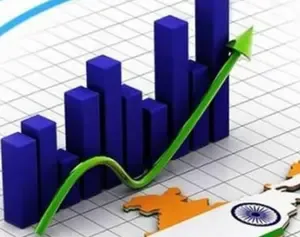
The IMF has reaffirmed India as the world's fastest-growing major economy at 7%, and Indian economists are reading it as more than a data point — it is external validation of a structural shift. With formalisation, digitalisation, and a 1.5-billion-strong consumer base driving momentum, the consensus view is that India's growth story is durable, not cyclical.
Key Takeaways
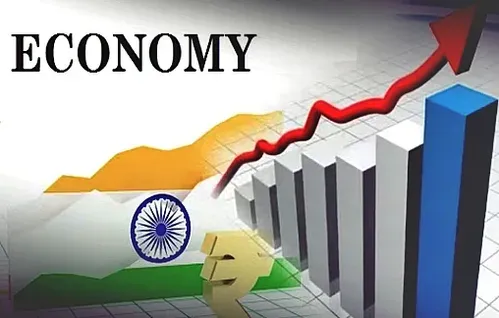
The IMF has projected India's GDP growth at 7 per cent , affirming its status as the world's fastest-growing major economy.
Economist Vijay Sardana cited India's population of over 1.5 billion and consumption-driven economy as core strengths.
CA Yogendra Kapoor of Kapoor & Associates attributed the favourable outlook to government focus on digitalisation , infrastructure , and GST/income tax formalisation .
Shukla noted India's resilience through global disruptions including the Russia-Ukraine conflict and the global energy crisis since 2014 .
Economy expert Vinod Rawal described the projection as a matter of national pride, saying India's lead over other major economies is now clear.
The International Monetary Fund (IMF) has projected that India will remain the world's fastest-growing major economy in 2026, with a growth rate of 7 per cent — a figure that economists and market analysts say reflects deepening global confidence in the country's long-term economic trajectory. The projection, discussed on Tuesday, 13 October, has drawn a broadly optimistic response from financial experts who point to India's structural strengths as the foundation for sustained expansion.
Experts Cite Demographic Dividend and Domestic Consumption
Economist Vijay Sardana said India's population of over 1.5 billion positions it as one of the most compelling growth and investment destinations in the world. 'This is very good news because a vast country like India, with a population of nearly 1.5 billion, has enormous potential,' he said. Sardana added that India is well-placed to play a pivotal role in the ongoing global political and economic realignment, with its consumption-driven economy serving as its greatest structural strength.
'The entire world should take this market seriously, as many investment opportunities are likely to emerge here,' he noted, pointing to the country's ongoing development as a key driver of forward momentum.
Formalisation of the Economy Seen as a Key Enabler
Economist and tax expert CA Yogendra Kapoor of Kapoor & Associates said India has the capacity to sustain a 7 per cent growth rate or higher, crediting government-led initiatives in digitalisation, infrastructure development, and economic transparency for creating a favourable investment climate. 'Absolutely, and I believe this target is easily achievable. Considering India's overall economic ecosystem at this point, I believe we can maintain a consistent rate of growth,' Kapoor said.
He pointed to rising income tax and GST collections as evidence that the Indian economy is steadily transitioning from the informal to the formal sector — a structural shift that broadens the tax base and increases fiscal resilience. 'If we look at the government's focus on digitalisation and infrastructure development, these initiatives create an environment that promotes not only domestic investment but also foreign investment,' he said.
India's Resilience Through Global Disruptions
Market expert A.P. Shukla highlighted that India has sustained its growth momentum through a series of major global shocks since 2014, including the Russia-Ukraine conflict, the global energy crisis, and broader economic uncertainty. He cited rising consumption indicators — including mobile phone penetration, housing demand, and travel spending — as evidence of real improvements in living standards. 'Crores of people in the country have risen above the poverty line. How did this happen? If we were not experiencing growth, how would this be possible?' Shukla observed.
India Poised to Lead Among Major Economies
Economy expert Vinod Rawal described the IMF's growth projection as a matter of national pride, arguing that India's standing among the world's top-performing major economies is now beyond question. 'Despite the fact that other countries' economies are not growing at the same pace, we will emerge as the fastest-growing economy in the world. There is no doubt about that,' he stated.
This comes amid a broader global growth slowdown, with several advanced economies grappling with high interest rates, persistent inflation, and subdued demand — conditions that, according to these experts, further underscore India's relative outperformance. With the IMF's endorsement reinforcing external validation of India's trajectory, the focus will now shift to whether structural reforms can convert the growth rate into broader employment and income gains across all segments of society.
Point of View
But expert consensus in India has a tendency to front-load optimism and underweight execution risk. The formalisation narrative — rising GST and income-tax collections — is real, but it captures economic activity already happening, not the next leg of growth. The harder question, which none of the experts raised, is whether 7% GDP growth is translating proportionally into job creation and wage gains at the lower end of the income ladder. India has grown briskly before without resolving its labour market quality problem. The IMF number is a ceiling to aspire to, not a floor to celebrate.
NationPress
13 Oct 2026
Frequently Asked Questions
What has the IMF projected for India's GDP growth?
The IMF has projected India's GDP growth at 7 per cent, reaffirming its position as the world's fastest-growing major economy. The projection reflects confidence in India's domestic consumption strength, ongoing infrastructure investment, and economic formalisation.
Why are economists optimistic about India sustaining 7% growth?
Economists point to several structural drivers: a population of over 1.5 billion providing a large consumption base, rising GST and income-tax collections signalling formalisation, and government investment in digitalisation and infrastructure. These factors are seen as creating a durable, not cyclical, growth environment.
How has India maintained growth despite global disruptions?
According to market expert A.P. Shukla, India has sustained its growth momentum through multiple global shocks since 2014, including the Russia-Ukraine conflict and the global energy crisis. Rising mobile penetration, housing demand, and travel spending are cited as indicators of real improvement in living standards.
What role does formalisation play in India's growth story?
CA Yogendra Kapoor of Kapoor & Associates argues that rising income-tax and GST collections show the economy is moving from informal to formal structures, broadening the tax base and increasing fiscal stability. This transition, he says, also makes India a more predictable environment for both domestic and foreign investors.
How does India's 7% growth compare with other major economies?
India's projected 7% growth stands well above most other major economies, many of which are contending with high interest rates, sticky inflation, and subdued demand. Economy expert Vinod Rawal noted that while other large economies are growing at a slower pace, India's lead as the fastest-growing major economy is not in question.