Sonowal: India fastest-growing major economy, IMF confirms
Synopsis
Union Minister Sarbananda Sonowal cited the latest IMF projections on October 13 to reaffirm India's status as the world's fastest-growing major economy, pointing to PM Modi's infrastructure expansion and Atmanirbhar Bharat reforms as the driving forces amid global headwinds.
Key Takeaways
IMF projections cited by Minister Sonowal confirm India as the fastest-growing major economy amid global turbulence.
PM Narendra Modi's leadership, next-generation infrastructure and bold reforms are credited as the growth drivers.
The National Infrastructure Pipeline (2019) targeted Rs 111 lakh crore in investment across key sectors including ports and waterways.
Atmanirbhar Bharat , launched in May 2020 , introduced production-linked incentives across 14 sectors to build domestic manufacturing resilience.
India's ports and shipping sector — under Sonowal's watch — is directly linked to export competitiveness and the broader growth story.
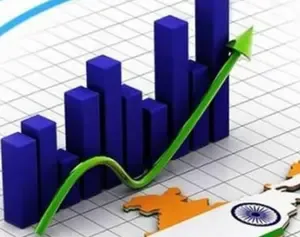
India has been ranked the fastest-growing major economy in IMF World Economic Outlook reports consistently since 2015 .
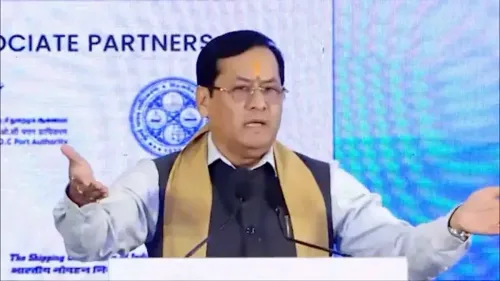
India is not just holding its ground amid global economic turbulence — it is pulling ahead. Union Minister of Ports, Shipping and Waterways Sarbananda Sonowal on Tuesday, October 13 cited the latest IMF projections to assert that India retains its position as the fastest-growing major economy in the world, crediting Prime Minister Narendra Modi's infrastructure push and structural reforms for powering that momentum.
Posting on X with the headline 'Resilient, Resolute and Rising!', Sonowal wrote: 'While global markets navigate turbulent times, Hon'ble PM Shri Narendra Modi ji's decisive leadership, next-gen infrastructural expansion and bold reforms are powering our self-reliance and global momentum.' The framing was deliberate — positioning India not merely as a survivor of global headwinds but as an active outlier.
IMF's consistent verdict on India's growth trajectory
The International Monetary Fund's World Economic Outlook series has, across multiple editions since 2015, identified India as the fastest-growing major economy — a designation that has become a central plank of India's economic diplomacy. The IMF's projections carry weight precisely because they benchmark India against peers like the United States, China, the European Union, and Japan. When those economies slow, India's relative growth gap widens — which is exactly the story the government has leaned into through periods of global uncertainty.Infrastructure and Atmanirbhar Bharat as the growth engine
Sonowal's reference to 'next-gen infrastructural expansion' points to a policy architecture that dates back to the National Infrastructure Pipeline, unveiled in 2019, which targeted Rs 111 lakh crore in investment across roads, railways, ports, power, and urban infrastructure over five years. The ports and shipping sector — Sonowal's own portfolio — sits squarely within that pipeline, with major investments in capacity expansion at India's major ports and the Sagarmala programme driving coastal connectivity. The 'self-reliance' note in the post anchors directly to the Atmanirbhar Bharat initiative launched in May 2020, which unleashed production-linked incentive schemes across 14 sectors to reduce import dependence and build domestic manufacturing muscle. That programme has since been held up as a structural reason for India's resilience when global supply chains fractured.A minister connecting ports to the macro picture
What makes Sonowal's post notable beyond routine economic cheerleading is the implicit linkage he draws between sectoral work — ports, waterways, logistics — and macroeconomic outperformance. India's logistics cost as a share of GDP has historically been a drag on competitiveness; every efficiency gain at a major port feeds directly into export competitiveness and investor confidence. Framing infrastructure spending as the bedrock of IMF-validated growth is a message aimed as much at global investors as at domestic audiences. The message lands at a moment when several major economies are wrestling with high borrowing costs and slowing demand. India's ability to sustain growth in that environment — driven by public capital expenditure, a young demographic, and expanding domestic consumption — is the core of the government's economic narrative heading into the next policy cycle.Point of View
The messaging serves a dual audience: domestic voters ahead of any electoral cycle and foreign investors benchmarking India against slowing peers. The invocation of 'next-gen infrastructure' also signals continuity of the capital expenditure-led growth strategy regardless of external shocks. Whether the IMF numbers fully hold through the next Outlook release will be the real test of the story's durability.
NationPress
13 Oct 2026
Frequently Asked Questions
Is India really the fastest-growing major economy according to the IMF?
The IMF has repeatedly identified India as the fastest-growing major economy in its World Economic Outlook reports. The Indian government, including Minister Sonowal in his October 13 post, routinely cites these projections to underscore India's economic outperformance relative to other large economies.
What is the National Infrastructure Pipeline?
The National Infrastructure Pipeline is an Indian government initiative unveiled in 2019 that targeted Rs 111 lakh crore in investment across roads, railways, ports, power and urban infrastructure over five years, aimed at driving growth and improving logistics competitiveness.
What is Atmanirbhar Bharat and how does it relate to India's growth?
Atmanirbhar Bharat ('Self-Reliant India') was launched by PM Modi in May 2020 . It introduced production-linked incentive schemes across 14 sectors to reduce import dependence, boost domestic manufacturing, and build supply chain resilience — factors credited with supporting India's economic stability during global disruptions.
What is Sarbananda Sonowal's current role?
Sarbananda Sonowal is India's Union Minister of Ports, Shipping and Waterways . He is a senior BJP leader and former Chief Minister of Assam, and his ministry oversees port development, the Sagarmala programme, and inland waterways expansion.
Why do IMF growth projections matter for India?
IMF projections serve as an internationally recognised benchmark, influencing foreign direct investment decisions, sovereign credit assessments, and India's standing in global economic diplomacy. Being rated the fastest-growing major economy strengthens India's negotiating position in trade and investment forums.