Madras High Court gets 2 new Additional Judges after Centre clears appointments
Synopsis
Five months after the Supreme Court Collegium approved their elevation, Dharmalingam Lingeswaran and Balathandayutham Karthikeyan have been formally appointed as Additional Judges of the Madras High Court. The gap between collegium nod and executive notification — a recurring feature of India's judicial appointment process — is again in focus as the high court works to address its pending caseload.
Key Takeaways
The Centre on 13 October 2026 cleared the appointment of two judicial officers as Additional Judges of the Madras High Court .
The appointees are Dharmalingam Lingeswaran and Balathandayutham Karthikeyan .
The Supreme Court Collegium , led by CJI Surya Kant , had approved the appointments on 18 May — nearly five months before the Centre's formal clearance.
The two are part of a six-officer batch approved by the collegium in response to a proposal originally dated 4 November 2025 .
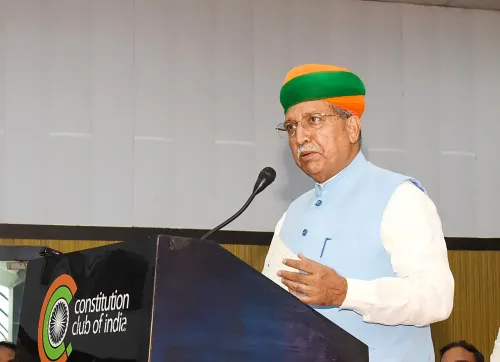
Union Minister Arjun Ram Meghwal announced the appointments in a post on X .
The Centre on Tuesday, 13 October 2026, cleared the appointment of two judicial officers as Additional Judges of the Madras High Court, following the recommendation of the Supreme Court Collegium. The appointments formalise a process that began with a collegium proposal dating back to November 2025.
Who Has Been Appointed
Union Minister of State (Independent Charge) for Law and Justice Arjun Ram Meghwal announced the decision in a post on X, stating that the President of India, in exercise of constitutional powers and in consultation with the Chief Justice of India (CJI), had approved the appointments. The two judicial officers named are Dharmalingam Lingeswaran and Balathandayutham Karthikeyan.
In his post, Meghwal quoted the official order: 'In exercise of the powers conferred by the Constitution of India, in consultation with Chief Justice of India, the President is pleased to appoint the following 02 Judicial Officers as Additional Judges of the Madras High Court.'
The Collegium's Role
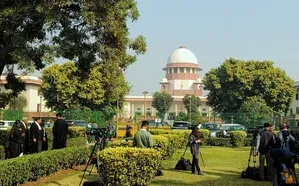
The Supreme Court Collegium, headed by Chief Justice of India Surya Kant, had approved the proposal for both appointments at its meeting held on 18 May. A day later, on 19 May, the collegium issued a formal statement confirming it had cleared the elevation of six judicial officers to the Madras High Court bench — a proposal originally dated 4 November 2025 — with Lingeswaran and Karthikeyan among those named.
The collegium comprises the CJI and the senior-most judges of the Supreme Court, and its recommendations are constitutionally requisite for appointments to the higher judiciary. Under the established framework, only candidates whose names have been recommended by the Supreme Court Collegium can be appointed as High Court judges.
How Judicial Appointments Work
The process of appointing High Court judges in India is, by design, a multi-stage exercise involving both the executive and the judiciary. It requires consultation and approval from various constitutional authorities at both the state and the Centre level. The executive's role is to formally notify the appointment once all consultations are complete — a step that typically follows the collegium's recommendation by several months, as in this case.
Notably, the gap between the collegium's approval in May and the Centre's formal clearance in October — nearly five months — reflects a pattern that judicial reform advocates have flagged as a source of delays in filling High Court vacancies across the country.
What This Means for the Madras High Court
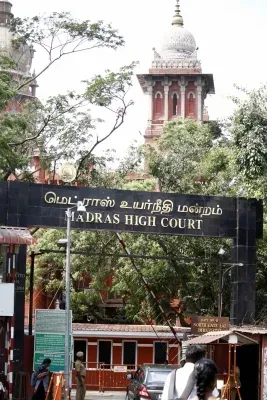
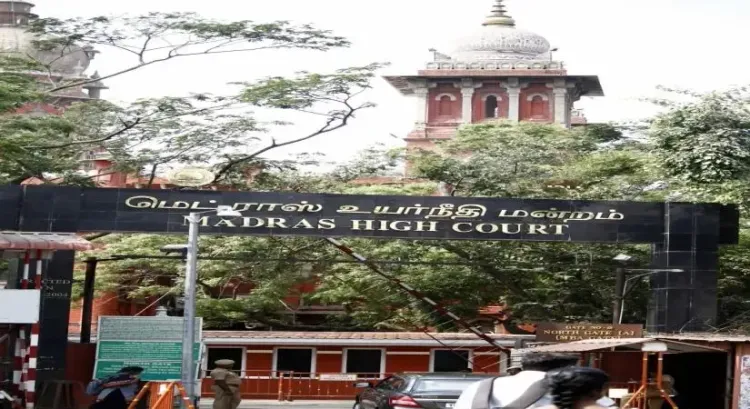
The Madras High Court, one of the oldest and busiest in India, has grappled with a significant backlog of pending cases. Additional judgeships, even on a temporary basis, are intended to augment the court's capacity to hear matters. The current appointments add to an ongoing replenishment effort: the six-officer batch approved by the collegium in May is being processed in tranches, with Tuesday's notification covering two of the six.
The remaining appointees from the 19 May collegium statement are expected to be notified separately as the executive completes its constitutional formalities.
Point of View
And the collegium-to-notification pipeline remains a structural chokepoint that no administration has resolved. While each individual appointment is procedurally correct, the cumulative delay has real consequences for litigants waiting years for hearings. The Madras High Court, with its historically high pendency, will benefit from additional judges — but the pace of filling benches continues to trail the pace at which cases accumulate.
NationPress
13 Oct 2026
Frequently Asked Questions
Who are the two new Additional Judges appointed to the Madras High Court?
The two judicial officers appointed as Additional Judges of the Madras High Court are Dharmalingam Lingeswaran and Balathandayutham Karthikeyan. Their appointment was cleared by the Centre on 13 October 2026, following the President's formal order in consultation with the Chief Justice of India.
What is the role of the Supreme Court Collegium in judicial appointments?
The Supreme Court Collegium — comprising the Chief Justice of India and the senior-most judges of the Supreme Court — recommends candidates for appointment and transfer in the higher judiciary. Only those whose names it has cleared can be appointed as High Court judges; the executive then formally notifies the appointment.
When did the Supreme Court Collegium approve these appointments?
The collegium, headed by CJI Surya Kant, approved the appointments at its meeting on 18 May. The formal statement was issued on 19 May, covering a batch of six judicial officers for the Madras High Court.
Why did it take months for the appointments to be finalised after collegium approval?
Judicial appointments in India require a multi-stage process involving consultations and approvals from constitutional authorities at both the state and Central level. The gap between the collegium's recommendation and the executive's formal notification — nearly five months in this case — reflects a recurring pattern that judicial reform advocates have flagged as a source of delay in filling High Court vacancies.
Are there more Madras High Court appointments expected from the same collegium batch?
Yes. The six-officer batch approved by the collegium in May is being processed in tranches. Tuesday's notification covers two of the six; the remaining appointees are expected to be notified separately as the executive completes its constitutional formalities.