Owaisi: Nationwide NRC Will Force Poor Into Long Queues
Synopsis
AIMIM president Asaduddin Owaisi warned on 13 October 2026 that RSS demands for a nationwide NRC would burden India's poor and document-less citizens with endless verification queues, echoing the hardships seen during the Assam NRC exercise that excluded 1.9 million people.
Key Takeaways
AIMIM president Asaduddin Owaisi posted on 13 October 2026 that RSS leaders are demanding a nationwide NRC.
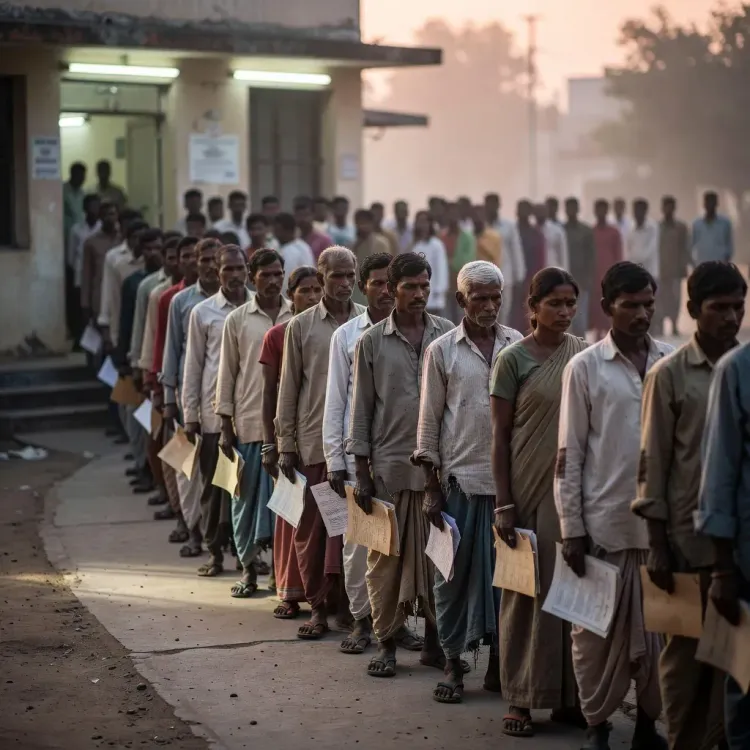
He warned that implementation would force poor and ordinary citizens into 'long, long queues' for document verification.
The Assam NRC , finalised on 31 August 2019 , excluded approximately 1.9 million people after a gruelling documentation exercise.
Former Union Home Minister Amit Shah had publicly committed to a nationwide NRC in 2019–2020 , triggering nationwide protests.
The RSS , founded in 1925 , is the ideological parent of the BJP and has periodically advocated for citizenship-verification exercises.
The Ministry of Home Affairs has not announced any fresh NRC pilot or legislative timeline as of this report.
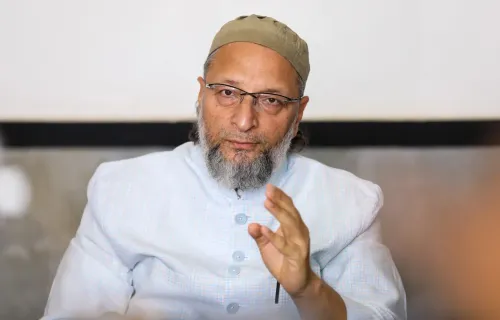
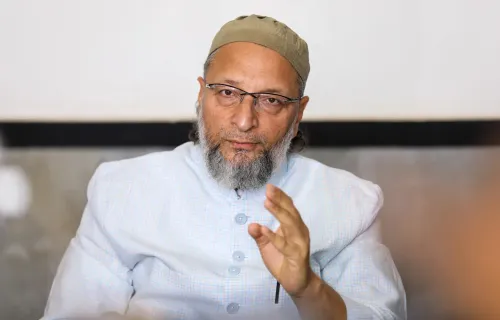
Every time a nationwide National Register of Citizens (NRC) surfaces as a political demand, the same question returns with force — who actually pays the price? AIMIM president Asaduddin Owaisi, the Lok Sabha MP from Hyderabad, sharpened that question on Tuesday, 13 October 2026, warning that an NRC drive pushed by RSS leaders would ultimately punish ordinary, document-poor Indians most.
Posting on X, Owaisi wrote: 'RSS के लोग NRC की मांग कर रहे हैं। अगर NRC हुआ, तो गरीब और आम लोगों को लंबी-लंबी कतारों में खड़ा होना पड़ेगा.' — 'RSS people are demanding the NRC. If the NRC happens, the poor and common people will have to stand in long, long queues.'The Assam Blueprint and Its Documentation Burden
The warning is not abstract. The Assam NRC — whose final list was published on 31 August 2019 — excluded roughly 1.9 million people after a years-long process of producing legacy documents, travelling to verification centres, and navigating a bureaucratic maze that many rural and illiterate residents found overwhelming. The Assam Accord of 1985 had first established the legal framework for identifying foreigners in the state, but the actual exercise revealed just how steep the documentation barrier could be for marginalised communities.
Critics of a nationwide rollout have consistently argued that what Assam endured at the state scale would be amplified catastrophically across a country of 1.4 billion. A birth certificate, a school-leaving record, a land deed — documents that middle-class urban households take for granted — are simply absent for tens of millions of the rural poor.
RSS Demand, BJP Position, and Owaisi's Consistent Opposition
The Rashtriya Swayamsevak Sangh, the Hindu nationalist volunteer organisation founded in 1925 and the ideological parent of the BJP, has periodically pressed for a nationwide NRC as part of a broader citizenship-verification agenda. Then-Union Home Minister Amit Shah stated publicly in 2019–2020 that a nationwide NRC would be conducted — a declaration that triggered large-scale protests across India at the time.
Owaisi has been one of the most vocal and consistent parliamentary critics of that proposal. His framing here is pointed: he does not lead with religious identity but with class — 'the poor and the common people.' It is a deliberate rhetorical choice, widening the argument beyond any single community to the millions of Indians who lack the paperwork bureaucracy demands.
What an Implementation Would Actually Look Like
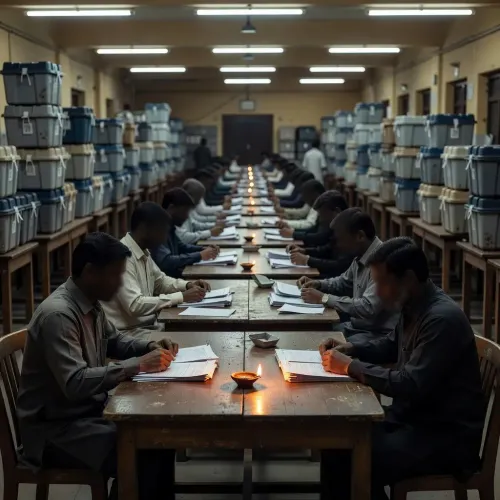
Policy researchers who tracked the Assam NRC process note that residents were required to visit National Register of Citizens Seva Kendras (NRSKs) multiple times, produce legacy documents predating 24 March 1971, and link those documents to current family trees. The logistical and legal cost for ordinary families was enormous. Scaling that to the rest of India — with its far greater diversity of record-keeping systems, languages, and literacy levels — is what animates the 'long queues' image Owaisi invokes.
The Ministry of Home Affairs has not announced any fresh NRC pilot or legislative timeline, but any signal from that quarter would immediately reprise this debate at full volume. Owaisi's post is both a pre-emptive alert and a positioning statement — reminding his constituency, and the wider opposition, of what the ground-level cost of implementation looks like.
The queue is not a metaphor. In Assam, it was a reality millions lived. The question now is whether that reality travels nationwide.
Point of View
Where verification centres became sites of anxiety for millions. This positions AIMIM in a broader opposition coalition against citizenship exercises, keeping the issue alive ahead of any potential Home Ministry move. Whether RSS pressure actually translates into a legislative push remains the key variable that will determine how far this debate escalates.
NationPress
13 Oct 2026
Frequently Asked Questions
What is the NRC and why is it controversial in India?
The National Register of Citizens is an official list of verified Indian citizens. It is controversial because the Assam NRC process excluded roughly 1.9 million people and required residents to produce difficult-to-obtain legacy documents, disproportionately affecting the poor, rural, and illiterate.
What did Owaisi say about the NRC on 13 October 2026?
Owaisi said RSS leaders are demanding a nationwide NRC and warned that if it is implemented, poor and ordinary people will be forced to stand in 'long, long queues' for document verification.
Has a nationwide NRC been implemented in India?
No. Only Assam has completed an NRC exercise, with the final list published on 31 August 2019. Union Home Minister Amit Shah stated in 2019–2020 that a nationwide NRC would be conducted, but no such exercise has been launched.
What was the outcome of the Assam NRC?
The final Assam NRC list, published on 31 August 2019, excluded approximately 1.9 million people. The exercise required residents to produce legacy documents and involved multiple visits to verification centres.
Why does Owaisi oppose the NRC?
Owaisi, as AIMIM president and Hyderabad Lok Sabha MP, has consistently opposed NRC proposals on the grounds that they impose severe documentation burdens on poor, rural, and marginalised communities who lack the required paperwork.