Owaisi suspects Amit Shah plans nationwide NRC rollout
Synopsis
AIMIM president Asaduddin Owaisi has publicly stated he suspects Union Home Minister Amit Shah intends to roll out the National Register of Citizens across India. The remark revives one of the country's most contested citizenship debates, rooted in the Assam NRC exercise of 2019 and the protests that followed.
Key Takeaways
Owaisi posted on 7 July 2026 that he suspects Amit Shah wants a nationwide NRC rollout.
The Assam NRC , completed on 31 August 2019 , excluded approximately 1.9 million people from its final list.
Amit Shah publicly stated in 2019 that a nationwide NRC would follow the Assam exercise.
No formal nationwide NRC announcement or budgetary allocation has been made as of the date of this report.
The CAA 2019 and NRC have been consistently linked by critics, including Owaisi , as a combined citizenship-screening framework.
Political observers are watching the monsoon and winter Parliament sessions for any legislative or administrative move on nationwide NRC.
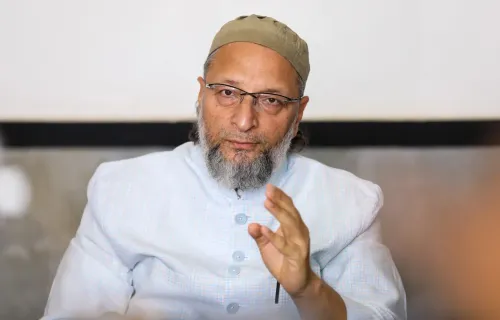
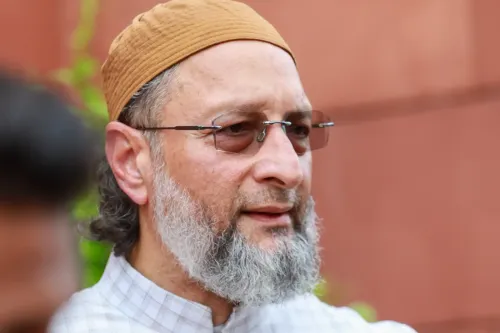
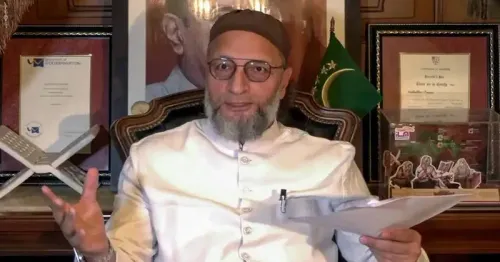
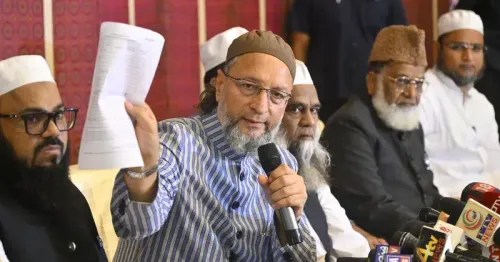
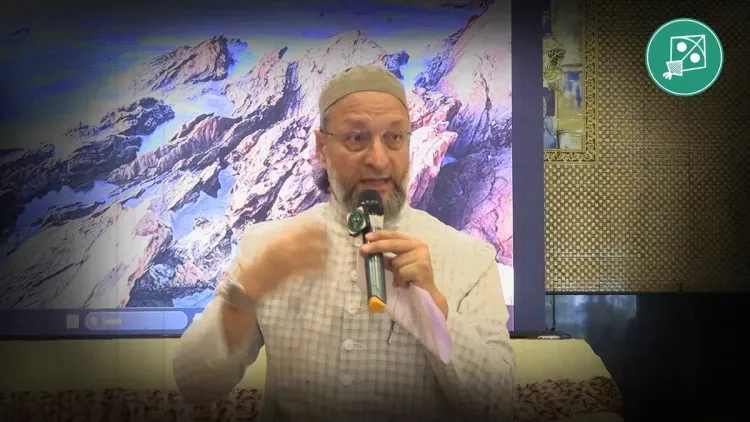
AIMIM president Asaduddin Owaisi on Tuesday, 7 July 2026, voiced suspicion that Union Home Minister Amit Shah intends to implement the National Register of Citizens (NRC) across the entire country, raising fresh alarm among opposition leaders and minority-rights groups over the citizenship documentation exercise.
In a post on X, Owaisi wrote in Hindi: 'Mujhe suspicion hai ki Amit Shah poore mulk mein NRC lagu karna chahte hain' — 'I have a suspicion that Amit Shah wants to implement the NRC across the entire country.' The statement, brief but pointed, revives a long-running political flashpoint that first peaked during the protests of 2019-2020.
Context
Owaisi, who represents Hyderabad in the Lok Sabha and is one of the most vocal parliamentary critics of the BJP's citizenship agenda, has consistently opposed both the Citizenship Amendment Act (CAA) 2019 and any proposed extension of the NRC beyond Assam. His latest remark signals that concerns about a nationwide exercise have not subsided, even years after the original controversy.
The NRC in Assam was completed under Supreme Court supervision, with its final list published on 31 August 2019. Approximately 1.9 million people were excluded from that list, sparking widespread anxiety — particularly among Bengali-speaking Muslims and Hindus in the state — about statelessness and detention.
Policy Backdrop
Amit Shah stated in Parliament and at public rallies in 2019 that a nationwide NRC would be rolled out after the Assam exercise was concluded. The Bharatiya Janata Party (BJP) had also linked the NRC to the detection of illegal immigrants in its election manifestos from 2016 to 2019, framing it as an internal-security imperative.
The CAA 2019, which fast-tracks citizenship for non-Muslim minorities from three neighbouring countries, was widely read by critics — including Owaisi — as a companion piece to the NRC: a safety net for some communities that would be excluded from a citizens' register, but not for Muslims. The government has denied this framing. No formal nationwide NRC pilot or budgetary allocation has been announced as of the date of this report.
Stakeholders and Impact
A nationwide NRC would have the broadest implications for residents of border states, stateless persons, and Muslim minorities who fear the documentation burden could be used selectively against them. Civil-society organisations that led the 2019-2020 protests have maintained a watch on any legislative or administrative moves by the Ministry of Home Affairs.
Owaisi's post, though framed as personal suspicion rather than a verified government announcement, carries political weight given his platform as a sitting MP and his track record of flagging policy shifts early. Opposition parties have historically coalesced around his warnings on citizenship issues to mount parliamentary pressure.
What's Next
Political observers will watch the monsoon and winter sessions of Parliament for any legislative proposal or Home Ministry announcement relating to a nationwide NRC framework. Any budgetary allocation or pilot-programme notification would likely trigger immediate floor debate, with Owaisi and allied opposition members expected to lead the challenge.
Until a formal government move materialises, the post underscores that citizenship documentation remains one of India's most electrically charged policy fault lines — and that even the suspicion of its revival is enough to reshape the political conversation.
Point of View
Which itself is telling: it suggests the opposition is actively monitoring the Home Ministry for citizenship-related moves ahead of Parliament's monsoon session. The remark fits a broader pattern in which AIMIM uses early, pointed statements to set the terms of a debate before the government acts, forcing the BJP to either deny or defend a position it has not yet formally taken. Given that the CAA's rules were notified in 2024 and implementation machinery is now in place, the NRC question has logical next-step salience for critics. Whether or not a nationwide NRC is imminent, Owaisi's framing ensures that any future Home Ministry action on citizenship documentation will be read through this lens of suspicion.
NationPress
6 Oct 2026
Frequently Asked Questions
What is the NRC and why is it controversial in India?
The National Register of Citizens is a database meant to identify verified Indian citizens. It is controversial because the Assam exercise in 2019 excluded about 1.9 million people, raising fears of statelessness, and critics argue a nationwide rollout could be used to target Muslim minorities.
Did Amit Shah say he would implement NRC across India?
Yes, Amit Shah stated in Parliament and at public rallies in 2019 that a nationwide NRC would be implemented after the Assam exercise was completed. No formal nationwide NRC has been announced since then.
What did Owaisi say about the NRC on 7 July 2026?
Owaisi posted in Hindi that he has a suspicion that Amit Shah wants to implement the NRC across the entire country, framing it as a personal concern rather than a confirmed government plan.
Is a nationwide NRC being implemented in India right now?
As of the date of this report, no formal announcement, budgetary allocation, or pilot programme for a nationwide NRC has been made by the Ministry of Home Affairs.
What is the connection between the CAA and the NRC?
Critics, including Owaisi, argue the Citizenship Amendment Act 2019 — which fast-tracks citizenship for non-Muslim minorities from three neighbouring countries — was designed to work alongside an NRC, providing a safety net for some communities excluded from a citizens' register but not for Muslims. The government has denied this interpretation.